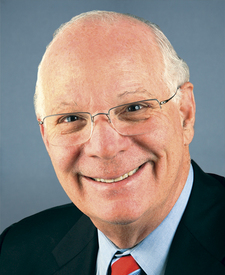
Benjamin L. Cardin
AnalysisD MD · Senate
Healthcare
+66Government Operations
-29Education
-78Environment
+36Finance
+16Foreign Policy
-40Defense
-6Labor
+47Elections
-9Regulated Industries
-49Criminal Justice
+28Energy
+26Technology
-18Transportation
-6Judiciary
-63Foreign Affairs
+5Civil Rights
+1Trade
-22Housing
-9Healthcare Consumers
-32Industry Impact Profile
2760 industry impacts
How this is computed
P Primary sponsor · C Co-sponsor · Y Yea vote · N Nay vote
Weighted score (w:) uses strongest role per bill. Weights: Primary 1.0, Co-sponsor 0.3, Yea 0.1, Nay -0.1.
Bills where the legislator voted nay (without sponsorship) contribute -0.1 per bill. Equal yea and nay roll calls on the same bill contribute 0.
Vote date filters affect vote attribution; sponsorship is always included.
Positive-Effect Industries
Negative-Effect Industries
Click any row to see supporting clauses
Showing positive and negative-direction effects only. Mixed and uncertain effects are not included in these counts.
Sponsored & Cosponsored Bills
s5454-118
Primary Sponsor IntroducedTo update the United States policy towards Hong Kong, and for other purposes.
s4773-118
Cosponsor IntroducedTo improve the health of minority individuals, and for other purposes.
s4706-118
Cosponsor IntroducedTo modernize the business of selling firearms.
s4425-118
Cosponsor IntroducedTo support democracy and the rule of law in Georgia, and for other purposes.
s4363-118
Cosponsor IntroducedTo secure the rights of public employees to organize, act concertedly, and bargain collectively, which safeguard the public interest and promote the free and unobstructed flow of commerce, and for other purposes.
sres697-118
CosponsorDesignating the week of May 12 through May 18, 2024, as National Police Week.
s4334-118
Cosponsor IntroducedTo enhance the security operations of the Transportation Security Administration and stability of the transportation security workforce by applying the personnel system under title 5, United States Code, to employees of the Transportation Security Administration, and for other purposes.
s2652-118
Cosponsor IntroducedTo amend chapter 44 of title 18, United States Code, to ensure that all firearms are traceable, and for other purposes.
s2344-118
Cosponsor IntroducedTo expand Americans’ access to the ballot box and reduce the influence of big money in politics, and for other purposes.
s1983-118
Primary Sponsor IntroducedTo require non-Federal prison, correctional, and detention facilities holding Federal prisoners or detainees under a contract with the Federal Government to make the same information available to the public that Federal prisons and correctional facilities are required to make available.
s1651-118
Cosponsor IntroducedTo encourage increased trade and investment between the United States and the countries in the Western Balkans, and for other purposes.
sres216-118
CosponsorDesignating the week of May 14 through May 20, 2023, as National Police Week.
s1591-118
Cosponsor IntroducedTo authorize dedicated domestic terrorism offices within the Department of Homeland Security, the Department of Justice, and the Federal Bureau of Investigation to analyze and monitor domestic terrorist activity and require the Federal Government to take steps to prevent domestic terrorism.
s1606-118
Cosponsor IntroducedTo end preventable maternal mortality, severe maternal morbidity, and maternal health disparities in the United States, and for other purposes.
sres191-118
Cosponsor In CommitteeRecognizing widening threats to freedom of the press and free expression around the world, reaffirming the vital role that a free and independent press plays in combating the growing threats of authoritarianism, misinformation, and disinformation, and reaffirming freedom of the press as a priority of the United States Government in promoting democracy, human rights, and good governance in commemoration of World Press Freedom Day on May 3, 2023.
s1409-118
Cosponsor IntroducedTo protect the safety of children on the internet.
s1289-118
Cosponsor IntroducedTo amend the Federal Food, Drug, and Cosmetic Act to strengthen requirements related to nutrient information on food labels, and for other purposes.
s1210-118
Primary Sponsor IntroducedTo designate a laboratory as the National Biodefense Analysis and Countermeasures Center, and for other purposes.
s1176-118
Cosponsor IntroducedTo direct the Secretary of Labor to issue an occupational safety and health standard that requires covered employers within the health care and social service industries to develop and implement a comprehensive workplace violence prevention plan, and for other purposes.
sres157-118
Cosponsor In CommitteeCommemorating the 25th anniversary of the signing of the Good Friday Agreement, and for other purposes.
Loading countries...
Select a clause to see detailed analysis
Failed to load analysis
Please try again
Failed to load clauses
Please try again
Click an industry from the Impact Profile to view supporting clauses
Select a clause to see detailed analysis