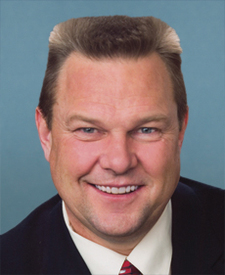
Jon Tester
AnalysisD MT · Senate
Healthcare
+13Government Operations
-25Environment
0Defense
+11Veterans Affairs
-5Finance
+7Veterans
-131Elections
-9National Security
-22Transportation
+14Education
-7Appropriations
-4Agriculture
+2Technology
+1Civil Rights
+8Criminal Justice
-17Trade
+8Foreign Policy
+1Housing
+1Labor
+7Industry Impact Profile
2630 industry impacts
How this is computed
P Primary sponsor · C Co-sponsor · Y Yea vote · N Nay vote
Weighted score (w:) uses strongest role per bill. Weights: Primary 1.0, Co-sponsor 0.3, Yea 0.1, Nay -0.1.
Bills where the legislator voted nay (without sponsorship) contribute -0.1 per bill. Equal yea and nay roll calls on the same bill contribute 0.
Vote date filters affect vote attribution; sponsorship is always included.
Positive-Effect Industries
Negative-Effect Industries
Click any row to see supporting clauses
Showing positive and negative-direction effects only. Mixed and uncertain effects are not included in these counts.
Sponsored & Cosponsored Bills
s4921-118
Primary Sponsor ReportedMaking appropriations for the Department of Defense for the fiscal year ending September 30, 2025, and for other purposes.
sres798-118
Primary SponsorCommemorating the 75th Anniversary of the Mann Gulch fire by designating August 5, 2024, as Mann Gulch Memorial Tribute Day.
sres782-118
CosponsorDesignating the week of August 4 through August 10, 2024, as National Farmers Market Week.
s4792-118
Cosponsor IntroducedTo amend the Secure and Trusted Communications Networks Act of 2019 to add communications equipment and services produced or provided by Shenzhen Da-Jiang Innovations Sciences and Technologies Company Limited and Autel Robotics to the list that the Federal Communications Commission is required to maintain under that Act, and for other purposes.
s4680-118
Cosponsor IntroducedTo award a Congressional Gold Medal to Jens Stoltenberg, in recognition of his contributions to the security, unity, and defense of the North Atlantic Treaty Organization.
sres765-118
CosponsorRelating to the death of the Honorable James Mountain Inhofe, former Senator for the State of Oklahoma.
sres749-118
Cosponsor In CommitteeRecognizing June 2024, as LGBTQ Pride Month.
sres745-118
Cosponsor In CommitteeExpressing support for and celebrating the 80th anniversary of the Servicemen’s Readjustment Act of 1944, commonly known as the G.I. Bill.
s4584-118
Cosponsor IntroducedTo amend the Internal Revenue Code of 1986 to allow a business credit for gain from the sale of real property for use as a manufactured home community, and for other purposes.
sres727-118
CosponsorDesignating June 2024 as Great Outdoors Month.
s4499-118
Cosponsor IntroducedTo reauthorize grants to the Girl Scouts of the United States of America, the Boy Scouts of America, the National 4–H Council, and the National FFA Organization to establish pilot projects to expand the programs carried out by the organizations in rural areas and small towns, and for other purposes.
sres722-118
CosponsorExpressing the gratitude and appreciation of the Senate for the acts of heroism and valor by the members of the United States Armed Forces who participated in the June 6, 1944, amphibious landing at Normandy, France, and commending those individuals for leadership and bravery in an operation that helped bring an end to World War II.
s4442-118
Primary Sponsor ReportedTo amend the Crow Tribe Water Rights Settlement Act of 2010 to make improvements to that Act, and for other purposes.
sres705-118
Cosponsor In CommitteeRecognizing May 28, 2024, as the 100th anniversary of the U.S. Border Patrol and commending the service of the U.S. Border Patrol to the United States people.
s4381-118
Cosponsor IntroducedTo protect an individual’s ability to access contraceptives and to engage in contraception and to protect a health care provider’s ability to provide contraceptives, contraception, and information related to contraception.
sres697-118
CosponsorDesignating the week of May 12 through May 18, 2024, as National Police Week.
sres692-118
CosponsorSupporting the mission and goals of National Fentanyl Awareness Day in 2024, including increasing individual and public awareness of the impact of fake or counterfeit fentanyl pills on families and young people.
s4334-118
Cosponsor IntroducedTo enhance the security operations of the Transportation Security Administration and stability of the transportation security workforce by applying the personnel system under title 5, United States Code, to employees of the Transportation Security Administration, and for other purposes.
s4268-118
Primary Sponsor IntroducedProposing a balanced budget amendment to the Constitution of the United States.
s4254-118
Primary Sponsor IntroducedTo limit the closure or consolidation of any United States Postal Service processing and distribution center in States, and for other purposes.
Loading countries...
Select a clause to see detailed analysis
Failed to load analysis
Please try again
Failed to load clauses
Please try again
Click an industry from the Impact Profile to view supporting clauses
Select a clause to see detailed analysis