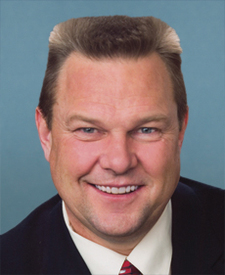
Jon Tester
AnalysisD MT · Senate
Healthcare
+13Government Operations
-25Environment
0Defense
+11Veterans Affairs
-5Finance
+7Veterans
-131Elections
-9National Security
-22Transportation
+14Education
-7Appropriations
-4Agriculture
+2Technology
+1Civil Rights
+8Criminal Justice
-17Trade
+8Foreign Policy
+1Housing
+1Labor
+7Industry Impact Profile
2630 industry impacts
How this is computed
P Primary sponsor · C Co-sponsor · Y Yea vote · N Nay vote
Weighted score (w:) uses strongest role per bill. Weights: Primary 1.0, Co-sponsor 0.3, Yea 0.1, Nay -0.1.
Bills where the legislator voted nay (without sponsorship) contribute -0.1 per bill. Equal yea and nay roll calls on the same bill contribute 0.
Vote date filters affect vote attribution; sponsorship is always included.
Positive-Effect Industries
Negative-Effect Industries
Click any row to see supporting clauses
Showing positive and negative-direction effects only. Mixed and uncertain effects are not included in these counts.
Sponsored & Cosponsored Bills
s5285-118
Cosponsor IntroducedTo stop the shipment of illicit synthetic drugs via transportation networks in the United States, and for other purposes.
s4921-118
Primary Sponsor ReportedMaking appropriations for the Department of Defense for the fiscal year ending September 30, 2025, and for other purposes.
s4381-118
Cosponsor IntroducedTo protect an individual’s ability to access contraceptives and to engage in contraception and to protect a health care provider’s ability to provide contraceptives, contraception, and information related to contraception.
s4268-118
Primary Sponsor IntroducedProposing a balanced budget amendment to the Constitution of the United States.
s3959-118
Cosponsor ReportedTo require the Transportation Security Administration to streamline the enrollment processes for individuals applying for a Transportation Security Administration security threat assessment for certain programs, including the Transportation Worker Identification Credential and Hazardous Materials Endorsement Threat Assessment programs of the Administration, and for other purposes.
s3953-118
Primary Sponsor IntroducedTo make demonstration grants to eligible local educational agencies or consortia of eligible local educational agencies for the purpose of increasing the numbers of school nurses in public elementary schools and secondary schools.
s3902-118
Primary Sponsor IntroducedTo amend the National Housing Act to authorize State-licensed appraisers to conduct appraisals in connection with mortgages insured by the FHA and to ensure compliance with the existing appraiser education and competency requirements, and for other purposes.
s4-118
Cosponsor IntroducedTo amend the Voting Rights Act of 1965 to revise the criteria for determining which States and political subdivisions are subject to section 4 of the Act, and for other purposes.
s3346-118
Primary Sponsor ReportedTo amend the Wild and Scenic Rivers Act to designate certain streams in the greater Yellowstone ecosystem and Smith River system in the State of Montana as components of the Wild and Scenic Rivers System, and for other purposes.
s3234-118
Cosponsor IntroducedTo implement reforms relating to foreign intelligence surveillance authorities, and for other purposes.
s2860-118
Cosponsor ReportedTo create protections for financial institutions that provide financial services to State-sanctioned marijuana businesses and service providers for such businesses, and for other purposes.
s2781-118
Cosponsor Passed SenateTo promote remediation of abandoned hardrock mines, and for other purposes.
s2581-118
Cosponsor Passed SenateTo extend the Secure Rural Schools and Community Self-Determination Act of 2000.
s1-118
Cosponsor IntroducedTo expand Americans’ access to the ballot box and reduce the influence of big money in politics, and for other purposes.
s2344-118
Cosponsor IntroducedTo expand Americans’ access to the ballot box and reduce the influence of big money in politics, and for other purposes.
s2149-118
Primary Sponsor IntroducedTo sustain economic development and recreational use of National Forest System land in the State of Montana, to add certain land to the National Wilderness Preservation System, to designate new areas for recreation, and for other purposes.
s5-118
Cosponsor IntroducedTo prohibit discrimination on the basis of sex, gender identity, and sexual orientation, and for other purposes.
s1987-118
Primary Sponsor Passed SenateTo provide for the settlement of the water rights claims of the Fort Belknap Indian Community, and for other purposes.
s1436-118
Primary Sponsor IntroducedTo expand and extend benefits available to veterans in response to the COVID–19 pandemic, and for other purposes.
s1323-118
Cosponsor IntroducedTo create protections for financial institutions that provide financial services to State-sanctioned marijuana businesses and service providers for such businesses, and for other purposes.
Loading countries...
Select a clause to see detailed analysis
Failed to load analysis
Please try again
Failed to load clauses
Please try again
Click an industry from the Impact Profile to view supporting clauses
Select a clause to see detailed analysis