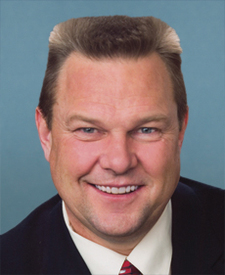
Jon Tester
AnalysisD MT · Senate
Healthcare
+13Government Operations
-25Environment
0Defense
+11Veterans Affairs
-5Finance
+7Veterans
-131Elections
-9National Security
-22Transportation
+14Education
-7Appropriations
-4Agriculture
+2Technology
+1Civil Rights
+8Criminal Justice
-17Trade
+8Foreign Policy
+1Housing
+1Labor
+7Industry Impact Profile
2630 industry impacts
How this is computed
P Primary sponsor · C Co-sponsor · Y Yea vote · N Nay vote
Weighted score (w:) uses strongest role per bill. Weights: Primary 1.0, Co-sponsor 0.3, Yea 0.1, Nay -0.1.
Bills where the legislator voted nay (without sponsorship) contribute -0.1 per bill. Equal yea and nay roll calls on the same bill contribute 0.
Vote date filters affect vote attribution; sponsorship is always included.
Positive-Effect Industries
Negative-Effect Industries
Click any row to see supporting clauses
Showing positive and negative-direction effects only. Mixed and uncertain effects are not included in these counts.
Sponsored & Cosponsored Bills
sres597-118
CosponsorRecognizing the heritage, culture, and contributions of American Indian, Alaska Native, and Native Hawaiian women in the United States.
s4997-118
CosponsorMaking supplemental appropriations for the Department of Veterans Affairs for the fiscal year ending September 30, 2024, and for other purposes.
s2795-118
Primary SponsorTo amend title 38, United States Code, to extend and modify certain authorities and requirements relating to the Department of Veterans Affairs, and for other purposes.
sres451-118
Primary SponsorPermitting the collection of clothing, toys, food, and housewares during the holiday season for charitable purposes in Senate buildings.
sres645-118
CosponsorDesignating the week of April 20 through April 28, 2024, as National Park Week.
sres925-118
CosponsorRelating to the death of the Honorable Fred R. Harris, former Senator for the State of Oklahoma.
sres902-118
CosponsorRelating to the death of Timothy Peter Johnson, former Senator for the State of South Dakota.
s5355-118
Cosponsor Passed SenateTo ensure that the National Advisory Council on Indian Education includes at least 1 member who is the president of a Tribal College or University.
sres897-118
CosponsorRecognizing National Native American Heritage Month and celebrating the heritages and cultures of Native Americans and the contributions of Native Americans to the United States.
s5285-118
Cosponsor IntroducedTo stop the shipment of illicit synthetic drugs via transportation networks in the United States, and for other purposes.
sres888-118
CosponsorHonoring the life of James Ralph Sasser, former Senator for the State of Tennessee.
s5194-118
Cosponsor IntroducedTo amend the Internal Revenue Code of 1986 to expand eligibility for the refundable credit for coverage under a qualified health plan.
sres881-118
CosponsorDesignating October 26, 2024, as the Day of the Deployed.
s5210-118
Primary Sponsor IntroducedTo improve mental health services of the Department of Veterans Affairs, and for other purposes.
sres879-118
Primary SponsorPermitting the collection of clothing, toys, food, and housewares during the holiday season for charitable purposes in Senate buildings.
sres853-118
CosponsorExpressing support for recognizing September 20 as National Service Dog Day.
sres851-118
CosponsorDesignating November 2, 2024, as National Bison Day.
sres818-118
CosponsorExpressing support for and celebrating the 80th anniversary of the Servicemen’s Readjustment Act of 1944.
s5052-118
Primary Sponsor IntroducedTo prohibit the importation of critical minerals from the Russian Federation.
s5007-118
Cosponsor IntroducedTo amend the Defense Production Act of 1950 with respect to foreign investments in United States agriculture, and for other purposes.
Loading countries...
Select a clause to see detailed analysis
Failed to load analysis
Please try again
Failed to load clauses
Please try again
Click an industry from the Impact Profile to view supporting clauses
Select a clause to see detailed analysis