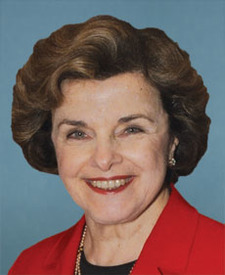
Dianne Feinstein
AnalysisD CA · Senate
Government Operations
-10Education
-37Environment
+15Healthcare
+14Finance
+15Criminal Justice
+26Elections
-10Housing
+41Transportation
+5Energy
-2Regulated Industries
-41Civil Rights
+20Judiciary
-63Technology
-1Labor
+13Native American Tribes
-35Defense
-6Agriculture
-3Foreign Policy
-15Immigration
-1Industry Impact Profile
2191 industry impacts
How this is computed
P Primary sponsor · C Co-sponsor · Y Yea vote · N Nay vote
Weighted score (w:) uses strongest role per bill. Weights: Primary 1.0, Co-sponsor 0.3, Yea 0.1, Nay -0.1.
Bills where the legislator voted nay (without sponsorship) contribute -0.1 per bill. Equal yea and nay roll calls on the same bill contribute 0.
Vote date filters affect vote attribution; sponsorship is always included.
Positive-Effect Industries
Negative-Effect Industries
Click any row to see supporting clauses
Showing positive and negative-direction effects only. Mixed and uncertain effects are not included in these counts.
Sponsored & Cosponsored Bills
sres21-118
Primary SponsorSupporting the observation of National Trafficking and Modern Slavery Prevention Month during the period beginning on January 1, 2023, and ending on February 1, 2023, to raise awareness of, and opposition to, human trafficking and modern slavery.
s2825-118
Cosponsor IntroducedTo award a Congressional Gold Medal to the United States Army Dustoff crews of the Vietnam War, collectively, in recognition of their extraordinary heroism and life-saving actions in Vietnam.
s2722-118
Cosponsor IntroducedTo address the needs of workers in industries likely to be impacted by rapidly evolving technologies.
s2645-118
Cosponsor ReportedTo reduce the health risks of heat by establishing the National Integrated Heat Health Information System within the National Oceanic and Atmospheric Administration and the National Integrated Heat Health Information System Interagency Committee to improve extreme heat preparedness, planning, and response, requiring a study, and establishing financial assistance programs to address heat effects, and for other purposes.
s2581-118
Cosponsor Passed SenateTo extend the Secure Rural Schools and Community Self-Determination Act of 2000.
s2701-118
Cosponsor IntroducedTo address the homelessness and housing crises, to move toward the goal of providing for a home for all Americans, and for other purposes.
s1-118
Cosponsor IntroducedTo expand Americans’ access to the ballot box and reduce the influence of big money in politics, and for other purposes.
s2443-118
Primary Sponsor ReportedMaking appropriations for energy and water development and related agencies for the fiscal year ending September 30, 2024, and for other purposes.
s2344-118
Cosponsor IntroducedTo expand Americans’ access to the ballot box and reduce the influence of big money in politics, and for other purposes.
s5-118
Cosponsor IntroducedTo prohibit discrimination on the basis of sex, gender identity, and sexual orientation, and for other purposes.
s2053-118
Cosponsor IntroducedTo protect freedom of travel and reproductive rights.
s1983-118
Cosponsor IntroducedTo require non-Federal prison, correctional, and detention facilities holding Federal prisoners or detainees under a contract with the Federal Government to make the same information available to the public that Federal prisons and correctional facilities are required to make available.
s1999-118
Cosponsor IntroducedTo protect an individual’s ability to access contraceptives and to engage in contraception and to protect a health care provider’s ability to provide contraceptives, contraception, and information related to contraception.
s1776-118
Cosponsor ReportedTo provide for the protection of and investment in certain Federal land in the State of California, and for other purposes.
s1677-118
Cosponsor IntroducedTo secure the Federal voting rights of persons when released from incarceration.
s1715-118
Primary Sponsor IntroducedTo direct the Secretary of Agriculture to select and implement landscape-scale forest restoration projects, to assist communities in increasing their resilience to wildfire, and for other purposes.
s1742-118
Cosponsor IntroducedTo modify the requirements applicable to locatable minerals on public domain land, and for other purposes.
s1723-118
Cosponsor ReportedTo establish the Truth and Healing Commission on Indian Boarding School Policies in the United States, and for other purposes.
s1664-118
Cosponsor ReportedTo allow Americans to earn paid sick time so that they can address their own health needs and the health needs of their families.
s1554-118
Cosponsor IntroducedTo grant a Federal charter to the National American Indian Veterans, Incorporated.
Loading countries...
Select a clause to see detailed analysis
Failed to load analysis
Please try again
Failed to load clauses
Please try again
Click an industry from the Impact Profile to view supporting clauses
Select a clause to see detailed analysis