To direct the Secretary of Agriculture to select and implement landscape-scale forest restoration projects, to assist communities in increasing their resilience to wildfire, and for other purposes.
Analysis under review: This bill has generated analysis that may be too generic or incomplete. Clause-level evidence remains available below.
Summary
What This Bill Does
This bill establishes comprehensive programs to increase forest restoration, wildfire resilience, and community preparedness across the National Forest System. It creates a conservation finance pilot program allowing private investment in forest restoration, establishes workforce development and training programs, and provides funding for fire-resistant infrastructure and wildfire detection equipment.
Who Benefits and How
- Conservation finance investors and developers gain new opportunities to invest up to $250 million in landscape-scale forest restoration projects with potential returns over 2-20 year terms.
- Disadvantaged communities and nonprofit organizations receive access to grants for land stewardship activities, forest restoration, and capacity building.
- Fire-prone communities and critical facilities benefit from microgrid development programs, fire-resistant weatherization materials, and doubled funding caps for home improvements.
- Universities and training institutions receive funding to establish prescribed fire training centers and workforce development programs.
Who Bears the Burden and How
- Forest Service must administer multiple new programs including conservation finance agreements, workforce development grants, and community capacity grants with significant reporting requirements.
- Secretaries of Agriculture, Interior, and Energy must coordinate on prescribed fire centers, wildfire detection equipment deployment, and microgrid programs.
- Dwelling unit owners receiving weatherization assistance must use fire- and drought-resistant building materials and incorporate wildfire mitigation planning.
Key Provisions
- Creates pilot program for up to 20 conservation finance agreements totaling $250 million for landscape-scale forest restoration
- Doubles weatherization assistance cap from $6,500 to $13,000 and adds fire-resistant materials
- Establishes Western prescribed fire training centers and innovative forestry workforce development grants
Evidence Chain:
This summary is generated from the full bill text using AI analysis. Expand "Detailed Analysis" below for identified beneficiaries/burden bearers.
At a Glance
What This Bill Does
Establishes landscape-scale forest restoration programs, conservation finance mechanisms, and community wildfire resilience initiatives to increase the pace of forest management and reduce wildfire risk across the National Forest System.
Key Policy Areas
Natural Resources, Energy, Workforce Development, Community Development, Wildfire Management
Primary Purpose
Establishes landscape-scale forest restoration programs, conservation finance mechanisms, and community wildfire resilience initiatives to increase the pace of forest management and reduce wildfire risk across the National Forest System.
Policy Domains
Title I - Conservation Finance
Identified Gains
Contextual inference, no direct clause citation- Conservation finance investors
- Forest restoration contractors
- Water utilities as downstream beneficiaries
Contextual inference, no direct clause citation
Identified Costs
Contextual inference, no direct clause citation- Forest Service administration
- Congress (oversight and appropriations)
Contextual inference, no direct clause citation
Title II - Community Resilience
Identified Gains
Contextual inference, no direct clause citation- Critical facilities in fire-prone areas
- Low-income homeowners receiving weatherization
- Technology companies producing fire detection equipment
Contextual inference, no direct clause citation
Identified Costs
Contextual inference, no direct clause citation- Dwelling unit owners (compliance with fire-resistant materials)
- Federal agencies (permitting and procurement review)
Contextual inference, no direct clause citation
Title III - Workforce Development and Community Capacity
Identified Gains
Contextual inference, no direct clause citation- Universities establishing fire training centers
- Nonprofits and local governments in disadvantaged communities
- Workers seeking forestry and fire management careers
Contextual inference, no direct clause citation
Identified Costs
Contextual inference, no direct clause citation- Forest Service grant administration
Contextual inference, no direct clause citation
Sponsors

Legislative Progress
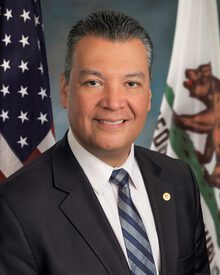
IntroducedMrs. Feinstein (for herself, Mr. Padilla, Mr. Daines, and Mr. …
Stakeholder Effects
cui bono?How this legislation distributes effects. Mention counts reflect frequency, not effect magnitude.
Congress (oversight committees), Department of Energy, Federal land management agencies
Positive-direction: Congress (oversight committees), Indian Tribes, Indian Tribes with critical facilities, State and Tribal fire management agencies
Negative-direction: Department of Energy, Federal land management agencies, Forest Service, Forest Service and Bureau of Land Management
Forest restoration contractors, Prescribed fire practitioners and trainees, Workers seeking forestry and fire management careers
Fire-resistant building materials manufacturers, Mass timber producers, Timber and biomass processors
Wildfire detection equipment manufacturers, Wildfire detection technology companies
Dwelling unit owners (compliance requirement), Low-income homeowners in fire-prone areas
Positive-direction: Low-income homeowners in fire-prone areas
Negative-direction: Dwelling unit owners (compliance requirement)
Communities at risk of wildfire, Low-income and minority communities near National Forests
Community colleges and vocational training institutions, Universities with fire science programs
Nonprofit forestry and fire training organizations, Nonprofit organizations in disadvantaged communities
Bill Structure & Actor Mappings
Who is "The Secretary" in each section?
- "the_secretary"
- → Secretary of Agriculture
- "the_secretary"
- → Secretary of Energy (for microgrids), Secretary of Agriculture and Secretary of Interior (for wildfire detection)
- "the_secretary"
- → Secretary of Agriculture
- "the_secretaries"
- → Secretary of Agriculture and Secretary of Interior (for prescribed fire centers)
Note: 'The Secretary' refers to Secretary of Agriculture in Titles I and III, but Secretary of Energy in Section 201
Key Definitions
Terms defined in this bill
A mutual benefit agreement of 2-20 years for a conservation finance project that may be contingent on appropriations and may include cancellation payments
A project on National Forest System land that uses a debt financing approach with loaned capital repaid by project beneficiaries
A low-income community or community with significant population systematically denied economic, social, or civic opportunities
We use a combination of our own taxonomy and classification in addition to large language models to assess meaning and potential beneficiaries. High confidence means strong textual evidence. Always verify with the original bill text.
Learn more about our methodology