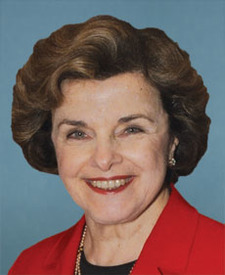
Dianne Feinstein
AnalysisD CA · Senate
Government Operations
-10Education
-37Environment
+15Healthcare
+14Finance
+15Criminal Justice
+26Elections
-10Housing
+41Transportation
+5Energy
-2Regulated Industries
-41Civil Rights
+20Judiciary
-63Technology
-1Labor
+13Native American Tribes
-35Defense
-6Agriculture
-3Foreign Policy
-15Immigration
-1Industry Impact Profile
2191 industry impacts
How this is computed
P Primary sponsor · C Co-sponsor · Y Yea vote · N Nay vote
Weighted score (w:) uses strongest role per bill. Weights: Primary 1.0, Co-sponsor 0.3, Yea 0.1, Nay -0.1.
Bills where the legislator voted nay (without sponsorship) contribute -0.1 per bill. Equal yea and nay roll calls on the same bill contribute 0.
Vote date filters affect vote attribution; sponsorship is always included.
Positive-Effect Industries
Negative-Effect Industries
Click any row to see supporting clauses
Showing positive and negative-direction effects only. Mixed and uncertain effects are not included in these counts.
Sponsored & Cosponsored Bills
sres289-118
Primary SponsorExpressing support for the designation of July 2023 as American Grown Flower Month.
sres21-118
Primary SponsorSupporting the observation of National Trafficking and Modern Slavery Prevention Month during the period beginning on January 1, 2023, and ending on February 1, 2023, to raise awareness of, and opposition to, human trafficking and modern slavery.
sres67-118
CosponsorSupporting the goals and ideals of Career and Technical Education Month.
s612-118
Cosponsor ReportedTo reauthorize the Lake Tahoe Restoration Act, and for other purposes.
sres382-118
Cosponsor In CommitteeRecognizing the month of October 2023 as Filipino American History Month and celebrating the history and culture of Filipino Americans and their immense contributions to the United States.
sres383-118
Cosponsor In CommitteeSupporting the goals and ideals of Red Ribbon Week during the period of October 23 through October 31, 2023.
s2985-118
Cosponsor IntroducedTo expand youth access to voting, and for other purposes.
sres378-118
Cosponsor In CommitteeExpressing support for the recognition of the week of September 25 through October 1, 2023, as Asian American and Native American Pacific Islander-Serving Institutions Week.
sres384-118
Cosponsor In CommitteeRecognizing the seriousness of polycystic ovary syndrome (PCOS) and expressing support for the designation of September 2023 as PCOS Awareness Month.
sres372-118
Cosponsor In CommitteeExpressing concern about the spreading problem of book banning and the proliferation of threats to freedom of expression in the United States.
sres371-118
Cosponsor In CommitteeSupporting the designation of the week of September 18 through September 22, 2023, as Malnutrition Awareness Week.
s2960-118
Cosponsor IntroducedTo modify certain notice requirements, to study certain election requirements, to clarify certain election requirements, and for other purposes.
s2926-118
Cosponsor IntroducedTo prohibit the importation, sale, manufacture, transfer, or possession of .50 caliber rifles, and for other purposes.
sres369-118
CosponsorExpressing support for the designation of September 2023 as Sickle Cell Disease Awareness Month in order to educate communities across the United States about sickle cell disease and the need for research, early detection methods, effective treatments, and preventative care programs with respect to complications from sickle cell disease and conditions related to sickle cell disease.
s2902-118
Cosponsor IntroducedTo prevent harassment at institutions of higher education, and for other purposes.
sres360-118
Cosponsor In CommitteeDesignating the week of September 25 through September 29, 2023, as National Hazing Awareness Week.
s2895-118
Cosponsor IntroducedTo amend the Internal Revenue Code of 1986 to provide for a refundable adoption tax credit.
sres359-118
CosponsorRecognizing and supporting the goals and ideals of National Forensic Science Week.
sres353-118
CosponsorExpressing support for the designation of the week of September 16 through September 23, 2023, as National Estuaries Week.
s2843-118
Cosponsor IntroducedTo amend the Help America Vote Act of 2002 to require States to provide for same day voter registration.
Loading countries...
Select a clause to see detailed analysis
Failed to load analysis
Please try again
Failed to load clauses
Please try again
Click an industry from the Impact Profile to view supporting clauses
Select a clause to see detailed analysis