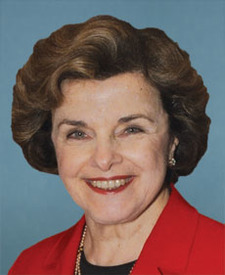
Dianne Feinstein
AnalysisD CA · Senate
Government Operations
-10Education
-37Environment
+15Healthcare
+14Finance
+15Criminal Justice
+26Elections
-10Housing
+41Transportation
+5Energy
-2Regulated Industries
-41Civil Rights
+20Judiciary
-63Technology
-1Labor
+13Native American Tribes
-35Defense
-6Agriculture
-3Foreign Policy
-15Immigration
-1Industry Impact Profile
2191 industry impacts
How this is computed
P Primary sponsor · C Co-sponsor · Y Yea vote · N Nay vote
Weighted score (w:) uses strongest role per bill. Weights: Primary 1.0, Co-sponsor 0.3, Yea 0.1, Nay -0.1.
Bills where the legislator voted nay (without sponsorship) contribute -0.1 per bill. Equal yea and nay roll calls on the same bill contribute 0.
Vote date filters affect vote attribution; sponsorship is always included.
Positive-Effect Industries
Negative-Effect Industries
Click any row to see supporting clauses
Showing positive and negative-direction effects only. Mixed and uncertain effects are not included in these counts.
Sponsored & Cosponsored Bills
sres67-118
CosponsorSupporting the goals and ideals of Career and Technical Education Month.
s2926-118
Cosponsor IntroducedTo prohibit the importation, sale, manufacture, transfer, or possession of .50 caliber rifles, and for other purposes.
s2817-118
Cosponsor IntroducedTo amend the Fair Labor Standards Act of 1938 to prohibit employers from paying employees in the garment industry by piece rate, to require manufacturers and contractors in the garment industry to register with the Department of Labor, and for other purposes.
s2769-118
Cosponsor IntroducedTo amend the Fair Labor Standards Act of 1938 and the Portal-to-Portal Act of 1947 to prevent wage theft and assist in the recovery of stolen wages, to authorize the Secretary of Labor to administer grants to prevent wage and hour violations, and for other purposes.
s2722-118
Cosponsor IntroducedTo address the needs of workers in industries likely to be impacted by rapidly evolving technologies.
s2645-118
Cosponsor ReportedTo reduce the health risks of heat by establishing the National Integrated Heat Health Information System within the National Oceanic and Atmospheric Administration and the National Integrated Heat Health Information System Interagency Committee to improve extreme heat preparedness, planning, and response, requiring a study, and establishing financial assistance programs to address heat effects, and for other purposes.
s2701-118
Cosponsor IntroducedTo address the homelessness and housing crises, to move toward the goal of providing for a home for all Americans, and for other purposes.
s2627-118
Cosponsor IntroducedTo amend the Employee Retirement Income Security Act of 1974 to provide for greater spousal protection under defined contribution plans, and for other purposes.
s2698-118
Primary Sponsor IntroducedTo require the Secretary of Agriculture to carry out a program to provide payments to producers experiencing certain crop losses as a result of a disaster.
s2488-118
Cosponsor IntroducedTo provide for increases in the Federal minimum wage, and for other purposes.
s2443-118
Primary Sponsor ReportedMaking appropriations for energy and water development and related agencies for the fiscal year ending September 30, 2024, and for other purposes.
s2383-118
Cosponsor IntroducedTo amend the Clean Air Act to establish a grant program for supporting local communities in detecting, preparing for, communicating about, or mitigating the environmental and public health impacts of wildfire smoke and extreme heat, and for other purposes.
s2344-118
Cosponsor IntroducedTo expand Americans’ access to the ballot box and reduce the influence of big money in politics, and for other purposes.
s2221-118
Cosponsor IntroducedTo amend the Internal Revenue Code of 1986 to clarify that all provisions shall apply to legally married same-sex couples in the same manner as other married couples, and for other purposes.
s2202-118
Primary Sponsor IntroducedTo amend the Omnibus Public Land Management Act of 2009 to authorize the modification of transferred works to increase public benefits and other project benefits as part of extraordinary operation and maintenance work, and for other purposes.
s2134-118
Cosponsor IntroducedTo amend the Federal Crop Insurance Act to require research and development regarding a policy to insure wine grapes against losses due to smoke exposure, and for other purposes.
s2162-118
Primary Sponsor IntroducedTo support water infrastructure in Reclamation States, and for other purposes.
s2171-118
Cosponsor IntroducedTo permit legally married same-sex couples to amend their filing status for tax returns outside the statute of limitations.
s2161-118
Primary Sponsor IntroducedTo provide financial assistance for projects to address certain subsidence impacts in the State of California, and for other purposes.
s1917-118
Cosponsor IntroducedTo amend the Clean Air Act to provide for the establishment of standards to limit the carbon intensity of the fuel used by certain vessels, and for other purposes.
Loading countries...
Select a clause to see detailed analysis
Failed to load analysis
Please try again
Failed to load clauses
Please try again
Click an industry from the Impact Profile to view supporting clauses
Select a clause to see detailed analysis