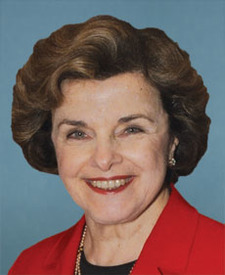
Dianne Feinstein
AnalysisD CA · Senate
Government Operations
-10Education
-37Environment
+15Healthcare
+14Finance
+15Criminal Justice
+26Elections
-10Housing
+41Transportation
+5Energy
-2Regulated Industries
-41Civil Rights
+20Judiciary
-63Technology
-1Labor
+13Native American Tribes
-35Defense
-6Agriculture
-3Foreign Policy
-15Immigration
-1Industry Impact Profile
2191 industry impacts
How this is computed
P Primary sponsor · C Co-sponsor · Y Yea vote · N Nay vote
Weighted score (w:) uses strongest role per bill. Weights: Primary 1.0, Co-sponsor 0.3, Yea 0.1, Nay -0.1.
Bills where the legislator voted nay (without sponsorship) contribute -0.1 per bill. Equal yea and nay roll calls on the same bill contribute 0.
Vote date filters affect vote attribution; sponsorship is always included.
Positive-Effect Industries
Negative-Effect Industries
Click any row to see supporting clauses
Showing positive and negative-direction effects only. Mixed and uncertain effects are not included in these counts.
Sponsored & Cosponsored Bills
s2652-118
Cosponsor IntroducedTo amend chapter 44 of title 18, United States Code, to ensure that all firearms are traceable, and for other purposes.
s2344-118
Cosponsor IntroducedTo expand Americans’ access to the ballot box and reduce the influence of big money in politics, and for other purposes.
s1983-118
Cosponsor IntroducedTo require non-Federal prison, correctional, and detention facilities holding Federal prisoners or detainees under a contract with the Federal Government to make the same information available to the public that Federal prisons and correctional facilities are required to make available.
s1742-118
Cosponsor IntroducedTo modify the requirements applicable to locatable minerals on public domain land, and for other purposes.
sres216-118
CosponsorDesignating the week of May 14 through May 20, 2023, as National Police Week.
s1475-118
Cosponsor IntroducedTo amend the Controlled Substances Act to prohibit certain acts related to fentanyl, analogues of fentanyl, and counterfeit substances, and for other purposes.
s1387-118
Cosponsor Passed SenateTo reauthorize the Project Safe Neighborhoods Grant Program Authorization Act of 2018, and for other purposes.
s1383-118
Cosponsor IntroducedTo regulate firearm silencers and firearm mufflers.
s1343-118
Cosponsor IntroducedTo amend the Immigration and Nationality Act to alter the definition of conviction, and for other purposes.
s1319-118
Cosponsor IntroducedTo address the importation and proliferation of machinegun conversion devices.
s1318-118
Cosponsor IntroducedTo provide enhanced protections for election workers.
s1306-118
Cosponsor IntroducedTo reauthorize the COPS ON THE BEAT grant program.
s1207-118
Cosponsor ReportedTo establish a National Commission on Online Child Sexual Exploitation Prevention, and for other purposes.
s1170-118
Cosponsor ReportedTo reauthorize and update the Project Safe Childhood program, and for other purposes.
s1144-118
Cosponsor Passed SenateTo establish a grant program to provide assistance to local law enforcement agencies, and for other purposes.
s994-118
Cosponsor Passed SenateTo amend the Omnibus Crime Control and Safe Streets Act of 1968 to provide that COPS grant funds may be used for local law enforcement recruits to attend schools or academies if the recruits agree to serve in precincts of law enforcement agencies in their communities.
s1007-118
Cosponsor IntroducedTo establish in the Bureau of Democracy, Human Rights, and Labor of the Department of State a Special Envoy for the Human Rights of LGBTQI+ Peoples, and for other purposes.
s929-118
Cosponsor IntroducedTo amend the Foreign Assistance Act of 1961 to authorize the use of Federal foreign assistance funds for comprehensive reproductive health care services, and for other purposes.
s707-118
Cosponsor IntroducedTo amend the Animal Welfare Act to allow for the retirement of certain animals used in Federal research, and for other purposes.
s640-118
Cosponsor IntroducedTo suspend the enforcement of certain civil liabilities of Federal employees and contractors during a lapse in appropriations, or during a breach of the statutory debt limit, and for other purposes.
Loading countries...
Select a clause to see detailed analysis
Failed to load analysis
Please try again
Failed to load clauses
Please try again
Click an industry from the Impact Profile to view supporting clauses
Select a clause to see detailed analysis