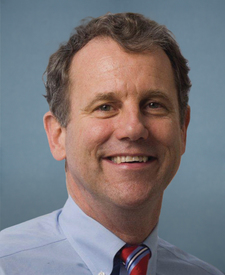
Sherrod Brown
AnalysisD OH · Senate
Healthcare
+126Government Operations
-20Education
-87Finance
-31Environment
+39Transportation
-30Labor
+30Elections
-9Criminal Justice
-3Defense
+15Civil Rights
+22Housing
+11Trade
-25Healthcare Consumers
-50Regulated Industries
-31Agriculture
-12Foreign Policy
+3Energy
+1Technology
+6Native American Tribes
-33Industry Impact Profile
2917 industry impacts
How this is computed
P Primary sponsor · C Co-sponsor · Y Yea vote · N Nay vote
Weighted score (w:) uses strongest role per bill. Weights: Primary 1.0, Co-sponsor 0.3, Yea 0.1, Nay -0.1.
Bills where the legislator voted nay (without sponsorship) contribute -0.1 per bill. Equal yea and nay roll calls on the same bill contribute 0.
Vote date filters affect vote attribution; sponsorship is always included.
Positive-Effect Industries
Negative-Effect Industries
Click any row to see supporting clauses
Showing positive and negative-direction effects only. Mixed and uncertain effects are not included in these counts.
Sponsored & Cosponsored Bills
sres697-118
CosponsorDesignating the week of May 12 through May 18, 2024, as National Police Week.
s4363-118
Cosponsor IntroducedTo secure the rights of public employees to organize, act concertedly, and bargain collectively, which safeguard the public interest and promote the free and unobstructed flow of commerce, and for other purposes.
s4032-118
Cosponsor IntroducedTo authorize magistrate judges to issue arrest warrants for certain criminal aliens.
s3303-118
Cosponsor IntroducedTo amend title 18, United States Code, to protect more victims of domestic violence by preventing their abusers from possessing or receiving firearms, and for other purposes.
s2637-118
Primary Sponsor IntroducedTo develop a scenario-based training curriculum for law enforcement personnel, and for other purposes.
s2344-118
Cosponsor IntroducedTo expand Americans’ access to the ballot box and reduce the influence of big money in politics, and for other purposes.
s1762-118
Cosponsor IntroducedTo prohibit the use of corporal punishment in schools, and for other purposes.
s1750-118
Cosponsor IntroducedTo prohibit and prevent seclusion, mechanical restraint, chemical restraint, and dangerous restraints that restrict breathing, and to prevent and reduce the use of physical restraint in schools, and for other purposes.
s1730-118
Cosponsor IntroducedTo strengthen the collection of data regarding interactions between law enforcement officers and individuals with disabilities.
sres216-118
CosponsorDesignating the week of May 14 through May 20, 2023, as National Police Week.
s1600-118
Cosponsor IntroducedMaking further supplemental appropriations for the fiscal year ending September 30, 2023, for border management activities, and for other purposes.
s1606-118
Cosponsor IntroducedTo end preventable maternal mortality, severe maternal morbidity, and maternal health disparities in the United States, and for other purposes.
s1507-118
Primary Sponsor IntroducedTo provide grants to State, local, territorial, and Tribal law enforcement agencies to purchase chemical screening devices and train personnel to use chemical screening devices in order to enhance law enforcement efficiency and protect law enforcement officers.
s1271-118
Cosponsor IntroducedTo impose sanctions with respect to trafficking of illicit fentanyl and its precursors by transnational criminal organizations, including cartels, and for other purposes.
s1251-118
Cosponsor IntroducedTo reform sentencing laws and correctional institutions, and for other purposes.
s1084-118
Cosponsor IntroducedTo eliminate racial, religious, and other discriminatory profiling by law enforcement, and for other purposes.
sres157-118
Cosponsor In CommitteeCommemorating the 25th anniversary of the signing of the Good Friday Agreement, and for other purposes.
s929-118
Cosponsor IntroducedTo amend the Foreign Assistance Act of 1961 to authorize the use of Federal foreign assistance funds for comprehensive reproductive health care services, and for other purposes.
s942-118
Cosponsor IntroducedTo create a point of order against legislation modifying the number of Justices of the Supreme Court of the United States.
s844-118
Cosponsor IntroducedTo authorize the declaration of a hazardous train event, and for other purposes.
Loading countries...
Select a clause to see detailed analysis
Failed to load analysis
Please try again
Failed to load clauses
Please try again
Click an industry from the Impact Profile to view supporting clauses
Select a clause to see detailed analysis