Healthcare
177 bills 598 analyzed clauses
Explore affected groups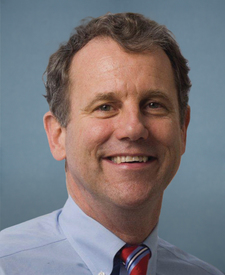
D OH · Senate
Policy Effects
Estimated effects on people, organizations, and industries in bills this legislator sponsored, cosponsored, or voted on. Includes bills they voted against.
These are assessments of legislative text, not measurements of realized outcomes or the legislator’s intent.
This selection could not be loaded. Your current view is still available.
Open the requested selection in a full pageStart with a policy area to see the specific groups affected.
177 bills 598 analyzed clauses
Explore affected groups152 bills 485 analyzed clauses
Explore affected groups92 bills 302 analyzed clauses
Explore affected groups88 bills 229 analyzed clauses
Explore affected groups86 bills 327 analyzed clauses
Explore affected groups53 bills 122 analyzed clauses
Explore affected groups47 bills 190 analyzed clauses
Explore affected groups46 bills 100 analyzed clauses
Explore affected groups43 bills 64 analyzed clauses
Explore affected groups40 bills 130 analyzed clauses
Explore affected groups37 bills 177 analyzed clauses
Explore affected groups29 bills 83 analyzed clauses
Explore affected groups27 bills 56 analyzed clauses
Explore affected groups26 bills 112 analyzed clauses
Explore affected groups21 bills 33 analyzed clauses
Explore affected groups20 bills 44 analyzed clauses
Explore affected groups19 bills 56 analyzed clauses
Explore affected groups15 bills 59 analyzed clauses
Explore affected groups12 bills 58 analyzed clauses
Explore affected groups11 bills 44 analyzed clauses
Explore affected groups10 bills 39 analyzed clauses
Explore affected groups8 bills 11 analyzed clauses
Explore affected groups7 bills 35 analyzed clauses
Explore affected groups7 bills 21 analyzed clauses
Explore affected groups6 bills 20 analyzed clauses
Explore affected groups6 bills 11 analyzed clauses
Explore affected groups5 bills 14 analyzed clauses
Explore affected groups4 bills 28 analyzed clauses
Explore affected groups3 bills 24 analyzed clauses
Explore affected groups2 bills 95 analyzed clauses
Explore affected groups2 bills 4 analyzed clauses
Explore affected groups2 bills 4 analyzed clauses
Explore affected groups1 bill 36 analyzed clauses
Explore affected groups1 bill 26 analyzed clauses
Explore affected groups1 bill 16 analyzed clauses
Explore affected groups1 bill 13 analyzed clauses
Explore affected groups1 bill 13 analyzed clauses
Explore affected groups1 bill 11 analyzed clauses
Explore affected groups1 bill 9 analyzed clauses
Explore affected groups1 bill 9 analyzed clauses
Explore affected groups1 bill 7 analyzed clauses
Explore affected groups1 bill 6 analyzed clauses
Explore affected groups1 bill 5 analyzed clauses
Explore affected groups1 bill 4 analyzed clauses
Explore affected groups1 bill 3 analyzed clauses
Explore affected groups1 bill 3 analyzed clauses
Explore affected groups1 bill 3 analyzed clauses
Explore affected groups1 bill 2 analyzed clauses
Explore affected groups1 bill 2 analyzed clauses
Explore affected groups1 bill 2 analyzed clauses
Explore affected groups1 bill 2 analyzed clauses
Explore affected groups1 bill 2 analyzed clauses
Explore affected groups1 bill 1 analyzed clause
Explore affected groups1 bill 1 analyzed clause
Explore affected groups1 bill 1 analyzed clause
Explore affected groups1 bill 1 analyzed clause
Explore affected groups1 bill 1 analyzed clause
Explore affected groups1 bill 1 analyzed clause
Explore affected groups1 bill 1 analyzed clause
Explore affected groupsPotential benefits are effects assessed as favorable to the named group. Potential burdens impose costs, restrictions, risks, or lost opportunities on that group.
Mixed effects contain countervailing effects on the same group. Unclear effects have an undetermined direction. A group can have separate benefits and burdens; these are counted separately.
Counts describe the number of identified effects, not their size or public value. Bill and clause counts are distinct within each view. Shared evidence may appear under several groups or policy areas, so their counts should not be added together.
Historical bill versions are included. Clauses analyzed in different versions count separately. A bill’s current status does not establish that every analyzed provision was enacted.
Only direct effects with high or medium confidence in the policy-area assignment are included. Bills are connected through sponsorship, cosponsorship, or Yea/Nay votes; a vote against a bill does not reverse its assessed effects. Vote dates filter recorded votes and vote-linked bills; sponsorship remains included.
Designating the week of February 6 through 10, 2023, as National School Counseling Week.
Designating the week of February 5 through 9, 2024, as National School Counseling Week.
Supporting the goals and ideals of Career and Technical Education Month.
To authorize a grant program for educational institutions to analyze, digitize, and map historic records relating to housing discrimination, and for other purposes.
Designating the week of September 15 through September 21, 2024, as Community School Coordinators Appreciation Week.
Expressing support for the recognition of September 23, 2024, to September 29, 2024, as Asian American and Native American Pacific Islander-Serving Institutions Week.
To amend the Child Care Access Means Parents In School Program under the Higher Education Act of 1965.
To prevent discrimination, including harassment, in employment.
To remove educational barriers to Federal employment for workers who are skilled through alternative routes, and for other purposes.
To improve the structure of the Federal Pell Grant program, and for other purposes.
Recognizing the contributions of African Americans to the musical heritage of the United States and the need for greater access to music education for African-American students and designating June 2024 as African-American Music Appreciation Month.
To effectively staff the high-need public elementary schools and secondary schools of the United States with school-based mental health services providers.
To improve access to oral health care for vulnerable and underserved populations.
To provide emergency assistance to States, territories, Tribal nations, and local areas affected by substance use disorder, including the use of opioids and stimulants, and to make financial assistance available to States, territories, Tribal nations, local areas, public or private nonprofit entities, and certain health providers, to provide for the development, organization, coordination, and operation of more effective and cost efficient systems for the delivery of essential services to individuals with substance use disorder and their families.
Recognizing the designation of April as Community College Month to celebrate more than 1,000 institutions throughout the United States supporting access to higher education and workforce training, and more broadly sustaining and advancing the economic prosperity of the United States.
To support the direct care professional workforce, and for other purposes.
To require a study on public health impacts as a consequence of the February 3, 2023, train derailment in East Palestine, Ohio.
To provide technical assistance and grants for faith-based organizations, institutions of higher education, and local governments to increase the supply of affordable rental housing, and for other purposes.
To authorize the Director of the Centers for Disease Control and Prevention to carry out a Social Determinants of Health Program, and for other purposes.
To amend the Voting Rights Act of 1965 to revise the criteria for determining which States and political subdivisions are subject to section 4 of the Act, and for other purposes.
Loading countries...
Select a clause to see detailed analysis
Failed to load analysis
Please try again
Failed to load clauses
Please try again
Explore affected groups in Policy Effects to view supporting evidence. Existing clause links also open here.
Select a clause to see detailed analysis