To support the direct care professional workforce, and for other purposes.
Analysis under review: This bill has generated analysis that may be too generic or incomplete. Clause-level evidence remains available below.
Summary
What This Bill Does
This bill, To support the direct care professional workforce, and for other purposes., changes federal law or congressional policy affecting workers, employers, and labor regulators. The main policy domain is Labor, Healthcare, Government Operations.
Who Benefits and How
workers, employers, and labor regulators may benefit from new authority, funding, eligibility, regulatory clarity, or reduced risk created by the bill.
Who Bears the Burden and How
federal implementing agencies, workers, employers, and labor regulators may take on implementation duties, reporting obligations, compliance costs, or oversight responsibilities.
Key Provisions
- Section id09F29D64022743B59FF14E47753ED089: 1. Short title; table of contents This Act may be cited as the Long-Term Care Workforce Support Act. The table of contents for this Act is as follows:
- Section id54884a90e8674531956bfd602c4348f0: 2. Findings and purposes Congress finds the following: The nearly 5,000,000 direct care professionals in the United States play a vital role in supporting the...
- Section id9bba9bbeb08f4b4fadb08b1ba4685f4e: 3. Definitions In this Act: The term activities of daily living means basic, personal, everyday activities, including tasks such as eating, toileting,...
- Section id83170d5b9ee242bf972131fd2a330840: 101. Additional support for Medicaid long-term care services provided by direct care professionals Section 1905 of the Social Security Act (42 U.S.C. 1396d) is...
- Section id37f7ceab59dc4ec1b51ebabfc1a18e23: 102. Additional support for Medicaid long-term care services and direct care professionals Not later than 18 months after the date of enactment of this Act,...
Evidence Chain:
This summary is generated from the full bill text using AI analysis. Expand "Detailed Analysis" below for identified beneficiaries/burden bearers with clause-level evidence links.
At a Glance
What This Bill Does
This bill, To support the direct care professional workforce, and for other purposes., changes federal law or congressional policy affecting workers, employers, and labor regulators.
Key Policy Areas
Labor, Healthcare, Government Operations
Primary Purpose
This bill, To support the direct care professional workforce, and for other purposes., changes federal law or congressional policy affecting workers, employers, and labor regulators.
Policy Domains
Whole bill
Identified Gains
- workers, employers, and labor regulators
Identified Costs
- federal implementing agencies
- workers, employers, and labor regulators
Sponsors
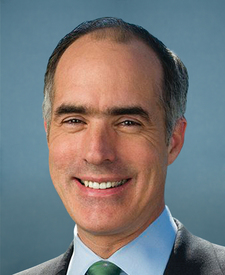

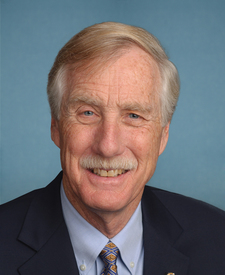

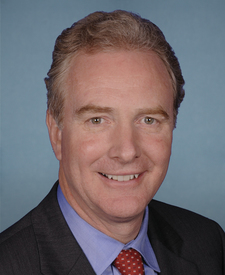
Legislative Progress
IntroducedMr. Casey (for himself, Mr. Kaine, Ms. Baldwin, Mr. Wyden, …
Impact analysis is available but no clear stakeholder effects identified. View clause-level analysis →
Bill Structure & Actor Mappings
Who is "The Secretary" in each section?
- "the_commission"
- → The commission identified in the operative section
- "the_administrator"
- → The Administrator identified in the operative section
- "secretary_of_labor"
- → Secretary of Labor
- "secretary_of_education"
- → Secretary of Education
- "secretary_of_health_and_human_services"
- → Secretary of Health and Human Services
Key Definitions
Terms defined in this bill
the poverty line (as defined in section 673(2) of the Omnibus Budget Reconciliation Act of 1981, including any revision required by such section applicable to a family of the size involved).(7)Indian tribe
an individual who— is a qualified home health aide, as defined in section 484.80(a) of title 42, Code of Federal Regulations
an education program that— is accredited by— the Council on Academic Accreditation in Audiology and Speech-Language Pathology or the Accreditation Commission for Audiology Education
an entity— that is— a State
an education program that— is accredited by— the Council on Academic Accreditation in Audiology and Speech-Language Pathology or the Accreditation Commission for Audiology Education
the process by which the Secretary— targets highly noncompliant industries, as identified by the Secretary, using industry-specific structures to influence, and ultimately reform, networks of interconnected employers
an individual who— is a qualified home health aide, as defined in section 484.80(a) of title 42, Code of Federal Regulations
any time a covered entity expects a direct care professional to— be available to work
a person who is— any person who is not covered under another clause of this subparagraph
an individual— whose income does not exceed 200 percent of the poverty line (as defined in section 2110(c)(5)) applicable to a family of the size involved
assistance or services— provided to an individual who is not an inpatient or resident of a hospital or institution for mental disease
factors specific to a patient that may increase the likelihood or severity of a workplace violence incident, including— a patient’s treatment and medication status, and history of violence and use of drugs or alcohol
We use a combination of our own taxonomy and classification in addition to large language models to assess meaning and potential beneficiaries. High confidence means strong textual evidence. Always verify with the original bill text.
Learn more about our methodology