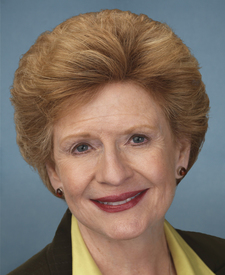
Debbie Stabenow
AnalysisD MI · Senate
Healthcare
+56Education
+7Agriculture
+188Government Operations
-21Finance
+14Environment
+46Labor
+32Elections
-9Transportation
-8Criminal Justice
-1Energy
+21Civil Rights
+1Foreign Policy
-9Regulated Industries
-36Healthcare Consumers
-47Immigration
-19Defense
-3Native American Tribes
-42Trade
+20Technology
+14Industry Impact Profile
2972 industry impacts
How this is computed
P Primary sponsor · C Co-sponsor · Y Yea vote · N Nay vote
Weighted score (w:) uses strongest role per bill. Weights: Primary 1.0, Co-sponsor 0.3, Yea 0.1, Nay -0.1.
Bills where the legislator voted nay (without sponsorship) contribute -0.1 per bill. Equal yea and nay roll calls on the same bill contribute 0.
Vote date filters affect vote attribution; sponsorship is always included.
Positive-Effect Industries
Negative-Effect Industries
Click any row to see supporting clauses
Showing positive and negative-direction effects only. Mixed and uncertain effects are not included in these counts.
Sponsored & Cosponsored Bills
s5227-118
Cosponsor IntroducedTo reaffirm and clarify the Federal relationships of the Grand River Bands of Ottawa Indians of Michigan as a federally recognized Indian tribe, and for other purposes.
s4693-118
Primary Sponsor IntroducedTo amend the Internal Revenue Code of 1986 to provide an investment credit for converting non-residential buildings to affordable housing.
s4300-118
Cosponsor IntroducedTo require the Secretary of Labor to maintain a publicly available list of all employers that relocate a call center or contract call center work overseas, to make such companies ineligible for Federal grants or guaranteed loans, and to require disclosure of the physical location of business agents engaging in customer service communications, and for other purposes.
s4243-118
Cosponsor IntroducedTo award posthumously the Congressional Gold Medal to Shirley Chisholm.
s4158-118
Cosponsor IntroducedTo direct the Federal Communications Commission to take certain actions to increase diversity of ownership in the broadcasting industry, and for other purposes.
s4120-118
Cosponsor IntroducedTo support the direct care professional workforce, and for other purposes.
s3657-118
Cosponsor IntroducedTo amend the Internal Revenue Code of 1986 to enhance the Child and Dependent Care Tax Credit and make the credit fully refundable for certain taxpayers.
s3367-118
Cosponsor IntroducedTo amend the Internal Revenue Code of 1986 to eliminate tax loopholes that allow billionaires to defer tax indefinitely through planning strategies such as buy, borrow, die, to modify over 30 tax provisions so that billionaires are required to pay taxes annually, and for other purposes.
s3008-118
Cosponsor IntroducedTo provide back pay to Federal contractors, and for other purposes.
s2895-118
Cosponsor IntroducedTo amend the Internal Revenue Code of 1986 to provide for a refundable adoption tax credit.
s2741-118
Cosponsor IntroducedTo amend title II of the Social Security Act to increase survivors benefits for disabled widows, widowers, and surviving divorced spouses, and for other purposes.
s2627-118
Cosponsor IntroducedTo amend the Employee Retirement Income Security Act of 1974 to provide for greater spousal protection under defined contribution plans, and for other purposes.
s2515-118
Cosponsor IntroducedTo amend the Internal Revenue Code of 1986 and the Small Business Act to expand the availability of employee stock ownership plans in S corporations, and for other purposes.
s1-118
Cosponsor IntroducedTo expand Americans’ access to the ballot box and reduce the influence of big money in politics, and for other purposes.
s2344-118
Cosponsor IntroducedTo expand Americans’ access to the ballot box and reduce the influence of big money in politics, and for other purposes.
s2277-118
Cosponsor IntroducedTo increase the benefits guaranteed in connection with certain pension plans, and for other purposes.
s2060-118
Cosponsor IntroducedTo amend the Agricultural Foreign Investment Disclosure Act of 1978 to strengthen oversight over foreign investment in the United States agricultural industry, and for other purposes.
s1992-118
Cosponsor IntroducedTo amend the Internal Revenue Code of 1986 to expand the earned income and child tax credits, and for other purposes.
s1714-118
Cosponsor IntroducedTo provide paid family and medical leave benefits to certain individuals, and for other purposes.
s1695-118
Cosponsor IntroducedTo amend the Internal Revenue Code of 1986 to provide a credit to issuers of American infrastructure bonds.
Loading countries...
Select a clause to see detailed analysis
Failed to load analysis
Please try again
Failed to load clauses
Please try again
Click an industry from the Impact Profile to view supporting clauses
Select a clause to see detailed analysis