Government Operations
36 bills 212 analyzed clauses
Explore affected groups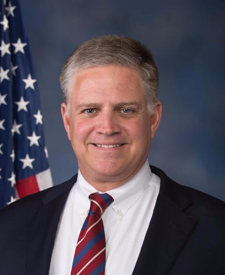
R GA-3 · House
Policy Effects
Estimated effects on people, organizations, and industries in bills this legislator sponsored, cosponsored, or voted on. Includes bills they voted against.
These are assessments of legislative text, not measurements of realized outcomes or the legislator’s intent.
This selection could not be loaded. Your current view is still available.
Open the requested selection in a full pageStart with a policy area to see the specific groups affected.
36 bills 212 analyzed clauses
Explore affected groups32 bills 150 analyzed clauses
Explore affected groups25 bills 151 analyzed clauses
Explore affected groups25 bills 67 analyzed clauses
Explore affected groups20 bills 194 analyzed clauses
Explore affected groups17 bills 60 analyzed clauses
Explore affected groups12 bills 59 analyzed clauses
Explore affected groups12 bills 51 analyzed clauses
Explore affected groups12 bills 30 analyzed clauses
Explore affected groups11 bills 39 analyzed clauses
Explore affected groups11 bills 21 analyzed clauses
Explore affected groups9 bills 23 analyzed clauses
Explore affected groups8 bills 28 analyzed clauses
Explore affected groups7 bills 39 analyzed clauses
Explore affected groups7 bills 13 analyzed clauses
Explore affected groups7 bills 10 analyzed clauses
Explore affected groups5 bills 14 analyzed clauses
Explore affected groups5 bills 5 analyzed clauses
Explore affected groups4 bills 26 analyzed clauses
Explore affected groups4 bills 4 analyzed clauses
Explore affected groups3 bills 5 analyzed clauses
Explore affected groups2 bills 9 analyzed clauses
Explore affected groups2 bills 4 analyzed clauses
Explore affected groups2 bills 2 analyzed clauses
Explore affected groups1 bill 21 analyzed clauses
Explore affected groups1 bill 11 analyzed clauses
Explore affected groups1 bill 8 analyzed clauses
Explore affected groups1 bill 6 analyzed clauses
Explore affected groups1 bill 4 analyzed clauses
Explore affected groups1 bill 4 analyzed clauses
Explore affected groups1 bill 3 analyzed clauses
Explore affected groups1 bill 3 analyzed clauses
Explore affected groups1 bill 2 analyzed clauses
Explore affected groups1 bill 2 analyzed clauses
Explore affected groups1 bill 2 analyzed clauses
Explore affected groups1 bill 2 analyzed clauses
Explore affected groups1 bill 1 analyzed clause
Explore affected groups1 bill 1 analyzed clause
Explore affected groups1 bill 1 analyzed clause
Explore affected groups1 bill 1 analyzed clause
Explore affected groups1 bill 1 analyzed clause
Explore affected groups1 bill 1 analyzed clause
Explore affected groupsPotential benefits are effects assessed as favorable to the named group. Potential burdens impose costs, restrictions, risks, or lost opportunities on that group.
Mixed effects contain countervailing effects on the same group. Unclear effects have an undetermined direction. A group can have separate benefits and burdens; these are counted separately.
Counts describe the number of identified effects, not their size or public value. Bill and clause counts are distinct within each view. Shared evidence may appear under several groups or policy areas, so their counts should not be added together.
Historical bill versions are included. Clauses analyzed in different versions count separately. A bill’s current status does not establish that every analyzed provision was enacted.
Only direct effects with high or medium confidence in the policy-area assignment are included. Bills are connected through sponsorship, cosponsorship, or Yea/Nay votes; a vote against a bill does not reverse its assessed effects. Vote dates filter recorded votes and vote-linked bills; sponsorship remains included.
To amend title VII of the Social Security Act to provide for a single point of contact at the Social Security Administration for individuals who are victims of identity theft.
To amend title VII of the Social Security Act to provide for a single point of contact at the Social Security Administration for individuals who are victims of identity theft.
To amend title II of the Social Security Act to provide for the reissuance of social security account numbers to young children in cases where confidentiality has been compromised.
To amend the Internal Revenue Code of 1986 to increase the limitations on expensing of depreciable business assets.
To provide an enforcement of remedies against the extraterritorial taxes and discriminatory taxes of foreign countries.
To amend title XVIII of the Social Security Act to ensure fairness in Medicare hospital payments by establishing a floor for the area wage index applied with respect to certain hospitals.
To amend the Federal Food, Drug, and Cosmetic Act with respect to molecularly targeted pediatric cancer investigations, and for other purposes.
To authorize the Attorney General to establish the National Law Enforcement Officers Remembrance, Support and Community Outreach program, and for other purposes.
To require the Secretary of Health and Human Services to submit an annual report on the impact of certain Medicare regulations on provider and payer consolidation.
To amend the Internal Revenue Code of 1986 to reform the low-income housing credit, and for other purposes.
To modernize Federal firearms laws to account for advancements in technology and less-than-lethal weapons, and for other purposes.
To amend the Internal Revenue Code of 1986 to permanently increase the standard deduction.
To amend title III of the Public Health Service Act to establish a program to develop antimicrobial innovations targeting the most challenging pathogens and most threatening infections, and for other purposes.
To require the Neighborhood Reinvestment Corporation to establish a national land bank network, and for other purposes.
To reform the labor laws of the United States, and for other purposes.
To amend the Internal Revenue Code of 1986 to restore the deduction for research and experimental expenditures.
To amend the Internal Revenue Code of 1986 to make permanent the 7-year recovery period for motorsports entertainment complexes.
To amend the Internal Revenue Code of 1986 to permanently extend the new markets tax credit, and for other purposes.
To direct the Director of the National Science Foundation to award grants for, and support research on, the development of makerspaces, and for other purposes.
To amend the Internal Revenue Code of 1986 to permanently allow a tax deduction at the time an investment in qualified property is made, and for other purposes.
Loading countries...
Select a clause to see detailed analysis
Failed to load analysis
Please try again
Failed to load clauses
Please try again
Explore affected groups in Policy Effects to view supporting evidence. Existing clause links also open here.
Select a clause to see detailed analysis