Government Operations
36 bills 212 analyzed clauses
Explore affected groups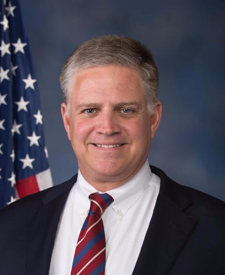
R GA-3 · House
Policy Effects
Estimated effects on people, organizations, and industries in bills this legislator sponsored, cosponsored, or voted on. Includes bills they voted against.
These are assessments of legislative text, not measurements of realized outcomes or the legislator’s intent.
This selection could not be loaded. Your current view is still available.
Open the requested selection in a full pageStart with a policy area to see the specific groups affected.
36 bills 212 analyzed clauses
Explore affected groups32 bills 150 analyzed clauses
Explore affected groups25 bills 151 analyzed clauses
Explore affected groups25 bills 67 analyzed clauses
Explore affected groups20 bills 194 analyzed clauses
Explore affected groups17 bills 60 analyzed clauses
Explore affected groups12 bills 59 analyzed clauses
Explore affected groups12 bills 51 analyzed clauses
Explore affected groups12 bills 30 analyzed clauses
Explore affected groups11 bills 39 analyzed clauses
Explore affected groups11 bills 21 analyzed clauses
Explore affected groups9 bills 23 analyzed clauses
Explore affected groups8 bills 28 analyzed clauses
Explore affected groups7 bills 39 analyzed clauses
Explore affected groups7 bills 13 analyzed clauses
Explore affected groups7 bills 10 analyzed clauses
Explore affected groups5 bills 14 analyzed clauses
Explore affected groups5 bills 5 analyzed clauses
Explore affected groups4 bills 26 analyzed clauses
Explore affected groups4 bills 4 analyzed clauses
Explore affected groups3 bills 5 analyzed clauses
Explore affected groups2 bills 9 analyzed clauses
Explore affected groups2 bills 4 analyzed clauses
Explore affected groups2 bills 2 analyzed clauses
Explore affected groups1 bill 21 analyzed clauses
Explore affected groups1 bill 11 analyzed clauses
Explore affected groups1 bill 8 analyzed clauses
Explore affected groups1 bill 6 analyzed clauses
Explore affected groups1 bill 4 analyzed clauses
Explore affected groups1 bill 4 analyzed clauses
Explore affected groups1 bill 3 analyzed clauses
Explore affected groups1 bill 3 analyzed clauses
Explore affected groups1 bill 2 analyzed clauses
Explore affected groups1 bill 2 analyzed clauses
Explore affected groups1 bill 2 analyzed clauses
Explore affected groups1 bill 2 analyzed clauses
Explore affected groups1 bill 1 analyzed clause
Explore affected groups1 bill 1 analyzed clause
Explore affected groups1 bill 1 analyzed clause
Explore affected groups1 bill 1 analyzed clause
Explore affected groups1 bill 1 analyzed clause
Explore affected groups1 bill 1 analyzed clause
Explore affected groupsPotential benefits are effects assessed as favorable to the named group. Potential burdens impose costs, restrictions, risks, or lost opportunities on that group.
Mixed effects contain countervailing effects on the same group. Unclear effects have an undetermined direction. A group can have separate benefits and burdens; these are counted separately.
Counts describe the number of identified effects, not their size or public value. Bill and clause counts are distinct within each view. Shared evidence may appear under several groups or policy areas, so their counts should not be added together.
Historical bill versions are included. Clauses analyzed in different versions count separately. A bill’s current status does not establish that every analyzed provision was enacted.
Only direct effects with high or medium confidence in the policy-area assignment are included. Bills are connected through sponsorship, cosponsorship, or Yea/Nay votes; a vote against a bill does not reverse its assessed effects. Vote dates filter recorded votes and vote-linked bills; sponsorship remains included.
To amend the Internal Revenue Code of 1986 to deny certain green energy tax benefits to companies connected to certain countries of concern.
To impose additional sanctions with respect to Iran and modify other existing sanctions with respect to Iran, and for other purposes.
To promote registered apprenticeships and other work-based learning programs for small and medium-sized businesses within in-demand industry sectors, through the establishment and support of industry or sector partnerships.
Standing with Israel as it defends itself against the barbaric war launched by Hamas and other terrorists.
To amend the Internal Revenue Code of 1986 to restore the limitation on downward attribution of stock ownership in applying constructive ownership rules.
To amend title XVIII of the Social Security Act to clarify the application of the in-office ancillary services exception to the physician self-referral prohibition for drugs furnished under the Medicare program.
To develop and disseminate a civic education curriculum and oral history resources regarding certain political ideologies, and for other purposes.
To amend the Internal Revenue Code of 1986 to allow a deduction for investment advisory expenses of certain funeral and cemetery trusts during suspension of miscellaneous itemized deductions, and for other purposes.
To require the Secretary of Defense to use, transfer, or donate all excess construction materials intended for the wall on the southwest border of the United States that are being stored by the Department of Defense, and for other purposes.
To ensure that residents of covered federally assisted rental housing may lawfully possess firearms, and for other purposes.
To amend the Internal Revenue Code of 1986 to make permanent the deduction for qualified business income.
To provide that the Administrator of the National Oceanic and Atmospheric Administration shall not issue an interim or final rule that includes an area closure in the South Atlantic for species managed under the Snapper-Grouper Fishery Management Plan until the South Atlantic Great Red Snapper Count study is complete and the data related to that study is integrated into the stock assessment.
To prohibit the Secretary of Energy from finalizing, implementing, or enforcing the proposed rule titled Energy Conservation Program: Energy Conservation Standards for Consumer Conventional Cooking Products, and for other purposes.
To approve and implement the Agreement between the American Institute in Taiwan and the Taipei Economic and Cultural Representative Office in the United States regarding Trade between the United States of America and Taiwan, and for other purposes.
To secure the supply chain by providing an election to determine foreign income taxes paid or incurred to certain Western Hemisphere countries without regard to certain regulations.
To amend title 49, United States Code, to ensure that authorizations issued by the Secretary of Transportation to foreign air carriers do not undermine labor standards, and for other purposes.
To amend the Internal Revenue Code of 1986 to increase the threshold for requiring information reporting with respect to certain payees.
To designate the facility of the United States Postal Service located at 120 West Church Street in Mount Vernon, Georgia, as the Second Lieutenant Patrick Palmer Calhoun Post Office.
To amend the Internal Revenue Code of 1986 to establish special rules for capital gains invested in rural opportunity zones.
To amend title III of the Public Health Service Act to reauthorize grants to address dental workforce needs.
Loading countries...
Select a clause to see detailed analysis
Failed to load analysis
Please try again
Failed to load clauses
Please try again
Explore affected groups in Policy Effects to view supporting evidence. Existing clause links also open here.
Select a clause to see detailed analysis