Healthcare
158 bills 386 analyzed clauses
Explore affected groups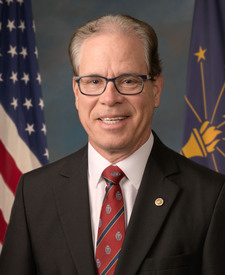
R IN · Senate
Policy Effects
Estimated effects on people, organizations, and industries in bills this legislator sponsored, cosponsored, or voted on. Includes bills they voted against.
These are assessments of legislative text, not measurements of realized outcomes or the legislator’s intent.
This selection could not be loaded. Your current view is still available.
Open the requested selection in a full pageStart with a policy area to see the specific groups affected.
158 bills 386 analyzed clauses
Explore affected groups157 bills 364 analyzed clauses
Explore affected groups131 bills 273 analyzed clauses
Explore affected groups128 bills 250 analyzed clauses
Explore affected groups97 bills 186 analyzed clauses
Explore affected groups80 bills 164 analyzed clauses
Explore affected groups76 bills 171 analyzed clauses
Explore affected groups66 bills 114 analyzed clauses
Explore affected groups65 bills 135 analyzed clauses
Explore affected groups45 bills 75 analyzed clauses
Explore affected groups43 bills 110 analyzed clauses
Explore affected groups41 bills 105 analyzed clauses
Explore affected groups39 bills 89 analyzed clauses
Explore affected groups31 bills 55 analyzed clauses
Explore affected groups30 bills 44 analyzed clauses
Explore affected groups25 bills 42 analyzed clauses
Explore affected groups20 bills 45 analyzed clauses
Explore affected groups18 bills 32 analyzed clauses
Explore affected groups17 bills 41 analyzed clauses
Explore affected groups16 bills 41 analyzed clauses
Explore affected groups12 bills 32 analyzed clauses
Explore affected groups10 bills 16 analyzed clauses
Explore affected groups9 bills 21 analyzed clauses
Explore affected groups9 bills 18 analyzed clauses
Explore affected groups9 bills 16 analyzed clauses
Explore affected groups7 bills 12 analyzed clauses
Explore affected groups6 bills 9 analyzed clauses
Explore affected groups5 bills 16 analyzed clauses
Explore affected groups5 bills 13 analyzed clauses
Explore affected groups3 bills 39 analyzed clauses
Explore affected groups3 bills 3 analyzed clauses
Explore affected groups3 bills 3 analyzed clauses
Explore affected groups2 bills 34 analyzed clauses
Explore affected groups2 bills 4 analyzed clauses
Explore affected groups2 bills 3 analyzed clauses
Explore affected groups2 bills 2 analyzed clauses
Explore affected groups1 bill 12 analyzed clauses
Explore affected groups1 bill 10 analyzed clauses
Explore affected groups1 bill 9 analyzed clauses
Explore affected groups1 bill 8 analyzed clauses
Explore affected groups1 bill 7 analyzed clauses
Explore affected groups1 bill 5 analyzed clauses
Explore affected groups1 bill 4 analyzed clauses
Explore affected groups1 bill 3 analyzed clauses
Explore affected groups1 bill 3 analyzed clauses
Explore affected groups1 bill 2 analyzed clauses
Explore affected groups1 bill 2 analyzed clauses
Explore affected groups1 bill 2 analyzed clauses
Explore affected groups1 bill 2 analyzed clauses
Explore affected groups1 bill 2 analyzed clauses
Explore affected groups1 bill 2 analyzed clauses
Explore affected groups1 bill 2 analyzed clauses
Explore affected groups1 bill 2 analyzed clauses
Explore affected groups1 bill 2 analyzed clauses
Explore affected groups1 bill 1 analyzed clause
Explore affected groups1 bill 1 analyzed clause
Explore affected groups1 bill 1 analyzed clause
Explore affected groups1 bill 1 analyzed clause
Explore affected groupsPotential benefits are effects assessed as favorable to the named group. Potential burdens impose costs, restrictions, risks, or lost opportunities on that group.
Mixed effects contain countervailing effects on the same group. Unclear effects have an undetermined direction. A group can have separate benefits and burdens; these are counted separately.
Counts describe the number of identified effects, not their size or public value. Bill and clause counts are distinct within each view. Shared evidence may appear under several groups or policy areas, so their counts should not be added together.
Historical bill versions are included. Clauses analyzed in different versions count separately. A bill’s current status does not establish that every analyzed provision was enacted.
Only direct effects with high or medium confidence in the policy-area assignment are included. Bills are connected through sponsorship, cosponsorship, or Yea/Nay votes; a vote against a bill does not reverse its assessed effects. Vote dates filter recorded votes and vote-linked bills; sponsorship remains included.
To amend title XI of the Social Security Act to establish a pilot program for testing the use of a predictive risk-scoring algorithm to provide oversight of payments for durable medical equipment and clinical diagnostic laboratory tests under the Medicare program.
To amend the Internal Revenue Code of 1986 to prohibit treatment of certain distributions and reimbursements for certain abortions as qualified medical expenses.
To amend title 1, United States Code, to clarify that certain tax exemptions are not treated as Federal financial assistance.
To amend the Internal Revenue Code of 1986 to provide that amounts paid for an abortion are not taken into account for purposes of the deduction for medical expenses.
To require annual reporting on the availability of Federal funds to persons and entities of China and activities conducted in collaboration with China, and for other purposes.
To address patent thickets.
To require enforcement against misbranded egg alternatives.
Honoring the life and legacy of the late Senator Herb Kohl.
To amend the Public Health Service Act to give a preference, with respect to project grants for preventive health services, for States that allow all trained individuals to carry and administer epinephrine, and for other purposes.
To amend chapter 3 of title 36, United States Code, to designate the mastodon as the national fossil of the United States.
To authorize certain States to take certain actions on certain Federal land to secure an international border of the United States, and for other purposes.
To require a full audit of the Board of Governors of the Federal Reserve System and the Federal reserve banks by the Comptroller General of the United States, and for other purposes.
To require the Secretary of Health and Human Services to prepare a report that outlines a plan for completing a review of approved opioid analgesic drugs that considers the public health effects of such opioid drugs.
Recognizing December 17 as Wright Brothers Day and commemorating the 120th anniversary of the first powered flight.
To require the Secretary of Education to disclose information about career and technical education and funding under the Carl D. Perkins Career and Technical Education Act of 2006, and require FAFSA applications to include a career and technical education acknowledgment.
To provide procedures for appealing certain Bureau of Alcohol, Tobacco, Firearms and Explosives rulings or determinations, and for other purposes.
To amend the Public Health Service Act to provide for hospital and insurer price transparency.
To amend the Individuals with Disabilities Education Act to require notification with respect to individualized education program teams, and for other purposes.
Recognizing Interscholastic Athletic Administrators’ Day on December 14, 2023.
To end unemployment payments to jobless millionaires.
Loading countries...
Select a clause to see detailed analysis
Failed to load analysis
Please try again
Failed to load clauses
Please try again
Explore affected groups in Policy Effects to view supporting evidence. Existing clause links also open here.
Select a clause to see detailed analysis