Healthcare
177 bills 598 analyzed clauses
Explore affected groups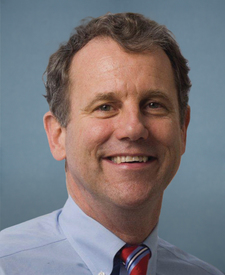
D OH · Senate
Policy Effects
Estimated effects on people, organizations, and industries in bills this legislator sponsored, cosponsored, or voted on. Includes bills they voted against.
These are assessments of legislative text, not measurements of realized outcomes or the legislator’s intent.
This selection could not be loaded. Your current view is still available.
Open the requested selection in a full pageStart with a policy area to see the specific groups affected.
177 bills 598 analyzed clauses
Explore affected groups152 bills 485 analyzed clauses
Explore affected groups92 bills 302 analyzed clauses
Explore affected groups88 bills 229 analyzed clauses
Explore affected groups86 bills 327 analyzed clauses
Explore affected groups53 bills 122 analyzed clauses
Explore affected groups47 bills 190 analyzed clauses
Explore affected groups46 bills 100 analyzed clauses
Explore affected groups43 bills 64 analyzed clauses
Explore affected groups40 bills 130 analyzed clauses
Explore affected groups37 bills 177 analyzed clauses
Explore affected groups29 bills 83 analyzed clauses
Explore affected groups27 bills 56 analyzed clauses
Explore affected groups26 bills 112 analyzed clauses
Explore affected groups21 bills 33 analyzed clauses
Explore affected groups20 bills 44 analyzed clauses
Explore affected groups19 bills 56 analyzed clauses
Explore affected groups15 bills 59 analyzed clauses
Explore affected groups12 bills 58 analyzed clauses
Explore affected groups11 bills 44 analyzed clauses
Explore affected groups10 bills 39 analyzed clauses
Explore affected groups8 bills 11 analyzed clauses
Explore affected groups7 bills 35 analyzed clauses
Explore affected groups7 bills 21 analyzed clauses
Explore affected groups6 bills 20 analyzed clauses
Explore affected groups6 bills 11 analyzed clauses
Explore affected groups5 bills 14 analyzed clauses
Explore affected groups4 bills 28 analyzed clauses
Explore affected groups3 bills 24 analyzed clauses
Explore affected groups2 bills 95 analyzed clauses
Explore affected groups2 bills 4 analyzed clauses
Explore affected groups2 bills 4 analyzed clauses
Explore affected groups1 bill 36 analyzed clauses
Explore affected groups1 bill 26 analyzed clauses
Explore affected groups1 bill 16 analyzed clauses
Explore affected groups1 bill 13 analyzed clauses
Explore affected groups1 bill 13 analyzed clauses
Explore affected groups1 bill 11 analyzed clauses
Explore affected groups1 bill 9 analyzed clauses
Explore affected groups1 bill 9 analyzed clauses
Explore affected groups1 bill 7 analyzed clauses
Explore affected groups1 bill 6 analyzed clauses
Explore affected groups1 bill 5 analyzed clauses
Explore affected groups1 bill 4 analyzed clauses
Explore affected groups1 bill 3 analyzed clauses
Explore affected groups1 bill 3 analyzed clauses
Explore affected groups1 bill 3 analyzed clauses
Explore affected groups1 bill 2 analyzed clauses
Explore affected groups1 bill 2 analyzed clauses
Explore affected groups1 bill 2 analyzed clauses
Explore affected groups1 bill 2 analyzed clauses
Explore affected groups1 bill 2 analyzed clauses
Explore affected groups1 bill 1 analyzed clause
Explore affected groups1 bill 1 analyzed clause
Explore affected groups1 bill 1 analyzed clause
Explore affected groups1 bill 1 analyzed clause
Explore affected groups1 bill 1 analyzed clause
Explore affected groups1 bill 1 analyzed clause
Explore affected groups1 bill 1 analyzed clause
Explore affected groupsPotential benefits are effects assessed as favorable to the named group. Potential burdens impose costs, restrictions, risks, or lost opportunities on that group.
Mixed effects contain countervailing effects on the same group. Unclear effects have an undetermined direction. A group can have separate benefits and burdens; these are counted separately.
Counts describe the number of identified effects, not their size or public value. Bill and clause counts are distinct within each view. Shared evidence may appear under several groups or policy areas, so their counts should not be added together.
Historical bill versions are included. Clauses analyzed in different versions count separately. A bill’s current status does not establish that every analyzed provision was enacted.
Only direct effects with high or medium confidence in the policy-area assignment are included. Bills are connected through sponsorship, cosponsorship, or Yea/Nay votes; a vote against a bill does not reverse its assessed effects. Vote dates filter recorded votes and vote-linked bills; sponsorship remains included.
To authorize the collection of supplemental payments to increase congressional investments in medical research, and for other purposes.
To prevent discrimination, including harassment, in employment.
To protect and expand nationwide access to fertility treatment, including in vitro fertilization.
To improve access to oral health care for vulnerable and underserved populations.
To provide emergency assistance to States, territories, Tribal nations, and local areas affected by substance use disorder, including the use of opioids and stimulants, and to make financial assistance available to States, territories, Tribal nations, local areas, public or private nonprofit entities, and certain health providers, to provide for the development, organization, coordination, and operation of more effective and cost efficient systems for the delivery of essential services to individuals with substance use disorder and their families.
To authorize the Director of the Centers for Disease Control and Prevention to carry out a Social Determinants of Health Program, and for other purposes.
To amend the Food and Agriculture Act of 1977 and the Agriculture Improvement Act of 2018 to modify provisions relating to matching funds requirements for research and extension activities at eligible institutions and related reporting requirements.
To improve the reproductive assistance provided by the Department of Defense and the Department of Veterans Affairs to certain members of the Armed Forces, veterans, and their spouses or partners, and for other purposes.
To amend the Department of Agriculture Reorganization Act of 1994 to improve the Office of Urban Agriculture and Innovative Production, and for other purposes.
To expand Americans’ access to the ballot box and reduce the influence of big money in politics, and for other purposes.
To amend the Agricultural Research, Extension, and Education Reform Act of 1998 and the Food, Agriculture, Conservation, and Trade Act of 1990 to direct the Agricultural Research Service to expand organic research, and for other purposes.
To amend the Food, Agriculture, Conservation, and Trade Act of 1990 to include spotted lanternfly control research and development as a high-priority research and extension initiative, and for other purposes.
To provide for the overall health and well-being of young people, including the promotion and attainment of lifelong sexual health and healthy relationships, and for other purposes.
To allow Americans to earn paid sick time so that they can address their own health needs and the health needs of their families.
To end preventable maternal mortality, severe maternal morbidity, and maternal health disparities in the United States, and for other purposes.
To impose sanctions with respect to trafficking of illicit fentanyl and its precursors by transnational criminal organizations, including cartels, and for other purposes.
To authorize an electronic health record modernization program of the Department of Veterans Affairs and increase oversight and accountability of the program to better serve veterans, medical professionals of the Department, and taxpayers, and for other purposes.
To amend the Agricultural Research, Extension, and Education Reform Act of 1998 to direct the Secretary of Agriculture to establish a national biochar research network, and for other purposes.
To amend the Fair Labor Standards Act of 1938 to provide more effective remedies to victims of discrimination in the payment of wages on the basis of sex, and for other purposes.
To amend title XIX of the Social Security Act to require coverage of, and expand access to, home and community-based services under the Medicaid program, to award grants for the creation, recruitment, training and education, retention, and advancement of the direct care workforce and to award grants to support family caregivers, and for other purposes.
Loading countries...
Select a clause to see detailed analysis
Failed to load analysis
Please try again
Failed to load clauses
Please try again
Explore affected groups in Policy Effects to view supporting evidence. Existing clause links also open here.
Select a clause to see detailed analysis