Healthcare
168 bills 563 analyzed clauses
Explore affected groups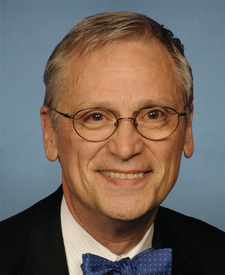
D OR-3 · House
Policy Effects
Estimated effects on people, organizations, and industries in bills this legislator sponsored, cosponsored, or voted on. Includes bills they voted against.
These are assessments of legislative text, not measurements of realized outcomes or the legislator’s intent.
This selection could not be loaded. Your current view is still available.
Open the requested selection in a full pageStart with a policy area to see the specific groups affected.
168 bills 563 analyzed clauses
Explore affected groups126 bills 422 analyzed clauses
Explore affected groups107 bills 488 analyzed clauses
Explore affected groups91 bills 292 analyzed clauses
Explore affected groups88 bills 352 analyzed clauses
Explore affected groups63 bills 174 analyzed clauses
Explore affected groups49 bills 270 analyzed clauses
Explore affected groups48 bills 278 analyzed clauses
Explore affected groups47 bills 157 analyzed clauses
Explore affected groups47 bills 132 analyzed clauses
Explore affected groups45 bills 234 analyzed clauses
Explore affected groups32 bills 131 analyzed clauses
Explore affected groups28 bills 92 analyzed clauses
Explore affected groups28 bills 65 analyzed clauses
Explore affected groups25 bills 74 analyzed clauses
Explore affected groups21 bills 42 analyzed clauses
Explore affected groups17 bills 114 analyzed clauses
Explore affected groups17 bills 87 analyzed clauses
Explore affected groups17 bills 28 analyzed clauses
Explore affected groups14 bills 49 analyzed clauses
Explore affected groups14 bills 44 analyzed clauses
Explore affected groups10 bills 40 analyzed clauses
Explore affected groups7 bills 35 analyzed clauses
Explore affected groups5 bills 24 analyzed clauses
Explore affected groups4 bills 136 analyzed clauses
Explore affected groups4 bills 39 analyzed clauses
Explore affected groups4 bills 16 analyzed clauses
Explore affected groups3 bills 30 analyzed clauses
Explore affected groups3 bills 14 analyzed clauses
Explore affected groups3 bills 9 analyzed clauses
Explore affected groups2 bills 23 analyzed clauses
Explore affected groups2 bills 7 analyzed clauses
Explore affected groups2 bills 6 analyzed clauses
Explore affected groups2 bills 2 analyzed clauses
Explore affected groups1 bill 11 analyzed clauses
Explore affected groups1 bill 4 analyzed clauses
Explore affected groups1 bill 4 analyzed clauses
Explore affected groups1 bill 3 analyzed clauses
Explore affected groups1 bill 3 analyzed clauses
Explore affected groups1 bill 2 analyzed clauses
Explore affected groups1 bill 2 analyzed clauses
Explore affected groups1 bill 2 analyzed clauses
Explore affected groups1 bill 2 analyzed clauses
Explore affected groups1 bill 2 analyzed clauses
Explore affected groups1 bill 2 analyzed clauses
Explore affected groups1 bill 1 analyzed clause
Explore affected groups1 bill 1 analyzed clause
Explore affected groups1 bill 1 analyzed clause
Explore affected groups1 bill 1 analyzed clause
Explore affected groups1 bill 1 analyzed clause
Explore affected groups1 bill 1 analyzed clause
Explore affected groups1 bill 1 analyzed clause
Explore affected groups1 bill 1 analyzed clause
Explore affected groupsPotential benefits are effects assessed as favorable to the named group. Potential burdens impose costs, restrictions, risks, or lost opportunities on that group.
Mixed effects contain countervailing effects on the same group. Unclear effects have an undetermined direction. A group can have separate benefits and burdens; these are counted separately.
Counts describe the number of identified effects, not their size or public value. Bill and clause counts are distinct within each view. Shared evidence may appear under several groups or policy areas, so their counts should not be added together.
Historical bill versions are included. Clauses analyzed in different versions count separately. A bill’s current status does not establish that every analyzed provision was enacted.
Only direct effects with high or medium confidence in the policy-area assignment are included. Bills are connected through sponsorship, cosponsorship, or Yea/Nay votes; a vote against a bill does not reverse its assessed effects. Vote dates filter recorded votes and vote-linked bills; sponsorship remains included.
To amend the Federal Crop Insurance Act to reduce Federal spending on crop insurance, and for other purposes.
To decriminalize and deschedule cannabis, to provide for reinvestment in certain persons adversely impacted by the War on Drugs, to provide for expungement of certain cannabis offenses, and for other purposes.
To prohibit the use of Federal funds from preventing a State from implementing their own laws with respect to psilocybin.
To amend the Voting Rights Act of 1965 to revise the criteria for determining which States and political subdivisions are subject to section 4 of the Act, and for other purposes.
To amend the Internal Revenue Code of 1986 to establish an excise tax on plastics.
To authorize an Action Plan for United States foreign assistance to developing countries to increase access to sustainable safe water, sanitation, and hygiene in healthcare facilities, promote stronger health systems and sustainable health infrastructure, build capacity of health workers, and promote the safety of health workers and patients, especially women and girls, and for other purposes.
Expressing the support of the House of Representatives for the designation of Public Radio Music Day and its deep appreciation for the role of public radio music stations in serving listeners, musicians, and hundreds of communities in the United States.
Expressing support for the designation of the week of September 16 through September 23, 2023, as National Estuaries Week.
To prevent a person who has been convicted of a misdemeanor hate crime, or received an enhanced sentence for a misdemeanor because of hate or bias in its commission, from obtaining a firearm.
To provide employees with a minimum of two consecutive hours of paid leave in order to vote in Federal elections.
To amend the Help America Vote Act of 2002 to ensure that voters in elections for Federal office do not wait in long lines in order to vote, and for other purposes.
To require the inclusion of voter registration information with certain leases and vouchers for federally assisted rental housing and mortgage applications, and for other purposes.
To expand youth access to voting, and for other purposes.
To remove barriers to the ability of unhoused individuals to register to vote and vote in elections for Federal office, and for other purposes.
To establish a democracy advancement and innovation program, and for other purposes.
To modify certain notice requirements, to study certain election requirements, to clarify certain election requirements, and for other purposes.
To limit the extent to which certain Federal law enforcement agencies may be permitted to conduct law enforcement functions in a jurisdiction without the approval of such jurisdiction, and for other purposes.
To amend the National Wildlife Refuge System Administration Act of 1966 to prohibit the possession or use of body-gripping traps in the National Wildlife Refuge System, and for other purposes.
To extend immigration benefits to survivors of domestic violence, sexual assault, human trafficking, and other gender-based violence, and for other purposes.
To require the Federal Energy Regulatory Commission to promulgate regulations with respect to regional and interregional transmission planning, and for other purposes.
Loading countries...
Select a clause to see detailed analysis
Failed to load analysis
Please try again
Failed to load clauses
Please try again
Explore affected groups in Policy Effects to view supporting evidence. Existing clause links also open here.
Select a clause to see detailed analysis