Healthcare
168 bills 563 analyzed clauses
Explore affected groups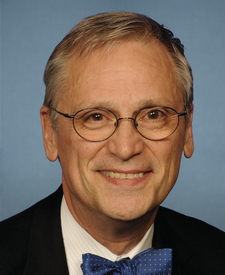
D OR-3 · House
Policy Effects
Estimated effects on people, organizations, and industries in bills this legislator sponsored, cosponsored, or voted on. Includes bills they voted against.
These are assessments of legislative text, not measurements of realized outcomes or the legislator’s intent.
This selection could not be loaded. Your current view is still available.
Open the requested selection in a full pageStart with a policy area to see the specific groups affected.
168 bills 563 analyzed clauses
Explore affected groups126 bills 422 analyzed clauses
Explore affected groups107 bills 488 analyzed clauses
Explore affected groups91 bills 292 analyzed clauses
Explore affected groups88 bills 352 analyzed clauses
Explore affected groups63 bills 174 analyzed clauses
Explore affected groups49 bills 270 analyzed clauses
Explore affected groups48 bills 278 analyzed clauses
Explore affected groups47 bills 157 analyzed clauses
Explore affected groups47 bills 132 analyzed clauses
Explore affected groups45 bills 234 analyzed clauses
Explore affected groups32 bills 131 analyzed clauses
Explore affected groups28 bills 92 analyzed clauses
Explore affected groups28 bills 65 analyzed clauses
Explore affected groups25 bills 74 analyzed clauses
Explore affected groups21 bills 42 analyzed clauses
Explore affected groups17 bills 114 analyzed clauses
Explore affected groups17 bills 87 analyzed clauses
Explore affected groups17 bills 28 analyzed clauses
Explore affected groups14 bills 49 analyzed clauses
Explore affected groups14 bills 44 analyzed clauses
Explore affected groups10 bills 40 analyzed clauses
Explore affected groups7 bills 35 analyzed clauses
Explore affected groups5 bills 24 analyzed clauses
Explore affected groups4 bills 136 analyzed clauses
Explore affected groups4 bills 39 analyzed clauses
Explore affected groups4 bills 16 analyzed clauses
Explore affected groups3 bills 30 analyzed clauses
Explore affected groups3 bills 14 analyzed clauses
Explore affected groups3 bills 9 analyzed clauses
Explore affected groups2 bills 23 analyzed clauses
Explore affected groups2 bills 7 analyzed clauses
Explore affected groups2 bills 6 analyzed clauses
Explore affected groups2 bills 2 analyzed clauses
Explore affected groups1 bill 11 analyzed clauses
Explore affected groups1 bill 4 analyzed clauses
Explore affected groups1 bill 4 analyzed clauses
Explore affected groups1 bill 3 analyzed clauses
Explore affected groups1 bill 3 analyzed clauses
Explore affected groups1 bill 2 analyzed clauses
Explore affected groups1 bill 2 analyzed clauses
Explore affected groups1 bill 2 analyzed clauses
Explore affected groups1 bill 2 analyzed clauses
Explore affected groups1 bill 2 analyzed clauses
Explore affected groups1 bill 2 analyzed clauses
Explore affected groups1 bill 1 analyzed clause
Explore affected groups1 bill 1 analyzed clause
Explore affected groups1 bill 1 analyzed clause
Explore affected groups1 bill 1 analyzed clause
Explore affected groups1 bill 1 analyzed clause
Explore affected groups1 bill 1 analyzed clause
Explore affected groups1 bill 1 analyzed clause
Explore affected groups1 bill 1 analyzed clause
Explore affected groupsPotential benefits are effects assessed as favorable to the named group. Potential burdens impose costs, restrictions, risks, or lost opportunities on that group.
Mixed effects contain countervailing effects on the same group. Unclear effects have an undetermined direction. A group can have separate benefits and burdens; these are counted separately.
Counts describe the number of identified effects, not their size or public value. Bill and clause counts are distinct within each view. Shared evidence may appear under several groups or policy areas, so their counts should not be added together.
Historical bill versions are included. Clauses analyzed in different versions count separately. A bill’s current status does not establish that every analyzed provision was enacted.
Only direct effects with high or medium confidence in the policy-area assignment are included. Bills are connected through sponsorship, cosponsorship, or Yea/Nay votes; a vote against a bill does not reverse its assessed effects. Vote dates filter recorded votes and vote-linked bills; sponsorship remains included.
To provide an earned path to citizenship, to address the root causes of migration and responsibly manage the southern border, and to reform the immigrant visa system, and for other purposes.
To establish a program to award grants to entities that provide transportation connectors from critically underserved communities to green spaces, and for other purposes.
To amend title 49, United States Code, to define critical airport infrastructure, and for other purposes.
To designate as wilderness certain Federal portions of the red rock canyons of the Colorado Plateau and the Great Basin Deserts in the State of Utah for the benefit of present and future generations of people in the United States.
To reform the safety net for farmers and ranchers, enhance soil, water, and habitat conservation, encourage beginning farmers and ranchers, strengthen nutrition for Americans, support agriculture research and innovation, reduce food waste, improve animal welfare, and invest in regional food systems, and for other purposes.
To address the impact of climate change on agriculture, and for other purposes.
To address root causes of homelessness, meet the needs of community members experiencing harms from homelessness, transition communities towards providing housing for all, end penalization of homelessness, and ensure full democratic participation and inclusion of persons experiencing homelessness, and for other purposes.
To amend the Internal Revenue Code of 1986 to repeal fossil fuel subsidies for oil companies, and for other purposes.
To amend the Internal Revenue Code of 1986 to repeal the excise tax on heavy trucks and trailers, and for other purposes.
To address the history of discrimination against Black farmers and ranchers, to require reforms within the Department of Agriculture to prevent future discrimination, and for other purposes.
To codify the existing Outdoor Recreation Legacy Partnership Program of the National Park Service, and for other purposes.
To place a moratorium on large concentrated animal feeding operations, to strengthen the Packers and Stockyards Act, 1921, to require country of origin labeling on beef, pork, and dairy products, and for other purposes.
To establish the Office of High-Risk AFO Disaster Mitigation and Enforcement in the Department of Agriculture, and for other purposes.
To provide for the protection of the Boundary Waters Canoe Area Wilderness and interconnected Federal lands and waters, including Voyageurs National Park, within the Rainy River Watershed in the State of Minnesota, and for other purposes.
Loading countries...
Select a clause to see detailed analysis
Failed to load analysis
Please try again
Failed to load clauses
Please try again
Explore affected groups in Policy Effects to view supporting evidence. Existing clause links also open here.
Select a clause to see detailed analysis