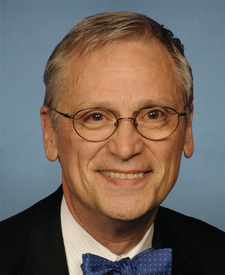
Earl Blumenauer
AnalysisD OR-3 · House
Healthcare
+38Environment
+27Education
-101Government Operations
+1Agriculture
-131Finance
+11Energy
-21Civil Rights
+19Regulated Industries
-74Transportation
+18National Security
-128Housing
+54Native American Tribes
-111Criminal Justice
+11Defense
+23Labor
+12Foreign Policy
-6Healthcare Consumers
-37Science & Space
+22Business
-33Industry Impact Profile
3470 industry impacts
How this is computed
P Primary sponsor · C Co-sponsor · Y Yea vote · N Nay vote
Weighted score (w:) uses strongest role per bill. Weights: Primary 1.0, Co-sponsor 0.3, Yea 0.1, Nay -0.1.
Bills where the legislator voted nay (without sponsorship) contribute -0.1 per bill. Equal yea and nay roll calls on the same bill contribute 0.
Vote date filters affect vote attribution; sponsorship is always included.
Positive-Effect Industries
Negative-Effect Industries
Click any row to see supporting clauses
Showing positive and negative-direction effects only. Mixed and uncertain effects are not included in these counts.
Sponsored & Cosponsored Bills
hr10341-118
Cosponsor IntroducedTo require the use of the voice and vote of the United States in international financial institutions to advance the cause of transitioning the global economy to a clean energy economy and to prohibit United States Government assistance to countries or entities to support fossil fuel activity, and for other purposes.
hr10314-118
Cosponsor IntroducedTo amend the Internal Revenue Code of 1986 to establish a National Resilience and Recovery Fund, and for other purposes.
hr10181-118
Cosponsor IntroducedTo exclude the imposition of duties and import quotas from the authorities provided to the President under the International Emergency Economic Powers Act.
hr9809-118
Cosponsor IntroducedTo amend the National Flood Insurance Act of 1968 to expand opportunities for families living in areas of high flood risk to access Federal assistance for voluntary relocation, and for other purposes.
hr9803-118
Primary Sponsor IntroducedTo amend title XVIII of the Social Security Act to ensure the integrity of hospice care furnished under the Medicare program, and for other purposes.
hr9781-118
Cosponsor IntroducedTo amend the Internal Revenue Code of 1986 to provide a tax credit for investors in start-up businesses, to provide a credit for wages paid by start-up businesses to their first employees, and for other purposes.
hres1491-118
Cosponsor In CommitteeExpressing support for the designation of Public Radio Music Day and deep appreciation for the role of public radio music stations in serving listeners, musicians, and hundreds of communities in the United States.
hres1489-118
Cosponsor In CommitteeSupporting the designation of the week of September 23 through September 27, 2024, as National Clean Energy Week.
hr9549-118
Cosponsor Passed HouseTo designate the facility of the United States Postal Service located at 125 South 1st Avenue in Hillsboro, Oregon, as the Elizabeth Furse Post Office Building.
hr9522-118
Cosponsor IntroducedTo amend the Internal Revenue Code of 1986 to modify the railroad track maintenance credit.
hr9464-118
Cosponsor IntroducedTo amend the Internal Revenue Code of 1986 to allow employers to deduct certain transportation fringe benefits.
hr9257-118
Cosponsor IntroducedTo establish the Great Bend of the Gila National Monument in the State of Arizona, and for other purposes.
hres1375-118
Cosponsor In CommitteeRecognizing the threat of extreme weather to children’s health and well-being, and expressing the sense of Congress that solutions must be rapidly and equitably developed and deployed to address the unique vulnerabilities and needs of children.
hr9058-118
Primary Sponsor IntroducedTo amend the Higher Education Act of 1965 to improve the American History for Freedom grant program.
hr9059-118
Primary Sponsor IntroducedTo amend the Internal Revenue Code of 1986 to provide an excise tax credit for certain heavy trucks when operated in power take-off mode.
hr8994-118
Cosponsor IntroducedTo direct the Secretary of Agriculture to remove nonambulatory pigs from the United States food system, to establish an online portal for confidential complaints, and for other purposes.
hres1355-118
Cosponsor In CommitteeExpressing support for the designation of July 10th as Journeyman Lineworkers Recognition Day.
hr8796-118
Cosponsor IntroducedTo revise sections 552, 1461, and 1462 of title 18, United States Code, and section 305 of the Tariff Act of 1930 (19 U.S.C. 1305), and for other purposes.
hres1304-118
Cosponsor In CommitteeExpressing support for the designation of June 19, 2024, as World Sickle Cell Awareness Day in order to increase public awareness across the United States and global community about sickle cell disease and the continued need for empirical research, early detection screenings, novel effective treatments leading to a cure, and preventative care programs with respect to complications from sickle cell anemia and conditions relating to sickle cell disease.
hr8732-118
Cosponsor IntroducedTo enhance the rights of domestic employees, and for other purposes.
Loading countries...
Select a clause to see detailed analysis
Failed to load analysis
Please try again
Failed to load clauses
Please try again
Click an industry from the Impact Profile to view supporting clauses
Select a clause to see detailed analysis