Healthcare
51 bills 217 analyzed clauses
Explore affected groups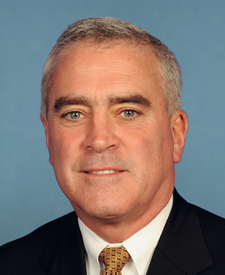
R OH-2 · House
Policy Effects
Estimated effects on people, organizations, and industries in bills this legislator sponsored, cosponsored, or voted on. Includes bills they voted against.
These are assessments of legislative text, not measurements of realized outcomes or the legislator’s intent.
This selection could not be loaded. Your current view is still available.
Open the requested selection in a full pageStart with a policy area to see the specific groups affected.
51 bills 217 analyzed clauses
Explore affected groups49 bills 320 analyzed clauses
Explore affected groups25 bills 124 analyzed clauses
Explore affected groups22 bills 61 analyzed clauses
Explore affected groups21 bills 413 analyzed clauses
Explore affected groups17 bills 81 analyzed clauses
Explore affected groups15 bills 201 analyzed clauses
Explore affected groups12 bills 32 analyzed clauses
Explore affected groups10 bills 24 analyzed clauses
Explore affected groups8 bills 30 analyzed clauses
Explore affected groups7 bills 16 analyzed clauses
Explore affected groups6 bills 33 analyzed clauses
Explore affected groups6 bills 19 analyzed clauses
Explore affected groups5 bills 29 analyzed clauses
Explore affected groups5 bills 8 analyzed clauses
Explore affected groups4 bills 7 analyzed clauses
Explore affected groups3 bills 37 analyzed clauses
Explore affected groups3 bills 16 analyzed clauses
Explore affected groups3 bills 10 analyzed clauses
Explore affected groups3 bills 3 analyzed clauses
Explore affected groups2 bills 9 analyzed clauses
Explore affected groups2 bills 8 analyzed clauses
Explore affected groups2 bills 3 analyzed clauses
Explore affected groups2 bills 3 analyzed clauses
Explore affected groups1 bill 11 analyzed clauses
Explore affected groups1 bill 7 analyzed clauses
Explore affected groups1 bill 6 analyzed clauses
Explore affected groups1 bill 4 analyzed clauses
Explore affected groups1 bill 2 analyzed clauses
Explore affected groups1 bill 2 analyzed clauses
Explore affected groups1 bill 2 analyzed clauses
Explore affected groups1 bill 1 analyzed clause
Explore affected groups1 bill 1 analyzed clause
Explore affected groups1 bill 1 analyzed clause
Explore affected groups1 bill 1 analyzed clause
Explore affected groups1 bill 1 analyzed clause
Explore affected groupsPotential benefits are effects assessed as favorable to the named group. Potential burdens impose costs, restrictions, risks, or lost opportunities on that group.
Mixed effects contain countervailing effects on the same group. Unclear effects have an undetermined direction. A group can have separate benefits and burdens; these are counted separately.
Counts describe the number of identified effects, not their size or public value. Bill and clause counts are distinct within each view. Shared evidence may appear under several groups or policy areas, so their counts should not be added together.
Historical bill versions are included. Clauses analyzed in different versions count separately. A bill’s current status does not establish that every analyzed provision was enacted.
Only direct effects with high or medium confidence in the policy-area assignment are included. Bills are connected through sponsorship, cosponsorship, or Yea/Nay votes; a vote against a bill does not reverse its assessed effects. Vote dates filter recorded votes and vote-linked bills; sponsorship remains included.
To amend the Internal Revenue Code of 1986 to allow a credit against tax for charitable donations to nonprofit organizations providing education scholarships to qualified elementary and secondary students.
To reauthorize and modernize part B of title IV of the Social Security Act to strengthen child welfare services, expand the availability of prevention services to better meet the needs of vulnerable families, and for other purposes.
To establish a commission to study the potential transfer of the Weitzman National Museum of American Jewish History to the Smithsonian Institution, and for other purposes.
To amend the Higher Education Act of 1965 to prohibit graduate medical schools from receiving Federal financial assistance if such schools adopt certain policies and requirements relating to diversity, equity, and inclusion.
To amend the Internal Revenue Code of 1986 to qualify homeless youth and veterans who are full-time students for purposes of the low-income housing tax credit.
Supporting the contributions of Catholic schools in the United States and celebrating the 50th annual National Catholic Schools Week.
To lower the cost of postsecondary education for students and families.
To direct the Joint Committee on the Library to procure a statue of Benjamin Franklin for placement in the Capitol.
To amend chapter 3081 of title 54, United States Code, to enhance the protection and preservation of America’s battlefields.
To amend the Internal Revenue Code of 1986 and the Small Business Act to expand the availability of employee stock ownership plans in S corporations, and for other purposes.
To amend the Internal Revenue Code of 1986 and the Small Business Act to expand the availability of employee stock ownership plans in S corporations, and for other purposes.
To amend title 38, United States Code, to establish in the Department of Veterans Affairs the Veterans Economic Opportunity and Transition Administration, and for other purposes.
To amend the Education Amendments of 1972 to provide that for purposes of determining compliance with title IX of such Act in athletics, sex shall be recognized based solely on a person’s reproductive biology and genetics at birth.
To amend the Internal Revenue Code of 1986 to provide for collegiate housing and infrastructure grants.
To prohibit the mass cancellation of student loans.
To establish Department of Homeland Security funding restrictions on institutions of higher education that have a relationship with Confucius Institutes, and for other purposes.
To ensure the rights of parents are honored and protected in the Nation’s public schools.
To amend the Congressional Budget Act of 1974 respecting the scoring of preventive health savings.
Expressing support for the designation of the week of January 22 through January 28, 2023, as National School Choice Week.
Loading countries...
Select a clause to see detailed analysis
Failed to load analysis
Please try again
Failed to load clauses
Please try again
Explore affected groups in Policy Effects to view supporting evidence. Existing clause links also open here.
Select a clause to see detailed analysis