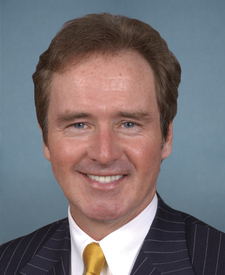
Brian Higgins
AnalysisD NY-26 · House
Healthcare
+39Education
-33National Security
-104Environment
+15Finance
+22Civil Rights
+20Government Operations
-8Regulated Industries
-32Housing
+31Criminal Justice
+6Defense
+17Foreign Policy
-1Homeowners
-29Transportation
-1Healthcare Consumers
-14Business
-12Agriculture
-4Technology
+3Energy
+2Native American Tribes
-13Industry Impact Profile
1214 industry impacts
How this is computed
P Primary sponsor · C Co-sponsor · Y Yea vote · N Nay vote
Weighted score (w:) uses strongest role per bill. Weights: Primary 1.0, Co-sponsor 0.3, Yea 0.1, Nay -0.1.
Bills where the legislator voted nay (without sponsorship) contribute -0.1 per bill. Equal yea and nay roll calls on the same bill contribute 0.
Vote date filters affect vote attribution; sponsorship is always included.
Negative-Effect Industries
Click any row to see supporting clauses
Showing positive and negative-direction effects only. Mixed and uncertain effects are not included in these counts.
Sponsored & Cosponsored Bills
hr1785-118
Cosponsor IntroducedTo amend the Internal Revenue Code of 1986 to modify the rehabilitation credit for certain small projects, to eliminate the requirement that the taxpayer’s basis in a building be reduced by the amount of the rehabilitation credit determined with respect to such building, and for other purposes.
hr1637-118
Cosponsor IntroducedTo recommend that the Center for Medicare and Medicaid Innovation test the effect of a dementia care management model, and for other purposes.
hr1610-118
Cosponsor IntroducedTo amend title XVIII of the Social Security Act to provide Medicare coverage for all physicians’ services furnished by doctors of chiropractic within the scope of their license, and for other purposes.
hr17-118
Cosponsor IntroducedTo amend the Fair Labor Standards Act of 1938 to provide more effective remedies to victims of discrimination in the payment of wages on the basis of sex, and for other purposes.
hr1402-118
Primary Sponsor IntroducedTo amend title 38, United States Code, to direct the Secretary of Veterans Affairs to provide coverage for boxing-based exercise classes for veterans diagnosed with certain movement disorders, and for other purposes.
hr1361-118
Cosponsor IntroducedTo authorize the Director of the Bureau of Justice Assistance to make grants to States, units of local government, and gun dealers to conduct gun buyback programs, and for other purposes.
hr1294-118
Cosponsor IntroducedTo amend title XXXIII of the Public Health Service Act with respect to flexibility and funding for the World Trade Center Health Program.
hr20-118
Cosponsor IntroducedTo amend the National Labor Relations Act, the Labor Management Relations Act, 1947, and the Labor-Management Reporting and Disclosure Act of 1959, and for other purposes.
hr1118-118
Cosponsor IntroducedTo amend the Federal Election Campaign Act of 1971 to provide for additional disclosure requirements for corporations, labor organizations, Super PACs and other entities, and for other purposes.
hr884-118
Cosponsor IntroducedTo amend the Internal Revenue Code of 1986 to provide for current year inclusion of net CFC tested income, and for other purposes.
hr698-118
Cosponsor IntroducedTo regulate assault weapons, to ensure that the right to keep and bear arms is not unlimited, and for other purposes.
hr625-118
Cosponsor IntroducedTo regulate large capacity ammunition feeding devices.
hr561-118
Cosponsor IntroducedTo ensure affordable abortion coverage and care for every person, and for other purposes.
hr51-118
Cosponsor IntroducedTo provide for the admission of the State of Washington, D.C. into the Union.
Loading countries...
Select a clause to see detailed analysis
Failed to load analysis
Please try again
Failed to load clauses
Please try again
Click an industry from the Impact Profile to view supporting clauses
Select a clause to see detailed analysis