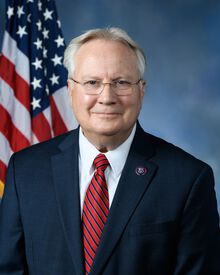
Jerry L. Carl
AnalysisR AL-1 · House
Government Operations
+13Defense
+7Environment
+9Healthcare
+1Education
+5Finance
+1Energy
-2Public Lands
+9Agriculture
+31Social Welfare
+34Healthcare Consumers
-26Criminal Justice
-1Housing
+4Trade
+14Native American Tribes
-17Transportation
+4Civil Rights
+8Technology
+14Science & Space
+12Foreign Policy
+7Industry Impact Profile
989 industry impacts
How this is computed
P Primary sponsor · C Co-sponsor · Y Yea vote · N Nay vote
Weighted score (w:) uses strongest role per bill. Weights: Primary 1.0, Co-sponsor 0.3, Yea 0.1, Nay -0.1.
Bills where the legislator voted nay (without sponsorship) contribute -0.1 per bill. Equal yea and nay roll calls on the same bill contribute 0.
Vote date filters affect vote attribution; sponsorship is always included.
Positive-Effect Industries
Negative-Effect Industries
Click any row to see supporting clauses
Showing positive and negative-direction effects only. Mixed and uncertain effects are not included in these counts.
Sponsored & Cosponsored Bills
hr8790-118
Cosponsor ReportedTo expedite under the National Environmental Policy Act of 1969 and improve forest management activities on National Forest System lands, on public lands under the jurisdiction of the Bureau of Land Management, and on Tribal lands to return resilience to overgrown, fire-prone forested lands, and for other purposes.
hr10045-118
Cosponsor IntroducedTo direct the Secretary of Agriculture to make emergency assistance payments to agricultural producers to mitigate high input costs and low commodity prices during crop year 2024.
hr10010-118
Cosponsor IntroducedTo amend the Magnuson-Stevens Fishery Conservation and Management Act to add an economic cause as an allowable cause to declare a fishery resource disaster.
hr10005-118
Cosponsor IntroducedTo establish a process to expedite the review of appeals of certain decisions by the Department of the Interior.
hr9533-118
Cosponsor ReportedTo amend the Endangered Species Act of 1973 to optimize conservation through resource prioritization, incentivize wildlife conservation on private lands, provide for greater incentives to recover listed species, create greater transparency and accountability in recovering listed species, and limit reasonable and prudent measures.
hr9151-118
Cosponsor ReportedTo strengthen the Department of Justice’s enforcement against trade-related crimes.
hr8411-118
Cosponsor IntroducedTo establish prohibitions with respect to vessels loaded or previously held at ports, harbors, or marine terminals in certain Western Hemisphere countries and with respect to which land owned, held, or controlled directly or indirectly by United States persons that is necessary to access the ports, harbors, marine terminals, or relevant port infrastructure has been nationalized, forcibly limited, or expropriated by the governments of such countries, and for other purposes.
hr615-118
Cosponsor ReportedTo prohibit the Secretary of the Interior and the Secretary of Agriculture from prohibiting the use of lead ammunition or tackle on certain Federal land or water under the jurisdiction of the Secretary of the Interior and the Secretary of Agriculture, and for other purposes.
hr1121-118
Cosponsor ReportedTo prohibit a moratorium on the use of hydraulic fracturing.
hr7408-118
Cosponsor ReportedTo amend the Pittman-Robertson Wildlife Restoration Act to make supplemental funds available for management of fish and wildlife species of greatest conservation need as determined by State fish and wildlife agencies, and for other purposes.
hr7303-118
Cosponsor IntroducedTo abolish the Board on Geographic Names and repeal the provisions of the Act of July 25, 1947 establishing such Board.
hr7035-118
Cosponsor IntroducedTo amend the Internal Revenue Code of 1986 to repeal the estate and generation-skipping transfer taxes.
hr6492-118
Cosponsor ReportedTo improve recreation opportunities on, and facilitate greater access to, Federal public land, and for other purposes.
hr6008-118
Cosponsor ReportedTo prohibit the implementation of certain documents until the Assistant Administrator for Fisheries of the National Marine Fisheries Service issues documents relating to the Rice’s whale.
hr5103-118
Cosponsor Passed HouseTo require the Director of the Office of Management and Budget to approve or deny spend plans within a certain amount of time, and for other purposes.
hr4922-118
Cosponsor IntroducedTo amend title 18, United States Code, to enhance protections against the importation, and transport between States, of injurious species, and for other purposes.
hr4470-118
Cosponsor ReportedTo extend the authorization of the Chemical Facility Anti-Terrorism Standards Program of the Department of Homeland Security.
hr4351-118
Cosponsor IntroducedTo amend the Rural Electrification Act of 1936 to improve access to broadband telecommunications services in rural areas, including by encouraging the provision of broadband loans and grants to increase broadband service in rural ports, and for other purposes.
hr3079-118
Cosponsor IntroducedTo protect law enforcement officers, and for other purposes.
hr2492-118
Cosponsor IntroducedTo restrict the availability of Federal funds to organizations associated with the abortion industry.
Loading countries...
Select a clause to see detailed analysis
Failed to load analysis
Please try again
Failed to load clauses
Please try again
Click an industry from the Impact Profile to view supporting clauses
Select a clause to see detailed analysis