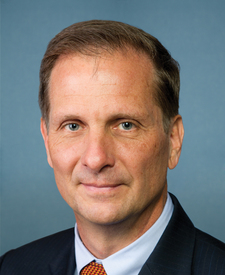
Chris Stewart
AnalysisR UT-2 · House
Agriculture
-8Government Operations
-2Environment
-3Education
+5Energy
+3Civil Rights
-3Healthcare
+2Native American Tribes
-15Finance
-5Transportation
-1Foreign Affairs
-6Regulated Industries
-1Housing
-1Defense
+1Criminal Justice
-1Trade
-5Foreign Policy
-1Homeowners
-3National Security
-1Technology
+4Industry Impact Profile
231 industry impacts
How this is computed
P Primary sponsor · C Co-sponsor · Y Yea vote · N Nay vote
Weighted score (w:) uses strongest role per bill. Weights: Primary 1.0, Co-sponsor 0.3, Yea 0.1, Nay -0.1.
Bills where the legislator voted nay (without sponsorship) contribute -0.1 per bill. Equal yea and nay roll calls on the same bill contribute 0.
Vote date filters affect vote attribution; sponsorship is always included.
Positive-Effect Industries
Click any row to see supporting clauses
Showing positive and negative-direction effects only. Mixed and uncertain effects are not included in these counts.
Sponsored & Cosponsored Bills
hr3396-118
Cosponsor In CommitteeTo require the standardization of reciprocal fire suppression cost share agreements, and for other purposes.
hr1640-118
Cosponsor In CommitteeTo prohibit the Secretary of Energy from finalizing, implementing, or enforcing the proposed rule titled Energy Conservation Program: Energy Conservation Standards for Consumer Conventional Cooking Products, and for other purposes.
hr4094-118
Cosponsor IntroducedTo amend the Central Utah Project Completion Act to authorize expenditures for the conduct of certain water conservation measures in the Great Salt Lake basin, and for other purposes.
hr3595-118
Primary Sponsor IntroducedTo improve the process for awarding grants under certain programs of the Department of Agriculture to certain counties in which the majority of land is owned or managed by the Federal Government and to other units of local government and Tribal governments in those counties, and for other purposes.
hr3594-118
Primary Sponsor IntroducedTo improve the process for awarding grants under certain programs of the Department of Transportation to certain counties in which the majority of land is owned or managed by the Federal Government and to other units of local government and Tribal governments in those counties, and for other purposes.
hr3397-118
Cosponsor ReportedTo require the Director of the Bureau of Land Management to withdraw a rule of the Bureau of Land Management relating to conservation and landscape health.
hres353-118
Cosponsor In CommitteeExpressing support for the designation of May 5, 2023, as the National Day of Awareness for Missing and Murdered Indigenous Women and Girls.
hr2962-118
Cosponsor IntroducedTo exempt certain Federal hydrogen programs from the requirements of the National Environmental Policy Act of 1969, and for other purposes.
hr2429-118
Cosponsor IntroducedTo establish the Open Access Evapotranspiration (OpenET) Data Program.
hr2367-118
Cosponsor ReportedTo amend title 23, United States Code, to establish a competitive grant program for projects for commercial motor vehicle parking, and for other purposes.
hr1586-118
Cosponsor IntroducedTo allow the Secretary of the Interior and the Secretary of Agriculture to use a fire retardant, chemical, or water for fire suppression, control, or prevention activities.
hr1298-118
Cosponsor IntroducedTo establish the United States Foundation for International Conservation to promote long-term management of protected and conserved areas, and for other purposes.
hr1018-118
Cosponsor IntroducedTo amend the Securities Exchange Act of 1934 to prohibit the Securities and Exchange Commission from requiring an issuer to disclose information related to certain greenhouse gas emissions, and for other purposes.
hr439-118
Primary Sponsor IntroducedTo direct the Secretary of the Interior to establish a grant program to allocate resources for remote search and rescue activities, and for other purposes.
hr277-118
Cosponsor ReportedTo amend chapter 8 of title 5, United States Code, to provide that major rules of the executive branch shall have no force or effect unless a joint resolution of approval is enacted into law.
hr209-118
Cosponsor IntroducedTo improve the permitting process for mining on Federal land, and for other purposes.
Loading countries...
Select a clause to see detailed analysis
Failed to load analysis
Please try again
Failed to load clauses
Please try again
Click an industry from the Impact Profile to view supporting clauses
Select a clause to see detailed analysis