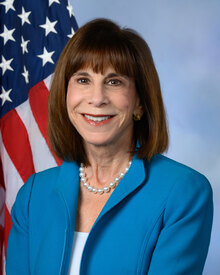
Kathy E. Manning
AnalysisD NC-6 · House
Government Operations
-9Education
+11Healthcare
+22Labor
+13Environment
-10Finance
+16Defense
+1Transportation
-1Housing
+19Homeowners
-23Veterans
-23Business
-12Technology
+2Energy
-1Immigration
0Civil Rights
-5Criminal Justice
-1Foreign Policy
-6Agriculture
+2Veterans Affairs
+2Industry Impact Profile
674 industry impacts
How this is computed
P Primary sponsor · C Co-sponsor · Y Yea vote · N Nay vote
Weighted score (w:) uses strongest role per bill. Weights: Primary 1.0, Co-sponsor 0.3, Yea 0.1, Nay -0.1.
Bills where the legislator voted nay (without sponsorship) contribute -0.1 per bill. Equal yea and nay roll calls on the same bill contribute 0.
Vote date filters affect vote attribution; sponsorship is always included.
Positive-Effect Industries
Negative-Effect Industries
Click any row to see supporting clauses
Showing positive and negative-direction effects only. Mixed and uncertain effects are not included in these counts.
Sponsored & Cosponsored Bills
hr8525-118
Cosponsor IntroducedTo hold law enforcement accountable for misconduct in court, improve transparency through data collection, and reform police training and policies.
hr8340-118
Cosponsor ReportedTo amend section 3(b)(4) of the United States Housing Act of 1937 to exclude certain disability benefits from income for the purposes of determining eligibility for the supported housing program under section 8(o)(19), and for other purposes.
hr6655-118
Cosponsor ReportedTo amend and reauthorize the Workforce Innovation and Opportunity Act.
hr6634-118
Cosponsor IntroducedTo increase the capacity of the Department of Labor and labor enforcement agencies of States to address labor violations, and for other purposes.
hr6553-118
Cosponsor IntroducedTo require the waiver of costs of activities relating to the evacuation of United States citizens endangered by acts of terrorism or war in Israel instigated by Hamas and other Islamist militant groups.
hr5965-118
Cosponsor In CommitteeTo amend the State Department Basic Authorities Act of 1956 to provide for an exemption of reimbursement for certain travel to return to the United States, and for other purposes.
hr5908-118
Cosponsor In CommitteeTo provide funding to summer youth employment programs to expand the availability of subsidized jobs for youths and to develop innovative program activities that improve academic, economic, and criminal justice outcomes for youths, and for other purposes.
hr14-118
Cosponsor IntroducedTo amend the Voting Rights Act of 1965 to revise the criteria for determining which States and political subdivisions are subject to section 4 of the Act, and for other purposes.
hr4583-118
Cosponsor IntroducedTo protect our Social Security system and improve benefits for current and future generations.
hr3899-118
Cosponsor IntroducedTo amend the Internal Revenue Code of 1986 to establish a refundable child tax credit with monthly advance payment.
hr3599-118
Cosponsor IntroducedTo reform the immigration laws.
hr3547-118
Cosponsor IntroducedTo require the Department of Homeland Security to develop and disseminate a threat assessment regarding the use of cyber harassment, including doxing, by terrorists and foreign malicious actors, and for other purposes.
hr3305-118
Cosponsor IntroducedTo end preventable maternal mortality, severe maternal morbidity, and maternal health disparities in the United States, and for other purposes.
hr2851-118
Cosponsor IntroducedTo amend the Act of August 16, 1937 (commonly referred to as the National Apprenticeship Act), to expand the national apprenticeship system to include apprenticeships, youth apprenticeships, and pre-apprenticeships registered under such Act and to promote the furtherance of labor standards necessary to safeguard the welfare of apprentices, and for other purposes.
hr2403-118
Cosponsor IntroducedTo amend chapter 44 of title 18, United States Code, to strengthen the background check procedures to be followed before a Federal firearms licensee may transfer a firearm to a person who is not such a licensee.
hr12-118
Cosponsor IntroducedTo protect a person’s ability to determine whether to continue or end a pregnancy, and to protect a health care provider’s ability to provide abortion services.
hr2367-118
Cosponsor ReportedTo amend title 23, United States Code, to establish a competitive grant program for projects for commercial motor vehicle parking, and for other purposes.
hr17-118
Cosponsor IntroducedTo amend the Fair Labor Standards Act of 1938 to provide more effective remedies to victims of discrimination in the payment of wages on the basis of sex, and for other purposes.
hr20-118
Cosponsor IntroducedTo amend the National Labor Relations Act, the Labor Management Relations Act, 1947, and the Labor-Management Reporting and Disclosure Act of 1959, and for other purposes.
hr1118-118
Cosponsor IntroducedTo amend the Federal Election Campaign Act of 1971 to provide for additional disclosure requirements for corporations, labor organizations, Super PACs and other entities, and for other purposes.
Loading countries...
Select a clause to see detailed analysis
Failed to load analysis
Please try again
Failed to load clauses
Please try again
Click an industry from the Impact Profile to view supporting clauses
Select a clause to see detailed analysis