Healthcare
179 bills 906 analyzed clauses
Explore affected groups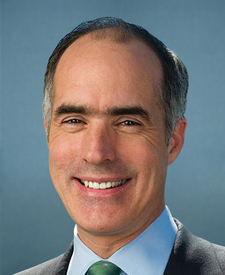
D PA · Senate
Policy Effects
Estimated effects on people, organizations, and industries in bills this legislator sponsored, cosponsored, or voted on. Includes bills they voted against.
These are assessments of legislative text, not measurements of realized outcomes or the legislator’s intent.
This selection could not be loaded. Your current view is still available.
Open the requested selection in a full pageStart with a policy area to see the specific groups affected.
179 bills 906 analyzed clauses
Explore affected groups171 bills 701 analyzed clauses
Explore affected groups117 bills 404 analyzed clauses
Explore affected groups106 bills 306 analyzed clauses
Explore affected groups95 bills 273 analyzed clauses
Explore affected groups71 bills 274 analyzed clauses
Explore affected groups51 bills 145 analyzed clauses
Explore affected groups47 bills 140 analyzed clauses
Explore affected groups39 bills 82 analyzed clauses
Explore affected groups39 bills 67 analyzed clauses
Explore affected groups38 bills 151 analyzed clauses
Explore affected groups36 bills 87 analyzed clauses
Explore affected groups30 bills 116 analyzed clauses
Explore affected groups30 bills 69 analyzed clauses
Explore affected groups23 bills 48 analyzed clauses
Explore affected groups21 bills 96 analyzed clauses
Explore affected groups19 bills 31 analyzed clauses
Explore affected groups18 bills 73 analyzed clauses
Explore affected groups14 bills 78 analyzed clauses
Explore affected groups12 bills 81 analyzed clauses
Explore affected groups12 bills 35 analyzed clauses
Explore affected groups11 bills 41 analyzed clauses
Explore affected groups8 bills 40 analyzed clauses
Explore affected groups8 bills 12 analyzed clauses
Explore affected groups6 bills 19 analyzed clauses
Explore affected groups6 bills 15 analyzed clauses
Explore affected groups5 bills 50 analyzed clauses
Explore affected groups5 bills 36 analyzed clauses
Explore affected groups5 bills 27 analyzed clauses
Explore affected groups3 bills 16 analyzed clauses
Explore affected groups2 bills 95 analyzed clauses
Explore affected groups2 bills 21 analyzed clauses
Explore affected groups2 bills 9 analyzed clauses
Explore affected groups2 bills 2 analyzed clauses
Explore affected groups1 bill 29 analyzed clauses
Explore affected groups1 bill 26 analyzed clauses
Explore affected groups1 bill 24 analyzed clauses
Explore affected groups1 bill 16 analyzed clauses
Explore affected groups1 bill 11 analyzed clauses
Explore affected groups1 bill 10 analyzed clauses
Explore affected groups1 bill 10 analyzed clauses
Explore affected groups1 bill 9 analyzed clauses
Explore affected groups1 bill 7 analyzed clauses
Explore affected groups1 bill 7 analyzed clauses
Explore affected groups1 bill 7 analyzed clauses
Explore affected groups1 bill 3 analyzed clauses
Explore affected groups1 bill 2 analyzed clauses
Explore affected groups1 bill 2 analyzed clauses
Explore affected groups1 bill 2 analyzed clauses
Explore affected groups1 bill 1 analyzed clause
Explore affected groups1 bill 1 analyzed clause
Explore affected groups1 bill 1 analyzed clause
Explore affected groups1 bill 1 analyzed clause
Explore affected groups1 bill 1 analyzed clause
Explore affected groups1 bill 1 analyzed clause
Explore affected groupsPotential benefits are effects assessed as favorable to the named group. Potential burdens impose costs, restrictions, risks, or lost opportunities on that group.
Mixed effects contain countervailing effects on the same group. Unclear effects have an undetermined direction. A group can have separate benefits and burdens; these are counted separately.
Counts describe the number of identified effects, not their size or public value. Bill and clause counts are distinct within each view. Shared evidence may appear under several groups or policy areas, so their counts should not be added together.
Historical bill versions are included. Clauses analyzed in different versions count separately. A bill’s current status does not establish that every analyzed provision was enacted.
Only direct effects with high or medium confidence in the policy-area assignment are included. Bills are connected through sponsorship, cosponsorship, or Yea/Nay votes; a vote against a bill does not reverse its assessed effects. Vote dates filter recorded votes and vote-linked bills; sponsorship remains included.
To amend the Internal Revenue Code of 1986 to allow workers an above-the-line deduction for union dues and expenses and to allow a miscellaneous itemized deduction for workers for all unreimbursed expenses incurred in the trade or business of being an employee.
To amend title XIX of the Social Security Act to require coverage of, and expand access to, home and community-based services under the Medicaid program, to award grants for the creation, recruitment, training and education, retention, and advancement of the direct care workforce and to award grants to support family caregivers, and for other purposes.
To enhance mental health and psychosocial support within United States development and humanitarian assistance programs.
To amend the Fair Labor Standards Act of 1938 to provide more effective remedies to victims of discrimination in the payment of wages on the basis of sex, and for other purposes.
To prohibit an employer from terminating the coverage of an employee under a group health plan while the employer is engaged in a lock-out or while the employee is engaged in a lawful strike, and for other purposes.
To amend the Water Infrastructure Improvements for the Nation Act to reauthorize Delaware River Basin conservation programs, and for other purposes.
To amend the Securities Act of 1934 to require country-by-country reporting.
To expand the take-home prescribing of methadone through pharmacies.
To amend the Employee Retirement Income Security Act of 1974 to require a group health plan or health insurance coverage offered in connection with such a plan to provide an exceptions process for any medication step therapy protocol, and for other purposes.
To amend title II of the Social Security Act to repeal the Government pension offset and windfall elimination provisions.
To enhance safety requirements for trains transporting hazardous materials, and for other purposes.
To protect the rights of passengers with disabilities in air transportation, and for other purposes.
To amend the National Labor Relations Act, the Labor Management Relations Act, 1947, and the Labor-Management Reporting and Disclosure Act of 1959, and for other purposes.
To award a Congressional Gold Medal, collectively, to the First Rhode Island Regiment, in recognition of their dedicated service during the Revolutionary War.
Designating March 1, 2023, as National Assistive Technology Awareness Day.
Designating February 28, 2023, as Rare Disease Day.
To assist employers providing employment under special certificates issued under section 14(c) of the Fair Labor Standards Act of 1938 in transforming their business and program models to models that support people with disabilities through competitive integrated employment, to phase out the use of such special certificates, and for other purposes.
To amend the Federal Election Campaign Act of 1971 to provide for additional disclosure requirements for corporations, labor organizations, Super PACs and other entities, and for other purposes.
To award posthumously the Congressional Gold Medal to Constance Baker Motley, in recognition of her enduring contributions and service to the United States.
To require a background check for every firearm sale.
Loading countries...
Select a clause to see detailed analysis
Failed to load analysis
Please try again
Failed to load clauses
Please try again
Explore affected groups in Policy Effects to view supporting evidence. Existing clause links also open here.
Select a clause to see detailed analysis