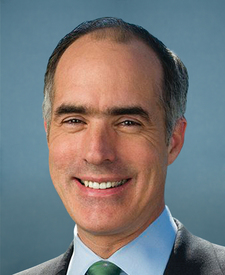
Robert P. Casey, Jr.
AnalysisD PA · Senate
Healthcare
+150Government Operations
-18Education
-20Transportation
-37Finance
-10Environment
+25Labor
+30Defense
+2Criminal Justice
-10Elections
-9Native American Tribes
-77Technology
-10Civil Rights
+9Trade
-16Regulated Industries
-37Foreign Policy
-6Housing
-4Immigration
-5Energy
0Science & Space
+29Industry Impact Profile
3289 industry impacts
How this is computed
P Primary sponsor · C Co-sponsor · Y Yea vote · N Nay vote
Weighted score (w:) uses strongest role per bill. Weights: Primary 1.0, Co-sponsor 0.3, Yea 0.1, Nay -0.1.
Bills where the legislator voted nay (without sponsorship) contribute -0.1 per bill. Equal yea and nay roll calls on the same bill contribute 0.
Vote date filters affect vote attribution; sponsorship is always included.
Positive-Effect Industries
Negative-Effect Industries
Click any row to see supporting clauses
Showing positive and negative-direction effects only. Mixed and uncertain effects are not included in these counts.
Sponsored & Cosponsored Bills
sres917-118
Primary Sponsor In CommitteeRecognizing November 2024 as National Family Caregivers Month.
s5329-118
Cosponsor IntroducedTo amend section 321 of the Tariff Act of 1930 to enhance transparency with respect to shipments seeking an administrative exemption from duties for low-value entries, and for other purposes.
s5128-118
Primary Sponsor IntroducedTo require the Director of the Bureau of Prisons to develop and implement a strategy to interdict illicit substances and other contraband in the mail at Federal correctional facilities.
sres817-118
CosponsorDesignating the week beginning September 8, 2024, as National Direct Support Professionals Recognition Week.
sres815-118
Cosponsor In CommitteeDesignating the week beginning on September 9, 2024, as National Hispanic-Serving Institutions Week.
s5016-118
Primary Sponsor IntroducedTo combat the economic aggression of the People's Republic of China, and for other purposes.
s4954-118
Primary Sponsor IntroducedTo require the Secretary of Transportation to issue a final rule setting minimum structural standards for railroad bridges, and for other purposes.
s4782-118
Cosponsor IntroducedTo promote the provision of exercise or fitness equipment, and exercise or fitness classes and instruction, that are accessible to individuals with disabilities.
s4776-118
Cosponsor ReportedTo amend the Older Americans Act of 1965 to authorize appropriations for fiscal years 2025 through 2029, and for other purposes.
s4766-118
Primary Sponsor IntroducedTo strengthen requirements for the use of accessible information and communications technology by Federal departments and agencies.
s4743-118
Cosponsor IntroducedTo improve the Long-Term Care Ombudsman program.
s4750-118
Primary Sponsor IntroducedTo ensure efficiency and fairness in Federal subcontracting, and for other purposes.
sres693-118
CosponsorRecognizing the significance of Asian American, Native Hawaiian, and Pacific Islander Heritage Month as an important time to celebrate the significant contributions of Asian Americans, Native Hawaiians, and Pacific Islanders to the history of the United States.
s4334-118
Cosponsor IntroducedTo enhance the security operations of the Transportation Security Administration and stability of the transportation security workforce by applying the personnel system under title 5, United States Code, to employees of the Transportation Security Administration, and for other purposes.
sres636-118
CosponsorDesignating February 29, 2024, as Rare Disease Day.
sres551-118
CosponsorCelebrating Black History Month.
s3747-118
Primary Sponsor IntroducedTo allow individuals with disabilities to campaign for elected office without losing access to federally supported benefits.
s3748-118
Primary Sponsor IntroducedTo amend the Help America Vote Act of 2002 to increase voting accessibility for individuals with disabilities and older individuals, and for other purposes.
sres505-118
Cosponsor In CommitteeCondemning the use of sexual violence and rape as a weapon of war by the terrorist group Hamas against the people of Israel.
s3501-118
Primary Sponsor IntroducedTo provide greater support for grandfamilies and older caregiver relatives.
Loading countries...
Select a clause to see detailed analysis
Failed to load analysis
Please try again
Failed to load clauses
Please try again
Click an industry from the Impact Profile to view supporting clauses
Select a clause to see detailed analysis