Risky Research Review Act
Summary
What This Bill Does
The Risky Research Review Act establishes a new independent executive-branch Life Sciences Research Security Board for federal funding decisions involving high-risk life-sciences research. It defines dual-use research of concern, gain-of-function research, high-consequence pathogens, select agents and toxins, and high-risk life-sciences research; creates a nine-member board with nongovernmental scientists, national-security experts, a biosafety expert, and an executive director; bars agencies from awarding federal funding for high-risk life sciences research without board approval; requires agency referral procedures and board reviews; adds board members to financial-disclosure coverage; requires GAO audits; and authorizes $30 million for each fiscal year from 2026 through 2035.
Who Benefits and How
Public health and national security officials benefit because risky pathogen research would receive independent review before federal funding is awarded. Congressional homeland security and energy-commerce committees benefit from GAO audits and clearer oversight of high-risk research funding. Biosafety experts benefit from a formal role in judging gain-of-function and dual-use research risks. Federal research agencies benefit from a centralized board that can make binding determinations on difficult high-risk proposals. The public benefits if research involving high-consequence pathogens is screened for misuse, transmissibility, virulence, immune evasion, and diagnostic-evasion risks.
Who Bears the Burden and How
Researchers seeking federal funds for high-risk life-sciences research must pass board review before receiving awards. Universities, biomedical labs, and biotechnology contractors face added referral, documentation, and approval burdens for covered research. Federal agencies must create procedures, refer covered proposals, and withhold funding unless the board approves. Life Sciences Research Security Board members must comply with appointment, conflict-of-interest, and financial-disclosure rules. Federal taxpayers fund the board at up to $30 million per year from fiscal years 2026 through 2035.
Key Provisions
- Establishes the Life Sciences Research Security Board as an independent executive-branch agency.
- Defines dual-use research of concern, gain-of-function research, high-consequence pathogens, select agents, and high-risk life-sciences research.
- Prohibits federal agencies from awarding covered high-risk life-sciences funding without board approval.
- Requires agency referral procedures, board review, GAO audits, and financial disclosure for board members.
- Authorizes $30 million per year for fiscal years 2026 through 2035 to operate the board.
Evidence Chain:
This summary is generated from the full bill text using AI analysis. Expand "Detailed Analysis" below for identified beneficiaries/burden bearers with clause-level evidence links.
At a Glance
What This Bill Does
Creates an independent Life Sciences Research Security Board to approve or block federal funding for high-risk life-sciences research, including gain-of-function and dual-use research involving high-consequence pathogens, with agency referral procedures, board review deadlines, GAO audits, member disclosures, and $30 million per year authorized for fiscal years 2026-2035.
Key Policy Areas
Biomedical Research, Biosecurity, Federal Funding
Primary Purpose
Creates an independent Life Sciences Research Security Board to approve or block federal funding for high-risk life-sciences research, including gain-of-function and dual-use research involving high-consequence pathogens, with agency referral procedures, board review deadlines, GAO audits, member disclosures, and $30 million per year authorized for fiscal years 2026-2035.
Policy Domains
Bill provisions
Identified Gains
- Public health security officials
- National security officials
- Congressional oversight committees
- Biosafety experts
- Federal research agencies
Identified Costs
- High-risk life-sciences researchers
- Universities and biomedical labs
- Federal funding agencies
- Life Sciences Research Security Board members
- Federal taxpayers
Sponsors
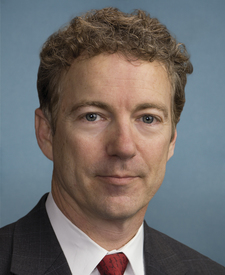
Rand Paul
R-KY | Primary Sponsor
Legislative Progress
ReportedReported by Mr. Paul, without amendment
Placed on Senate Legislative Calendar under General Orders. Calendar No. …
Committee on Homeland Security and Governmental Affairs. Reported by Senator …
Committee on Homeland Security and Governmental Affairs. Ordered to be …
Mr. Paul (for himself and Mr. Peters) introduced the following …
Read twice and referred to the Committee on Homeland Security …
Introduced in Senate
Stakeholder Effects
cui bono?How this legislation distributes effects. Mention counts reflect frequency, not effect magnitude.
Congressional oversight committees, Federal funding agencies, Federal research agencies
Positive-direction: Congressional oversight committees, Federal research agencies
Negative-direction: Federal funding agencies, Life Sciences Research Security Board members
Biosafety experts, High-risk life-sciences researchers, Universities and biomedical labs
Positive-direction: Biosafety experts
Negative-direction: High-risk life-sciences researchers, Universities and biomedical labs
Bill Structure & Actor Mappings
Who is "The Secretary" in each section?
- "board"
- → Life Sciences Research Security Board
We use a combination of our own taxonomy and classification in addition to large language models to assess meaning and potential beneficiaries. High confidence means strong textual evidence. Always verify with the original bill text.
Learn more about our methodology