Community Services Block Grant Improvement Act of 2025
Summary
What This Bill Does
The Community Services Block Grant Improvement Act is a broad modernization of the CSBG statute. It updates the program purpose toward reducing poverty by supporting community action agencies and other community services network organizations that improve economic security, self-sufficiency, and local opportunity. It revises definitions including agency-wide strategic plan, community action agency, community action plan, community needs assessment, eligible entity, family, Indian Tribe, and poverty line, and sets 200 percent of the poverty line as the direct-service eligibility criterion. The bill authorizes 1 billion dollars for fiscal year 2026, 1.2 billion dollars for fiscal year 2027, 1.4 billion dollars for fiscal year 2028, and 1.7 billion dollars for each of fiscal years 2029 through 2032, plus 40 million dollars per year for discretionary national or regional programs. State allotment rules preserve minimum shares and raise the floor when post-reservation funds exceed 900 million dollars. States must make quarterly allocations, get the first allocation out within 30 days after apportionment, and make grants available to eligible entities on defined timelines. State uses are refocused on application-plan activities, training and technical assistance, emergency economic insecurity responses, performance systems, coordination, statewide associations, needs assessments, and evidence building. The bill rewrites state applications and plans, redesignation of unserved areas, tripartite board requirements, the Office of Community Services role, training and technical assistance, fiscal controls, audits, withholding, accountability reporting, use limitations, discretionary authority, community food and nutrition programs, and national youth programs. The practical effect is to preserve CSBG as a community-action grant system while making eligibility broader, funding larger, state duties more prescriptive, eligible-entity governance more explicit, and federal oversight more data-driven.
Who Benefits and How
Low-income individuals and families up to 200 percent of the poverty line benefit because they are expressly eligible for direct CSBG-funded services, assistance, and resources. Community action agencies benefit from multiyear authorizations, clearer eligible-entity definitions, state grant timelines, and support for strategic plans and needs assessments. State CSBG offices benefit from larger authorizations and clearer allotment and quarterly allocation rules. Indian Tribes and tribal organizations benefit from updated definitions and access within the community services network. Community food and nutrition programs and youth instructional programs benefit from dedicated discretionary authorizations through fiscal year 2032.
Who Bears the Burden and How
State CSBG offices must submit more detailed plans, allocate funds on time, monitor eligible entities, support training and technical assistance, and comply with accountability reporting. Eligible entities must maintain community action plans, agency-wide strategic plans, tripartite boards, audits, fiscal controls, and performance reporting. HHS Office of Community Services staff must administer larger authorizations, training, oversight, withholding, national activities, and reporting systems. Federal appropriators bear the cost of rising authorizations from 1 billion dollars in fiscal year 2026 to 1.7 billion dollars annually from fiscal years 2029 through 2032. States redesignating unserved areas must follow more formal notice, hearing, and eligibility processes.
Key Provisions
- Amends CSBG purposes to focus on economic security, self-sufficiency, and opportunity through community action agencies and network organizations.
- Raises direct-service eligibility to 200 percent of the poverty line.
- Authorizes CSBG funding from 1 billion dollars in fiscal year 2026 to 1.7 billion dollars annually for fiscal years 2029 through 2032.
- Revises state allotments, quarterly payments, state uses, applications, plans, eligible-entity designation, and tripartite board rules.
- Strengthens Office of Community Services oversight, training, fiscal controls, audits, withholding, accountability reporting, and use limitations.
- Authorizes community food and nutrition programs and national or regional youth instructional activities through fiscal year 2032.
Evidence Chain:
This summary is generated from the full bill text using AI analysis. Expand "Detailed Analysis" below for identified beneficiaries/burden bearers with clause-level evidence links.
At a Glance
What This Bill Does
Reauthorizes and rewrites the Community Services Block Grant Act through fiscal year 2032, raising income eligibility to 200 percent of poverty, revising state allotments and eligible-entity governance, strengthening accountability, and funding community food, youth, training, and national activities.
Key Policy Areas
Social Welfare, Community Services, Grants
Primary Purpose
Reauthorizes and rewrites the Community Services Block Grant Act through fiscal year 2032, raising income eligibility to 200 percent of poverty, revising state allotments and eligible-entity governance, strengthening accountability, and funding community food, youth, training, and national activities.
Policy Domains
Resolution provisions
Identified Gains
- Low-income individuals
- Community action agencies
- State CSBG offices
- Indian Tribes
- Community food programs
- Youth instructional programs
Identified Costs
- State CSBG offices
- Eligible entities
- HHS Office of Community Services staff
- Federal appropriators
- State redesignation officials
Sponsors
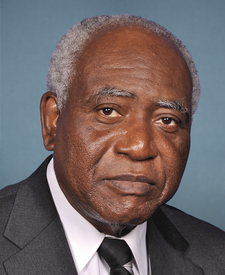
Legislative Progress
In CommitteeMr. Thompson of Pennsylvania (for himself and Ms. Bonamici) introduced …
Referred to the House Committee on Education and Workforce.
Introduced in House
Stakeholder Effects
cui bono?How this legislation distributes effects. Mention counts reflect frequency, not effect magnitude.
HHS Office of Community Services staff, Indian Tribes, State CSBG offices
Positive-direction: State CSBG offices
Negative-direction: HHS Office of Community Services staff, State redesignation officials
Community action agencies, Eligible entities
Positive-direction: Community action agencies
Negative-direction: Eligible entities
Bill Structure & Actor Mappings
Who is "The Secretary" in each section?
We use a combination of our own taxonomy and classification in addition to large language models to assess meaning and potential beneficiaries. High confidence means strong textual evidence. Always verify with the original bill text.
Learn more about our methodology