Tanning Tax Repeal Act of 2025
Summary
What This Bill Does
The Tanning Tax Repeal Act eliminates the federal excise tax on indoor tanning services. It strikes chapter 49 from subtitle D of the Internal Revenue Code and removes the corresponding table entry. The bill does not replace the tax with a new health or safety rule; its practical effect is to lower the federal tax burden on indoor tanning salons and their customers while reducing federal revenue and removing a tax that public-health advocates have treated as a price signal against ultraviolet tanning.
Who Benefits and How
Indoor tanning salons benefit because they no longer have to collect and remit the federal excise tax. Tanning customers benefit from lower after-tax prices if salons pass through the tax repeal. Small beauty and wellness businesses benefit from simpler tax compliance for tanning services. Tax preparers serving salons benefit from one fewer excise-tax filing obligation.
Who Bears the Burden and How
Federal taxpayers and the Treasury lose revenue from repealing the tanning services excise tax. Public-health advocates focused on skin cancer prevention lose a federal price signal discouraging indoor tanning. IRS excise-tax administrators must update guidance, forms, and enforcement systems after repeal. Dermatology and cancer-prevention organizations may face increased advocacy burden if lower prices increase tanning use.
Key Provisions
- Repeals the federal excise tax on indoor tanning services.
- Amends the Internal Revenue Code by striking chapter 49 and the related table entry.
- Provides lower tax compliance obligations for indoor tanning salons.
- Limits federal use of tax policy as a price signal tied to ultraviolet tanning.
Evidence Chain:
This summary is generated from the full bill text using AI analysis. Expand "Detailed Analysis" below for identified beneficiaries/burden bearers with clause-level evidence links.
At a Glance
What This Bill Does
Repeals the Internal Revenue Code excise tax on indoor tanning services by striking chapter 49 and the related table entry.
Key Policy Areas
Tax, Small Business, Health Services
Primary Purpose
Repeals the Internal Revenue Code excise tax on indoor tanning services by striking chapter 49 and the related table entry.
Policy Domains
Resolution provisions
Identified Gains
- Indoor tanning salons
- Tanning customers
- Beauty and wellness businesses
- Tax preparers
Identified Costs
- Federal taxpayers
- Public-health advocates
- IRS excise-tax administrators
- Dermatology organizations
Sponsors


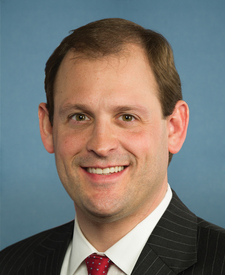


Legislative Progress
In CommitteeMrs. Miller of West Virginia introduced the following bill; which …
Referred to the House Committee on Ways and Means.
Introduced in House
Stakeholder Effects
cui bono?How this legislation distributes effects. Mention counts reflect frequency, not effect magnitude.
Bill Structure & Actor Mappings
Who is "The Secretary" in each section?
We use a combination of our own taxonomy and classification in addition to large language models to assess meaning and potential beneficiaries. High confidence means strong textual evidence. Always verify with the original bill text.
Learn more about our methodology