New Source Review Permitting Improvement Act
Summary
What This Bill Does
The New Source Review Permitting Improvement Act changes when facility changes count as Clean Air Act modifications or construction requiring preconstruction permits. Section 2 amends the section 111 modification definition so a change increases emissions only if the source's maximum achievable hourly emission rate after the change is higher than the maximum achievable hourly rate during any hour in the previous 10 years. It excludes changes designed to reduce pollution per unit of production or restore, maintain, or improve reliability or safety, unless EPA determines the increased maximum hourly rate would adversely affect human health or the environment. Section 3 limits Prevention of Significant Deterioration construction requirements to physical construction of discrete emissions-unit parts at a major emitting facility, even if other on-site work is costly, significant, permanent, or accommodates an installation. It also says construction-related modification does not include a change without a significant emissions increase or significant net emissions increase in annual actual emissions. Section 4 applies parallel rules for nonattainment areas. Section 5 says the Act does not make any change a modification if it would not have been treated that way before enactment.
Who Benefits and How
Major emitting facilities benefit because fewer projects would trigger New Source Review solely because of on-site work or hourly-rate comparisons outside the bill's test. Manufacturers benefit when efficiency, reliability, safety, or pollution-per-unit improvements can proceed without being treated as modifications unless EPA finds adverse effects. Power plants, refineries, and industrial facilities benefit from a clearer 10-year maximum hourly emissions benchmark and annual actual emissions tests. Project developers benefit because PSD and nonattainment preconstruction requirements would focus on discrete emissions-unit construction. State permitting agencies benefit from clearer statutory criteria, though they may also need to update implementation guidance.
Who Bears the Burden and How
EPA must apply new definitions, determine when excluded projects still cause adverse human-health or environmental effects, and update Clean Air Act permitting practice. Environmental advocates bear a policy burden because some reliability, safety, or efficiency projects may avoid NSR review even if they affect emissions per hour below the new threshold. Communities near industrial facilities may face fewer preconstruction permit reviews for projects that do not meet the bill's modification tests. State air permitting agencies must adjust PSD and nonattainment permit decisions to the new construction and annual-emissions standards.
Key Provisions
- Provides an emissions-increase definition using the post-change maximum achievable hourly rate compared with any hour in the prior 10 years.
- Provides an exclusion for pollution-per-unit, reliability, safety, and maintenance projects unless EPA finds adverse effects.
- Limits PSD construction permitting to physical construction of discrete emissions-unit parts.
- Excludes changes without significant annual actual emissions increases from construction-related modification treatment.
- Applies parallel construction and modification limits in nonattainment areas.
- Provides that the Act does not newly classify changes as modifications if they were not modifications before enactment.
Evidence Chain:
This summary is generated from the full bill text using AI analysis. Expand "Detailed Analysis" below for identified beneficiaries/burden bearers with clause-level evidence links.
At a Glance
What This Bill Does
Narrows Clean Air Act New Source Review triggers by defining an emissions increase based on maximum achievable hourly emissions over the prior 10 years, excluding certain pollution-control, efficiency, reliability, and safety projects unless EPA finds adverse health or environmental effects, and limiting construction-permit requirements to physical construction of discrete emissions-unit parts or annual actual emissions increases.
Key Policy Areas
Environment, Manufacturing, Energy
Primary Purpose
Narrows Clean Air Act New Source Review triggers by defining an emissions increase based on maximum achievable hourly emissions over the prior 10 years, excluding certain pollution-control, efficiency, reliability, and safety projects unless EPA finds adverse health or environmental effects, and limiting construction-permit requirements to physical construction of discrete emissions-unit parts or annual actual emissions increases.
Policy Domains
House resolution provisions
Identified Gains
- Major emitting facilities
- Manufacturers
- Power plants
- Refineries
- Industrial facilities
- Project developers
- State permitting agencies
Identified Costs
- Environmental Protection Agency
- Environmental advocates
- Communities near industrial facilities
- State air permitting agencies
Sponsors

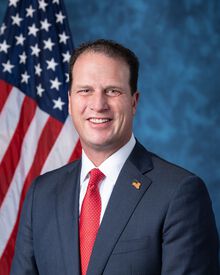
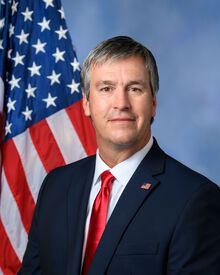


Legislative Progress
ReportedPlaced on the Union Calendar, Calendar No. 542.
Reported (Amended) by the Committee on Energy and Commerce. H. …
Additional sponsors: Mrs. Fedorchak, Mr. Ellzey, Ms. Boebert, Mr. Pfluger, …
Reported (Amended) by the Committee on Energy and Commerce. H. …
Committee Consideration and Mark-up Session Held
Ordered to be Reported (Amended) by the Yeas and Nays: …
Forwarded by Subcommittee to Full Committee by the Yeas and …
Subcommittee Consideration and Mark-up Session Held
Referred to the Subcommittee on Environment.
Referred to the House Committee on Energy and Commerce.
Stakeholder Effects
cui bono?How this legislation distributes effects. Mention counts reflect frequency, not effect magnitude.
Environmental Protection Agency, State air permitting agencies
Bill Structure & Actor Mappings
Who is "The Secretary" in each section?
- "epa"
- → Environmental Protection Agency
We use a combination of our own taxonomy and classification in addition to large language models to assess meaning and potential beneficiaries. High confidence means strong textual evidence. Always verify with the original bill text.
Learn more about our methodology