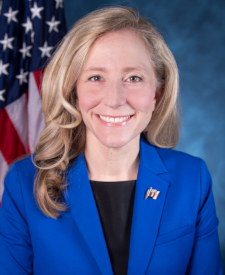
Abigail Davis Spanberger
AnalysisD VA-7 · House
Healthcare
+37Government Operations
+3Education
-35Energy
+17Environment
-3Regulated Industries
-43Defense
+8Finance
+1Transportation
+1Criminal Justice
0Public Health
+17Foreign Policy
-9Business
-14Agriculture
-8Housing
+5Oil & Gas
-21Civil Rights
-3Technology
+4Trade
-9Foreign Businesses
-9Industry Impact Profile
820 industry impacts
How this is computed
P Primary sponsor · C Co-sponsor · Y Yea vote · N Nay vote
Weighted score (w:) uses strongest role per bill. Weights: Primary 1.0, Co-sponsor 0.3, Yea 0.1, Nay -0.1.
Bills where the legislator voted nay (without sponsorship) contribute -0.1 per bill. Equal yea and nay roll calls on the same bill contribute 0.
Vote date filters affect vote attribution; sponsorship is always included.
Positive-Effect Industries
Negative-Effect Industries
Click any row to see supporting clauses
Showing positive and negative-direction effects only. Mixed and uncertain effects are not included in these counts.
Sponsored & Cosponsored Bills
hr9936-118
Primary Sponsor IntroducedTo amend the National Agricultural Research, Extension, and Teaching Policy Act of 1977 with respect to workforce development, and for other purposes.
hr9667-118
Primary Sponsor IntroducedTo require the Secretary of Homeland Security to enhance capabilities for outbound inspections at the southern land border, and for other purposes.
hr9244-118
Cosponsor IntroducedTo transfer and limit Executive Branch authority to suspend or restrict the entry of a class of aliens.
hr8907-118
Cosponsor IntroducedTo reform Federal firearms laws, and for other purposes.
hr8525-118
Cosponsor IntroducedTo hold law enforcement accountable for misconduct in court, improve transparency through data collection, and reform police training and policies.
hr8343-118
Cosponsor IntroducedTo amend title 31, United States Code, to include information on improper payments under Federal programs, to change the treatment of certain Federal programs with respect to susceptibility to significant improper payments, and for other purposes.
hr8340-118
Cosponsor ReportedTo amend section 3(b)(4) of the United States Housing Act of 1937 to exclude certain disability benefits from income for the purposes of determining eligibility for the supported housing program under section 8(o)(19), and for other purposes.
hr6973-118
Cosponsor IntroducedTo permit COPS grants to be used for the purpose of increasing the compensation and hiring of law enforcement officers, and for other purposes.
hr6877-118
Primary Sponsor IntroducedTo amend section 1242 of the Food Security Act of 1985 to enhance and update conservation practice standards, and for other purposes.
hr6867-118
Cosponsor IntroducedTo create an Office of Conservation Innovation within the Natural Resources Conservation Service.
hr6747-118
Cosponsor IntroducedTo speed up the deployment of electricity transmission and clean energy, with proper input from affected communities, and for other purposes.
hr3448-118
Cosponsor ReportedTo amend chapter 3081 of title 54, United States Code, to enhance the protection and preservation of America’s battlefields.
hr6031-118
Cosponsor In CommitteeTo address and take action to prevent bullying and harassment of students.
hr14-118
Cosponsor IntroducedTo amend the Voting Rights Act of 1965 to revise the criteria for determining which States and political subdivisions are subject to section 4 of the Act, and for other purposes.
hr5390-118
Cosponsor In CommitteeTo direct the Secretary of Commerce to conduct a study on the feasibility of manufacturing in the United States products for critical infrastructure sectors, and for other purposes.
hr5250-118
Cosponsor IntroducedTo amend the Agricultural Credit Act of 1978 with respect to the emergency watershed program, and for other purposes.
hr5133-118
Cosponsor IntroducedTo provide for the conservation of the Chesapeake Bay, and for other purposes.
hr4193-118
Cosponsor IntroducedTo require the Secretary of Transportation to establish a policy with respect to family seating on air transportation, and for other purposes.
hr3899-118
Cosponsor IntroducedTo amend the Internal Revenue Code of 1986 to establish a refundable child tax credit with monthly advance payment.
hr3534-118
Cosponsor IntroducedTo require justices, judges, magistrate judges, or bankruptcy judges and their spouses and dependent children to place certain assets into qualified blind trusts, and for other purposes.
Loading countries...
Select a clause to see detailed analysis
Failed to load analysis
Please try again
Failed to load clauses
Please try again
Click an industry from the Impact Profile to view supporting clauses
Select a clause to see detailed analysis