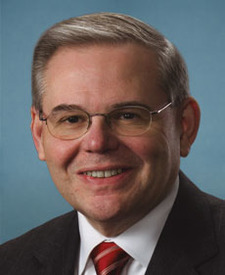
Robert Menendez
AnalysisD NJ · Senate
Government Operations
-5Education
-71Healthcare
+13Environment
+16Finance
+5Foreign Policy
-31Defense
-1Foreign Affairs
-22Elections
-9Criminal Justice
-17Transportation
+7Technology
-2Civil Rights
+13Labor
+18Regulated Industries
-20Native American Tribes
-43Housing
-16Immigration
-10Agriculture
-6Energy
-1Industry Impact Profile
2921 industry impacts
How this is computed
P Primary sponsor · C Co-sponsor · Y Yea vote · N Nay vote
Weighted score (w:) uses strongest role per bill. Weights: Primary 1.0, Co-sponsor 0.3, Yea 0.1, Nay -0.1.
Bills where the legislator voted nay (without sponsorship) contribute -0.1 per bill. Equal yea and nay roll calls on the same bill contribute 0.
Vote date filters affect vote attribution; sponsorship is always included.
Positive-Effect Industries
Negative-Effect Industries
Click any row to see supporting clauses
Showing positive and negative-direction effects only. Mixed and uncertain effects are not included in these counts.
Sponsored & Cosponsored Bills
sres221-118
CosponsorPromoting minority health awareness and supporting the goals and ideals of National Minority Health Month in April 2023, which include bringing attention to the health disparities faced by minority populations of the United States such as American Indians, Alaska Natives, Asian Americans, African Americans, Hispanics, and Native Hawaiians or other Pacific Islanders.
sres500-118
CosponsorDesignating November 8, 2023, as National First-Generation College Celebration Day.
s3128-118
CosponsorTo streamline the reporting of violations against immigrant children in Federal custody, to provide protections for unaccompanied immigrant children, and to ensure safe release to sponsors, and for other purposes.
sres412-118
CosponsorSupporting the nearly 150,000 United Auto Workers currently negotiating collective bargaining agreements with the “Big Three” automakers.
sres67-118
CosponsorSupporting the goals and ideals of Career and Technical Education Month.
sres765-118
CosponsorRelating to the death of the Honorable James Mountain Inhofe, former Senator for the State of Oklahoma.
s4680-118
Cosponsor IntroducedTo award a Congressional Gold Medal to Jens Stoltenberg, in recognition of his contributions to the security, unity, and defense of the North Atlantic Treaty Organization.
s4629-118
Cosponsor IntroducedTo prohibit discrimination on the basis of religion, sex (including sexual orientation and gender identity), and marital status in the administration and provision of child welfare services, to improve safety, well-being, and permanency for lesbian, gay, bisexual, transgender, and queer or questioning foster youth, and for other purposes.
sres743-118
Cosponsor In CommitteeReaffirming the importance of the United States promoting the safety, health, and well-being of refugees and displaced persons in the United States and around the world.
sres722-118
CosponsorExpressing the gratitude and appreciation of the Senate for the acts of heroism and valor by the members of the United States Armed Forces who participated in the June 6, 1944, amphibious landing at Normandy, France, and commending those individuals for leadership and bravery in an operation that helped bring an end to World War II.
sres707-118
CosponsorRecognizing the significance of Jewish American Heritage Month as a time to celebrate the contributions of Jewish Americans to the society and culture of the United States.
s4381-118
Cosponsor IntroducedTo protect an individual’s ability to access contraceptives and to engage in contraception and to protect a health care provider’s ability to provide contraceptives, contraception, and information related to contraception.
sres693-118
CosponsorRecognizing the significance of Asian American, Native Hawaiian, and Pacific Islander Heritage Month as an important time to celebrate the significant contributions of Asian Americans, Native Hawaiians, and Pacific Islanders to the history of the United States.
sres692-118
CosponsorSupporting the mission and goals of National Fentanyl Awareness Day in 2024, including increasing individual and public awareness of the impact of fake or counterfeit fentanyl pills on families and young people.
sres673-118
CosponsorHonoring the life of David Hampton Pryor, former United States Senator for the State of Arkansas.
sres675-118
CosponsorPromoting minority health awareness and supporting the goals and ideals of National Minority Health Month in April 2024, which include bringing attention to the health disparities faced by minority populations of the United States such as American Indians, Alaska Natives, Asian Americans, African Americans, Hispanics, and Native Hawaiians and other Pacific Islanders.
s4223-118
Cosponsor IntroducedTo establish certain duties for pharmacies to ensure provision of Food and Drug Administration-approved contraception, medication related to contraception, and for other purposes.
sres668-118
CosponsorHonoring the life of Daniel Robert Bob Graham, former Senator for the State of Florida.
sres655-118
CosponsorHonoring the life of Joseph Isadore Lieberman, former Senator for the State of Connecticut.
sres647-118
Cosponsor In CommitteeRecognizing the designation of the week of April 11 through April 17, 2024, as the seventh annual Black Maternal Health Week.
Loading countries...
Select a clause to see detailed analysis
Failed to load analysis
Please try again
Failed to load clauses
Please try again
Click an industry from the Impact Profile to view supporting clauses
Select a clause to see detailed analysis