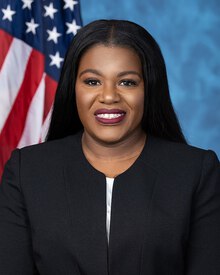
Cori Bush
AnalysisD MO-1 · House
Healthcare
+43Education
-138Government Operations
+4Environment
-5Finance
-3Agriculture
-44Regulated Industries
-53Energy
-8Housing
+25Labor
+12Civil Rights
-4Transportation
+6Criminal Justice
+12Native American Tribes
-47Healthcare Consumers
-25Public Health
+18Veterans
-30Technology
+2Defense
+8Environmental Groups
-25Industry Impact Profile
1922 industry impacts
How this is computed
P Primary sponsor · C Co-sponsor · Y Yea vote · N Nay vote
Weighted score (w:) uses strongest role per bill. Weights: Primary 1.0, Co-sponsor 0.3, Yea 0.1, Nay -0.1.
Bills where the legislator voted nay (without sponsorship) contribute -0.1 per bill. Equal yea and nay roll calls on the same bill contribute 0.
Vote date filters affect vote attribution; sponsorship is always included.
Positive-Effect Industries
Negative-Effect Industries
Click any row to see supporting clauses
Showing positive and negative-direction effects only. Mixed and uncertain effects are not included in these counts.
Sponsored & Cosponsored Bills
hres1617-118
Cosponsor In CommitteeExpressing the sense of the House of Representatives that it is the duty of the Federal Government to dramatically expand and strengthen the care economy.
hr10230-118
Cosponsor IntroducedTo encourage the donation of menstrual products to nonprofit organizations for distribution, and for other purposes.
hr10237-118
Cosponsor IntroducedTo require the Commissioner of U.S. Customs and Border Protection to develop and disseminate guidance for the handling of personal property of individuals who are under arrest, restrained, or confined by U.S. Customs and Border Protection, and for other purposes.
hres1588-118
Cosponsor In CommitteeSupporting the goals and principles of Transgender Day of Remembrance by recognizing the epidemic of violence toward transgender people and memorializing the lives lost this year.
hr10150-118
Cosponsor IntroducedTo establish a low-income water assistance program, and for other purposes.
hr10092-118
Cosponsor IntroducedTo require agencies that use, fund, or oversee algorithms to have an office of civil rights focused on bias, discrimination, and other harms of algorithms, and for other purposes.
hres1553-118
Cosponsor In CommitteeExpressing the sense that the House of Representatives must take responsible and timely action to address the Federal tax loophole that allows Act 22 decree holders to legally evade Federal taxes.
hr9998-118
Cosponsor IntroducedTo require the Secretary of Transportation to issue a final rule setting minimum structural standards for railroad bridges, and for other purposes.
hr9982-118
Cosponsor IntroducedTo require the Office of Children’s Health Protection to be maintained within the Environmental Protection Agency, and for other purposes.
hr9973-118
Cosponsor IntroducedTo require the public disclosure of COINTELPRO records, to establish a COINTELPRO Records Collection, and to establish the COINTELPRO Records Review Board, and for other purposes.
hres1525-118
Cosponsor In CommitteeCalling for comprehensive legislation that addresses United States policies contributing to forced migration and displacement, promotes an immigration system that addresses the root causes of migration, reaffirms United States commitment to asylum, and provides a roadmap to citizenship for immigrants living in the United States.
hr9907-118
Cosponsor IntroducedTo provide for a comprehensive Federal response to Long COVID, including research, education, and support for affected individuals, to direct the National Institutes of Health to establish a Long COVID research program, and for other purposes.
hr9873-118
Cosponsor IntroducedTo amend the Fair Labor Standards Act of 1938 and the Internal Revenue Code of 1986 to make certain modifications in relation to the minimum wage.
hres1500-118
Cosponsor In CommitteeCensuring Representative Glen Clay Higgins of the 3rd Congressional District of Louisiana.
hr9838-118
Cosponsor IntroducedTo amend the Internal Revenue Code of 1986 to provide for an end date for the credit for certain qualified carbon oxide, and for other purposes.
hr9807-118
Cosponsor IntroducedTo amend the Public Health Service Act to authorize a grant program to provide surge capacity for providers faced with increased unmet need for contraceptive care.
hr2706-118
Cosponsor ReportedTo prohibit discrimination on the basis of mental or physical disability in cases of organ transplants.
hres1495-118
Cosponsor In CommitteeExpressing support for the designation of September 2024 as Sickle Cell Disease Awareness Month in order to educate communities across the United States about sickle cell disease and the need for research, early detection methods, effective treatments, and preventative care programs with respect to complications from sickle cell disease and conditions related to sickle cell disease.
hres1478-118
Cosponsor In CommitteeRecognizing access to water, sanitation, electricity, heating, cooling, broadband communications, and public transportation as basic human rights and public services that must be accessible, safe, justly sourced and sustainable, acceptable, sufficient, affordable, climate resilient, and reliable for every person.
hr9649-118
Cosponsor IntroducedTo restore funding for the United Nations Relief and Works Agency for Palestine Refugees in the Near East (UNRWA).
Loading countries...
Select a clause to see detailed analysis
Failed to load analysis
Please try again
Failed to load clauses
Please try again
Click an industry from the Impact Profile to view supporting clauses
Select a clause to see detailed analysis