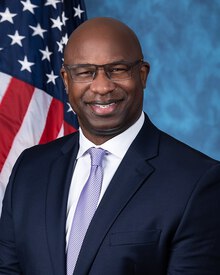
Jamaal Bowman
AnalysisD NY-16 · House
Education
-169Healthcare
+61Government Operations
-6Environment
+4Finance
+1Energy
-4Housing
+33Transportation
+8Labor
+12Regulated Industries
-42Civil Rights
+5Criminal Justice
+5Healthcare Consumers
-63Agriculture
-16Native American Tribes
-54Veterans
-48Defense
+8Business
-32Technology
+3Science & Space
+19Industry Impact Profile
2447 industry impacts
How this is computed
P Primary sponsor · C Co-sponsor · Y Yea vote · N Nay vote
Weighted score (w:) uses strongest role per bill. Weights: Primary 1.0, Co-sponsor 0.3, Yea 0.1, Nay -0.1.
Bills where the legislator voted nay (without sponsorship) contribute -0.1 per bill. Equal yea and nay roll calls on the same bill contribute 0.
Vote date filters affect vote attribution; sponsorship is always included.
Positive-Effect Industries
Click any row to see supporting clauses
Showing positive and negative-direction effects only. Mixed and uncertain effects are not included in these counts.
Sponsored & Cosponsored Bills
hr9025-118
Cosponsor IntroducedTo require payments for motor vehicle insurance policy premiums to be taken into account in determining eligibility for benefits or assistance provided through Federal funds, and for other purposes.
hres1354-118
Cosponsor In CommitteeImpeaching Samuel Alito, Jr., Associate Justice of the Supreme Court of the United States, for high crimes and misdemeanors.
hr8797-118
Primary Sponsor IntroducedTo amend the Internal Revenue Code of 1986 to impose an income tax on excess profits of certain corporations.
hr8427-118
Cosponsor IntroducedTo prohibit the importation, sale, manufacture, transfer, or possession of .50 caliber rifles, and for other purposes.
hr8311-118
Cosponsor IntroducedTo cancel existing medical debt, and for other purposes.
hr8253-118
Cosponsor IntroducedTo establish a green transportation infrastructure grant program, and for other purposes.
hr7972-118
Cosponsor IntroducedTo increase the supply of, and lower rents for, affordable housing and to assess calculations of area median income for purposes of Federal low-income housing assistance, and for other purposes.
hr7749-118
Cosponsor IntroducedTo amend the Internal Revenue Code of 1986 to impose a tax on the net value of assets of a taxpayer, and for other purposes.
hr7721-118
Cosponsor IntroducedTo direct the heads of certain Federal agencies to develop and support worker-owned cooperative businesses, and for other purposes.
hr7600-118
Cosponsor IntroducedTo amend chapter 261 of title 49, United States Code, to provide for high-speed rail corridor development, and for other purposes.
hr7138-118
Cosponsor IntroducedTo amend title XVI of the Social Security Act to update eligibility for the supplemental security income program, and for other purposes.
hr7041-118
Cosponsor IntroducedTo amend the Internal Revenue Code of 1986 to impose a corporate tax rate increase on companies whose ratio of compensation of the CEO or other highest paid employee to median worker compensation is more than 50 to 1, and for other purposes.
hr6063-118
Cosponsor IntroducedTo amend the Internal Revenue Code of 1986 and the Social Security Act to provide that an individual engaged in a labor dispute may receive unemployment benefits.
hr5859-118
Cosponsor IntroducedTo direct the Secretary of Transportation to establish a program to provide grants to protection and advocacy systems to advocate for individuals with disabilities to access transportation, and for other purposes.
hr5827-118
Cosponsor IntroducedTo promote the establishment of resident organizations and provide additional amounts for tenant organizations, and for other purposes.
hr5760-118
Cosponsor IntroducedTo establish a climate resilience workforce, and for other purposes.
hr5628-118
Cosponsor IntroducedTo direct the Federal Trade Commission to require impact assessments of automated decision systems and augmented critical decision processes, and for other purposes.
hr5560-118
Cosponsor IntroducedTo amend the Immigration and Nationality Act to promote family unity, and for other purposes.
hr5572-118
Cosponsor IntroducedTo amend the National and Community Service Act of 1990 to establish a Civilian Climate Corps to help communities respond to climate change and transition to a clean economy, and for other purposes.
hr5456-118
Cosponsor IntroducedTo amend the Internal Revenue Code of 1986 to end the tax subsidy for employer efforts to influence their workers’ exercise of their rights around labor organizations and engaging in collective action.
Loading countries...
Select a clause to see detailed analysis
Failed to load analysis
Please try again
Failed to load clauses
Please try again
Click an industry from the Impact Profile to view supporting clauses
Select a clause to see detailed analysis