To promote democracy in Venezuela, and for other purposes.
Analysis under review: This bill has generated analysis that may be too generic or incomplete. Clause-level evidence remains available below.
Summary
What This Bill Does
This bill imposes comprehensive sanctions on the Maduro regime in Venezuela, including blocking property, prohibiting financial transactions with Venezuelan government debt, banning cryptocurrency issued by the regime, and opposing Venezuela membership in international financial institutions. The sanctions can be suspended or terminated when Venezuela transitions to a democratically elected government.
Who Benefits and How
U.S. democracy promotion organizations receive funding support (at least $5 million to OAS) for deploying human rights observers and election monitors in Venezuela. Venezuelan democratic opposition and civil society benefit from humanitarian assistance carve-outs that allow food donations and medicine exports. Future democratically elected Venezuelan government would receive comprehensive development assistance, trade normalization, Export-Import Bank financing, and DFC support.
Who Bears the Burden and How
The Maduro regime and Venezuelan state oil company (PDVSA) face complete asset freezes, debt transaction prohibitions, and exclusion from international financial institutions. Cryptocurrency exchanges and U.S. financial institutions must prohibit transactions involving Venezuelan government-issued digital currencies. Countries providing assistance to the Maduro regime (including Cuba, Iran, Russia, China) may lose U.S. foreign assistance eligibility and debt forgiveness.
Key Provisions
- Blocks all property of the Venezuelan government and prohibits debt transactions with PDVSA and the Maduro regime
- Bans cryptocurrency transactions related to Venezuelan government-issued digital tokens
- Creates pathway for sanctions relief tied to democratic transition benchmarks (free elections, release of political prisoners, respect for human rights)
- Authorizes humanitarian assistance to the Venezuelan people while maintaining sanctions on the government
Evidence Chain:
This summary is generated from the full bill text using AI analysis. Expand "Detailed Analysis" below for identified beneficiaries/burden bearers.
At a Glance
What This Bill Does
Establishes comprehensive sanctions against the Maduro regime in Venezuela while providing a framework for supporting transition to democracy and resuming relations with a democratically elected government.
Key Policy Areas
Foreign Policy, Financial Sanctions, International Trade, Humanitarian Aid, Human Rights
Primary Purpose
Establishes comprehensive sanctions against the Maduro regime in Venezuela while providing a framework for supporting transition to democracy and resuming relations with a democratically elected government.
Policy Domains
Title I - Determinations and Definitions
Identified Gains
Contextual inference, no direct clause citation- Venezuelan democratic opposition
- Venezuelan civil society
Contextual inference, no direct clause citation
Identified Costs
Contextual inference, no direct clause citation- Maduro regime
Contextual inference, no direct clause citation
Title V - General Provisions
Identified Gains
Contextual inference, no direct clause citation- U.S. intelligence agencies
- U.S. importers
Contextual inference, no direct clause citation
Title II - Assistance to Support Democratic Venezuela
Identified Gains
Contextual inference, no direct clause citation- Democracy promotion organizations
- Venezuelan people (humanitarian)
- OAS human rights observers
Contextual inference, no direct clause citation
Identified Costs
Contextual inference, no direct clause citation- Maduro regime
- International financial institutions
Contextual inference, no direct clause citation
Title IV - Policy Toward Venezuela
Identified Gains
Contextual inference, no direct clause citation- Future democratic Venezuelan government
- Venezuelan people
- U.S. exporters and investors
Contextual inference, no direct clause citation
Title III - Sanctions
Identified Gains
Contextual inference, no direct clause citation- U.S. national security interests
- Venezuelan democratic opposition
Contextual inference, no direct clause citation
Identified Costs
Contextual inference, no direct clause citation- Maduro regime
- PDVSA (Venezuelan state oil company)
- Cryptocurrency exchanges
- Foreign persons doing business with Venezuela
- Countries assisting Maduro regime
Contextual inference, no direct clause citation
Sponsors
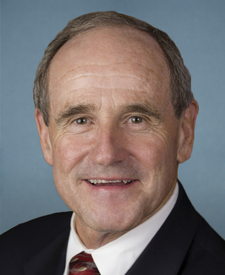
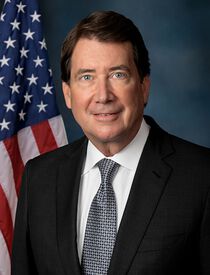
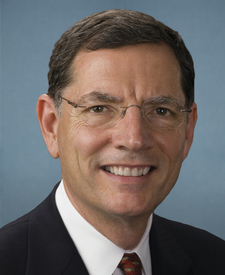
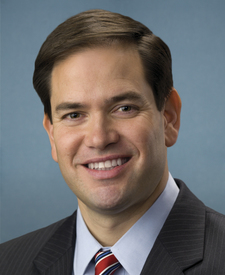
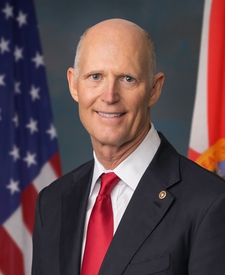
Legislative Progress
IntroducedMr. Risch (for himself, Mr. Rubio, Mr. Hagerty, Mr. Scott …
Stakeholder Effects
cui bono?How this legislation distributes effects. Mention counts reflect frequency, not effect magnitude.
Countries providing assistance to Maduro regime, Countries supporting Maduro regime (Cuba, Iran, Russia, China), Future democratic Venezuelan government
Positive-direction: Future democratic Venezuelan government, Future transition government in Venezuela
Negative-direction: Countries providing assistance to Maduro regime, Countries supporting Maduro regime (Cuba, Iran, Russia, China), Maduro regime, Maduro regime in Venezuela, U.S. foreign assistance recipients who support Venezuela, Venezuelan government
Entities receiving sanctions licenses, Foreign persons doing business with Venezuelan government, Persons supporting sanctioned Venezuelan entities
Positive-direction: U.S. businesses seeking to operate in Venezuela, U.S. businesses seeking to trade with Venezuela, U.S. exporters to Venezuela, U.S. importers of Venezuelan goods, Venezuelan exporters
Negative-direction: Entities receiving sanctions licenses, Foreign persons doing business with Venezuelan government, Persons supporting sanctioned Venezuelan entities, Persons violating Venezuela sanctions
Congressional oversight committees, Department of State, Executive branch agencies
Positive-direction: Export-Import Bank, U.S. International Development Finance Corporation, U.S. intelligence agencies, U.S. law enforcement agencies
Negative-direction: Department of State, Executive branch agencies, Treasury Department
Democracy-building NGOs in Venezuela, Election monitoring organizations, Human rights organizations
Cryptocurrency exchanges operating in the U.S., International financial institutions (World Bank, IMF, IDB), U.S. financial institutions
Companies operating in Venezuelan energy sector, PDVSA (Venezuelan state oil company), U.S. refineries importing Venezuelan oil
Positive-direction: U.S. refineries importing Venezuelan oil
Negative-direction: Companies operating in Venezuelan energy sector, PDVSA (Venezuelan state oil company)
Bill Structure & Actor Mappings
Who is "The Secretary" in each section?
- "the_president"
- → President of the United States
- "the_president"
- → President of the United States
- "the_secretary"
- → Secretary of the Treasury (for IFI votes)
- "the_president"
- → President of the United States
- "the_secretary"
- → Secretary of the Treasury (for sanctions implementation)
- "secretary_of_state"
- → Secretary of State (for foreign policy coordination)
- "the_president"
- → President of the United States
Note: The Secretary in Title II (sec 201) refers to Secretary of the Treasury for IFI voting instructions, while in Title III it refers to Secretary of Treasury for sanctions implementation with consultation from Secretary of State
Key Definitions
Terms defined in this bill
The Committee on Foreign Relations of the Senate and the Committee on Foreign Affairs of the House of Representatives
A government showing respect for civil liberties, reinstating National Assembly, releasing political prisoners, dissolving repressive agencies, and committing to free elections within 12 months
A government resulting from free and fair elections with international observers, multiple parties, media access, and respect for human rights
Assistance provided by grant, concessional sale, guaranty, or insurance on favorable terms, including export subsidies, tariff treatment, and debt forgiveness
We use a combination of our own taxonomy and classification in addition to large language models to assess meaning and potential beneficiaries. High confidence means strong textual evidence. Always verify with the original bill text.
Learn more about our methodology