To permit the Attorney General to award grants for accurate date on opioid-related overdoses, and for other purposes.
Summary
What This Bill Does
The bill creates accurate data on opioid-related overdoses The Attorney General may award grants to States, territories, and localities to support improved data and surveillance on opioid-related overdoses, including, creates law enforcement grants The Attorney General shall make grants to local law enforcement agencies and forensic laboratories in communities with high rates of drug overdoses for the purpose of— training to help, and requires office of National Drug Control Policy reform The Drug Enforcement Administration shall develop uniform reporting standards for inputting data into the National Forensic Laboratory Information System. It relies on reporting requirements, compliance mandates, grants, and definition changes. The main policy areas are Regulated Industries, Healthcare, Science & Space, and Criminal Justice.
Who Benefits and How
Public beneficiaries or protected communities affected by the clause could face reduced risk, Researchers and scientific institutions affected by the bill could gain revenue opportunities, and Regulated entities and members of the public affected by the bill could gain revenue opportunities.
Who Bears the Burden and How
Federal, state, or local agencies responsible for implementing the clause would take on compliance duties, Patients and health care consumers affected by the bill would take on compliance duties, and Researchers and scientific institutions affected by the bill would take on compliance duties.
Key Provisions
- Creates accurate data on opioid-related overdoses The Attorney General may award grants to States, territories, and localities to support improved data and surveillance on opioid-related overdoses, including...
- Creates law enforcement grants The Attorney General shall make grants to local law enforcement agencies and forensic laboratories in communities with high rates of drug overdoses for the purpose of— training to help...
- Requires office of National Drug Control Policy reform The Drug Enforcement Administration shall develop uniform reporting standards for inputting data into the National Forensic Laboratory Information System...
- Requires DEA testing The Drug Enforcement Administration shall submit to Congress, as part of the annual budget process, a specific line item for the level of funding necessary for the Fentanyl Signature Profiling...
Evidence Chain:
This summary is generated from the full bill text using AI analysis. Expand "Detailed Analysis" below for identified beneficiaries/burden bearers with clause-level evidence links.
At a Glance
What This Bill Does
The bill creates accurate data on opioid-related overdoses The Attorney General may award grants to States, territories, and localities to support improved data and surveillance on opioid-related overdoses, including, creates law enforcement grants The Attorney General shall make grants to local law enforcement agencies and forensic laboratories in communities with high rates of drug overdoses for the purpose of— training to help, and requires office of National Drug Control Policy reform The Drug Enforcement Administration shall develop uniform reporting standards for inputting data into the National Forensic Laboratory Information System.
Key Policy Areas
Regulated Industries, Healthcare, Science & Space, Criminal Justice
Primary Purpose
The bill creates accurate data on opioid-related overdoses The Attorney General may award grants to States, territories, and localities to support improved data and surveillance on opioid-related overdoses, including, creates law enforcement grants The Attorney General shall make grants to local law enforcement agencies and forensic laboratories in communities with high rates of drug overdoses for the purpose of— training to help, and requires office of National Drug Control Policy reform The Drug Enforcement Administration shall develop uniform reporting standards for inputting data into the National Forensic Laboratory Information System.
Policy Domains
Whole bill
Identified Gains
- Public beneficiaries or protected communities affected by the clause
- Researchers and scientific institutions affected by the bill
- Regulated entities and members of the public affected by the bill
- Patients and health care consumers affected by the bill
- Law enforcement, justice-system actors, and affected communities
Identified Costs
- Federal, state, or local agencies responsible for implementing the clause
- Patients and health care consumers affected by the bill
- Researchers and scientific institutions affected by the bill
Sponsors
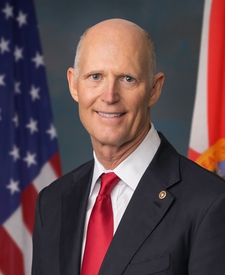
Rick Scott
R-FL | Primary Sponsor
Legislative Progress
IntroducedMr. Scott of Florida (for himself and Mr. Welch) introduced …
Stakeholder Effects
cui bono?How this legislation distributes effects. Mention counts reflect frequency, not effect magnitude.
Law enforcement, justice-system actors, and affected communities
Bill Structure & Actor Mappings
Who is "The Secretary" in each section?
We use a combination of our own taxonomy and classification in addition to large language models to assess meaning and potential beneficiaries. High confidence means strong textual evidence. Always verify with the original bill text.
Learn more about our methodology