Livestock Disaster Assistance Improvement Act of 2025
Analysis under review: This bill has generated analysis that may be too generic or incomplete. Clause-level evidence remains available below.
Summary
What This Bill Does
This bill strengthens disaster assistance programs for farmers and ranchers affected by drought. It makes it easier to qualify for livestock forage assistance, improves payments for honey bee producers, and allows ranchers on federal and state lands to access emergency conservation funds.
Who Benefits and How
Livestock producers and ranchers benefit by gaining access to disaster payments after just 4 weeks of drought instead of 8 weeks. Honey bee producers receive improved payment rates that account for colony losses. Ranchers grazing on federal or state lands become eligible for emergency conservation payments they were previously excluded from. The bill also waives environmental review delays during drought emergencies.
Who Bears the Burden and How
Federal agencies (USDA, Interior, NOAA) face increased administrative requirements, including establishing a new interagency drought monitoring working group within 180 days and creating new memoranda of understanding. Environmental review processes are streamlined, which some conservation groups may view as reducing oversight.
Key Provisions
- Expands emergency conservation program eligibility to ranchers on federal and state lands
- Lowers drought threshold from 8 to 4 consecutive weeks for forage disaster payments
- Removes size limits on honey bee operations and improves colony loss payment rates
- Creates interagency working group to improve drought monitoring data
- Waives 30-day NEPA comment period for emergency conservation measures during drought
Evidence Chain:
This summary is generated from the full bill text using AI analysis. Expand "Detailed Analysis" below for identified beneficiaries/burden bearers.
At a Glance
What This Bill Does
Improves disaster assistance programs for livestock producers and ranchers, particularly during drought conditions, by expanding eligibility, streamlining permitting, and improving drought monitoring coordination.
Key Policy Areas
Agriculture, Disaster Relief, Water Resources, Environmental Regulation
Primary Purpose
Improves disaster assistance programs for livestock producers and ranchers, particularly during drought conditions, by expanding eligibility, streamlining permitting, and improving drought monitoring coordination.
Policy Domains
Livestock Disaster Assistance Improvement Act of 2025
Identified Gains
Contextual inference, no direct clause citation- Cattle ranchers
- Livestock producers
- Honey bee producers (beekeepers)
- Ranchers on federal lands
- Ranchers on state/local lands
Contextual inference, no direct clause citation
Identified Costs
Contextual inference, no direct clause citation- Federal agencies (USDA, DOI, NOAA)
- Bureau of Land Management
- Farm Service Agency
- Forest Service
Contextual inference, no direct clause citation
Sponsors
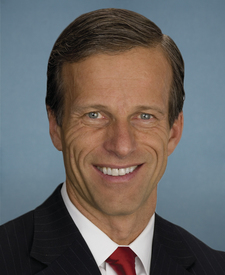
John Thune
R-SD | Primary Sponsor
Legislative Progress
In CommitteeMr. Thune (for himself and Mr. Luján) introduced the following …
Read twice and referred to the Committee on Agriculture, Nutrition, …
Introduced in Senate
Stakeholder Effects
cui bono?How this legislation distributes effects. Mention counts reflect frequency, not effect magnitude.
Agricultural producers affected by drought, Agricultural producers leasing state/local lands, Agricultural producers on state/local leased lands
Bureau of Land Management, Environmental review processes, Farm Service Agency
Positive-direction: Bureau of Land Management
Negative-direction: Farm Service Agency, Forest Service, National Oceanic and Atmospheric Administration, USDA Natural Resources Conservation Service, USDA Office of the Chief Economist
Commercial beekeepers (honey bee producers), Large-scale beekeeping operations
Rural communities affected by watershed emergencies
State mesonet programs in drought-prone states
Bill Structure & Actor Mappings
Who is "The Secretary" in each section?
- "chief"
- → Chief of the Forest Service
- "administrator"
- → Administrator of the Farm Service Agency
- "the_secretary"
- → Secretary of Agriculture
- "secretary_of_the_interior"
- → Secretary of the Interior
Note: 'The Secretary' generally refers to Secretary of Agriculture, but Section 2 also references 'Secretary of the Interior' for BLM land matters
Key Definitions
Terms defined in this bill
With respect to nonindustrial private forest land, an owner; with respect to Federal land, a permit holder; with respect to State/local land, a lessee
An interagency working group to improve availability of consistent, accurate, and reliable data for the United States Drought Monitor
We use a combination of our own taxonomy and classification in addition to large language models to assess meaning and potential beneficiaries. High confidence means strong textual evidence. Always verify with the original bill text.
Learn more about our methodology