Stop Secret Spending Act of 2025
Summary
What This Bill Does
The Stop Secret Spending Act closes gaps in federal spending transparency, especially for other transaction agreements. Treasury and OMB must ensure OTA data is automatically transmitted to USAspending.gov within three years and available in a centralized view; before that, they must publish interim reports listing OTAs. Treasury must post annual reports on federal spending not yet on USAspending.gov and why it is missing, including classified or national-security-related spending, legislative or judicial branch awards, and subawards. The bill also requires data completeness and accuracy standards, agency lists, inspector general reports, and GAO recommendations.
Who Benefits and How
Taxpayers benefit because more federal award and OTA spending would appear on USAspending.gov. Congressional appropriators and oversight committees benefit from annual reports on spending not posted publicly. Inspectors general benefit from clearer recurring audit duties for agencies required to post data. Journalists and watchdog groups benefit from a centralized view of OTA spending and explanations for missing data.
Who Bears the Burden and How
The Treasury Secretary must build OTA reporting, annual missing-spending reports, display standards, and agency lists. OMB must coordinate with Treasury and agencies on data quality and OTA implementation. Agencies with other transaction authority must transmit OTA data and ensure posted information is complete and accurate. Inspectors general must submit and publish reports for covered agencies for up to 10 years.
Key Provisions
- Requires other transaction agreement data to be automatically transmitted to USAspending.gov within three years.
- Requires annual reports on federal spending not posted to USAspending.gov and the reasons data is missing.
- Establishes data completeness, accuracy, verification, display-standard, and agency-list requirements.
- Expands inspector general reporting and requires GAO recommendations on spending-transparency updates.
Evidence Chain:
This summary is generated from the full bill text using AI analysis. Expand "Detailed Analysis" below for identified beneficiaries/burden bearers with clause-level evidence links.
At a Glance
What This Bill Does
Requires other transaction agreement spending to be reported on USAspending.gov, adds annual unposted-spending reports, strengthens data-quality rules, and requires inspectors general and GAO oversight of federal spending transparency.
Key Policy Areas
Government Spending, Transparency, Federal Procurement
Primary Purpose
Requires other transaction agreement spending to be reported on USAspending.gov, adds annual unposted-spending reports, strengthens data-quality rules, and requires inspectors general and GAO oversight of federal spending transparency.
Policy Domains
Bill provisions
Identified Gains
- Taxpayers
- Congressional oversight committees
- Inspectors general
- Journalists and watchdog groups
Identified Costs
- Treasury Secretary
- OMB
- Agencies with other transaction authority
- Inspectors general
Sponsors


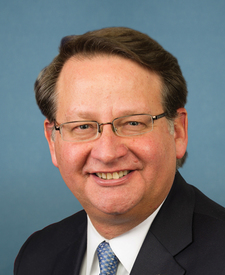

Legislative Progress
Passed SenateReceived in the House.
Held at the desk.
Message on Senate action sent to the House.
Passed/agreed to in Senate: Passed Senate with amendments by Unanimous …
Passed Senate with amendments by Unanimous Consent. (consideration: CR S2721-2723; …
Committee on Small Business and Entrepreneurship. Hearings held.
Reported by Mr. Paul, with amendments
Placed on Senate Legislative Calendar under General Orders. Calendar No. …
Committee on Homeland Security and Governmental Affairs. Reported by Senator …
Committee on Homeland Security and Governmental Affairs. Ordered to be …
Stakeholder Effects
cui bono?How this legislation distributes effects. Mention counts reflect frequency, not effect magnitude.
Agencies with other transaction authority, Congressional oversight committees, Inspectors general
Positive-direction: Congressional oversight committees
Negative-direction: Agencies with other transaction authority, Inspectors general, Office of Management and Budget, Treasury Department spending transparency offices
Bill Structure & Actor Mappings
Who is "The Secretary" in each section?
- "director"
- → Director of the Office of Management and Budget
- "secretary"
- → Secretary of the Treasury
We use a combination of our own taxonomy and classification in addition to large language models to assess meaning and potential beneficiaries. High confidence means strong textual evidence. Always verify with the original bill text.
Learn more about our methodology