Stop Secret Spending Act of 2025
Summary
What This Bill Does
The Stop Secret Spending Act would amend the Federal Funding Accountability and Transparency Act to include other transaction agreements in covered federal awards. Treasury must ensure automatic transmission and a centralized public view of those agreements on USAspending.gov within three years of enactment. Starting within one year, Treasury must publish an annual report stating the total federal-award spending not posted and the reasons for omission, including classified or national-security spending, legislative or judicial branch awards, and lower-tier subawards. This is an accounting of missing spending data, not an instruction to declassify underlying records or a ban on other transaction authority.
Who Benefits and How
Federal taxpayers and users of USAspending.gov could gain a more complete view of federal awards and the reasons some spending remains outside public records. Congressional committees gain additional inspector-general assessments and an implementation plan if integration is still unfinished at year two. Better data could improve scrutiny of award recipients, including other transaction recipients, but the bill does not award anyone a contract or guarantee spending savings. The Government Accountability Office (GAO) must recommend advisable updates to Federal Acquisition Regulation clause 52.204-10 within one year; recommendations are not themselves a revised contract clause.
Who Bears the Burden and How
The Department of the Treasury and Office of Management and Budget (OMB) bear systems-integration, coordination, standard-setting and recurring publication duties. Heads of reporting agencies must ensure complete and accurate data and comply with Treasury display standards; Treasury and OMB may verify completeness, accuracy and consistency. Inspectors general of agencies listed in 31 U.S.C. 901(b)(1) or (2) must report publicly and to Congress within one year and at least every two years thereafter during the ten-year period, aligned with the specified financial-report dates. The bill narrows that inspector-general provision from each federal agency to the cited agency list, while Treasury and OMB separately determine which agencies must report spending data. No new appropriation or explicit civil penalty appears in the text.
Key Provisions
- Expands federal-award coverage to other transaction agreements and requires automated centralized publication within three years.
- Requires a prior-fiscal-year agreement inventory at year one if integration is incomplete, and a congressional status-and-action plan at year two if it remains incomplete.
- Requires annual publication of the amount of unreported federal-award spending and reasons for omission without demanding publication of classified underlying records.
- Directs Treasury and OMB to publish the covered reporting-agency list within one year and at least biennially, notify agency heads and inspectors general, and establish accuracy and display requirements.
- Requires covered inspector-general reports during a ten-year period and GAO recommendations within one year on the federal contract-reporting clause.
Evidence Chain:
This summary is generated from the full bill text using AI analysis. Expand "Detailed Analysis" below for identified beneficiaries/burden bearers with clause-level evidence links.
At a Glance
What This Bill Does
Bring other transaction agreements into federal spending-disclosure coverage, require centralized automated reporting and explanations of unreported awards, and strengthen data-quality and inspector-general oversight.
Key Policy Areas
Federal spending transparency, Procurement oversight
Primary Purpose
Bring other transaction agreements into federal spending-disclosure coverage, require centralized automated reporting and explanations of unreported awards, and strengthen data-quality and inspector-general oversight.
Policy Domains
Stop Secret Spending Act of 2025
Identified Gains
- Federal taxpayers
- USAspending.gov data users
- Congressional oversight committees
Identified Costs
- Department of the Treasury
- Office of Management and Budget
- Government Accountability Office
- Inspectors general of agencies listed in 31 U.S.C. 901(b)
Sponsors


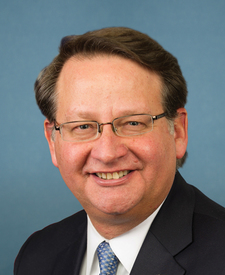

Legislative Progress
Passed SenateHeld at the desk.
Received in the House.
Message on Senate action sent to the House.
Passed Senate with amendments by Unanimous Consent. (consideration: CR S2721-2723; …
Passed/agreed to in Senate: Passed Senate with amendments by Unanimous …
Committee on Small Business and Entrepreneurship. Hearings held.
Reported by Mr. Paul, with amendments
Placed on Senate Legislative Calendar under General Orders. Calendar No. …
Committee on Homeland Security and Governmental Affairs. Reported by Senator …
Committee on Homeland Security and Governmental Affairs. Ordered to be …
Stakeholder Effects
cui bono?How this legislation distributes effects. Mention counts reflect frequency, not effect magnitude.
Department of the Treasury, Federal agencies with other transaction authority, Government Accountability Office
Positive-direction: Inspectors general of agencies outside 31 U.S.C. 901(b)
Negative-direction: Department of the Treasury, Federal agencies with other transaction authority, Government Accountability Office, Inspectors general of agencies listed in 31 U.S.C. 901(b), Office of Management and Budget
Bill Structure & Actor Mappings
Who is "The Secretary" in each section?
- "director"
- → Director of the Office of Management and Budget
- "secretary"
- → Secretary of the Treasury
- "relevant_agency"
- → A federal agency with other transaction agreement authority, as determined by the OMB Director
- "comptroller_general"
- → Comptroller General of the United States, head of GAO
- "covered_inspector_general"
- → Inspector general of an agency listed in 31 U.S.C. 901(b)(1) or (2)
Note: {'description': 'The reported text contains tracked corrections alongside deleted words. The engrossed text resolves them as include, or, paragraph (1) or (2), and FAR 52.204-10. Parser repetitions of inserted statutory subsections do not create multiple reporting duties. The ten-year inspector-general deadline sentence contains awkward not less than frequently wording; the analysis describes its stated at-least-biennial schedule rather than inventing exact intermediate dates.'}
Key Definitions
Terms defined in this bill
A federal agency under FFATA that has authority to enter into an other transaction agreement, as determined by the OMB Director.
The public spending website established under section 2 of FFATA.
We use a combination of our own taxonomy and classification in addition to large language models to assess meaning and potential beneficiaries. High confidence means strong textual evidence. Always verify with the original bill text.
Learn more about our methodology