CROWN Act of 2025
Analysis under review: This bill has generated analysis that may be too generic or incomplete. Clause-level evidence remains available below.
Summary
The CROWN Act of 2025 (Creating a Respectful and Open World for Natural Hair) prohibits discrimination based on hair texture or hairstyle when that hair characteristic is commonly associated with a particular race or national origin. The bill specifically protects hairstyles including tightly coiled or tightly curled hair, locs, cornrows, twists, braids, Bantu knots, and Afros. It extends anti-discrimination protections across five domains: federally assisted programs (enforced via Title VI of the Civil Rights Act), housing (via Fair Housing Act), public accommodations (via Title II of the Civil Rights Act), employment (via Title VII of the Civil Rights Act), and equal contractual rights (via 42 USC 1981). The bill responds to federal court decisions that narrowly interpreted existing civil rights laws to permit discrimination against natural hairstyles, and to recent policy changes like the 2018 military grooming reforms that acknowledged such policies were racially discriminatory.
Evidence Chain:
This summary is generated from the full bill text using AI analysis. Expand "Detailed Analysis" below for identified beneficiaries/burden bearers.
At a Glance
What This Bill Does
Prohibit discrimination based on hair texture or hairstyle commonly associated with race or national origin across federally assisted programs, housing, public accommodations, employment, and equal rights under law.
Who Benefits
- People of African descent wearing natural or protective hairstyles
- Workers facing grooming-related discrimination
- Students facing school grooming policies targeting natural hair
Who Bears Costs
- Employers with grooming policies restricting natural hairstyles
- Schools with restrictive hair policies
- Housing providers with discriminatory grooming standards
Key Policy Areas
{'domain': 'Civil Rights', 'evidence': ['3', '4', '5', '6', '7']}, {'domain': 'Labor', 'evidence': ['6']}
Primary Purpose
Prohibit discrimination based on hair texture or hairstyle commonly associated with race or national origin across federally assisted programs, housing, public accommodations, employment, and equal rights under law.
Policy Domains
Legislative Strategy
"Systematically close the gap in federal civil rights protection by amending enforcement mechanisms across all major existing civil rights statutes rather than creating new standalone law."
Sponsors
Legislative Progress
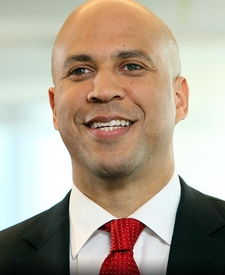
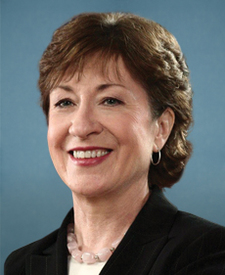
In CommitteeMr. Booker (for himself and Ms. Collins) introduced the following …
Read twice and referred to the Committee on the Judiciary.
Introduced in Senate
Stakeholder Effects
cui bono?How this legislation distributes effects. Mention counts reflect frequency, not effect magnitude.
Individuals facing hair-based exclusion from public places, Individuals seeking equal contractual rights, Individuals with natural hairstyles in federally funded programs
Contracting parties with discriminatory practices, Employers with grooming policies targeting natural hairstyles, Entities with restrictive grooming policies
Housing providers and landlords, Renters and homebuyers with natural hairstyles
Positive-direction: Renters and homebuyers with natural hairstyles
Negative-direction: Housing providers and landlords
Employment agencies and labor organizations
Bill Structure & Actor Mappings
Who is "The Secretary" in each section?
We use a combination of our own taxonomy and classification in addition to large language models to assess meaning and potential beneficiaries. High confidence means strong textual evidence. Always verify with the original bill text.
Learn more about our methodology