To provide for a Federal partnership to ensure educational equity and quality.
Analysis under review: This bill has generated analysis that may be too generic or incomplete. Clause-level evidence remains available below.
Summary
What This Bill Does
Creates a comprehensive education reform framework through competitive grants to states that establish independent State Oversight Boards and commit to educational equity goals. Provides federal funding for early childhood education, teacher quality and diversity, college and career readiness pathways, and student success programs - all with accountability mechanisms requiring states to meet equity targets or face fund withholding.
Who Benefits and How
Students from low-income families and students of color benefit from targeted programs to close achievement and college enrollment gaps. Early childhood programs receive expanded funding under IDEA and Head Start. Teachers benefit from professional development and recruitment programs. States receive substantial federal grants (with 50% matching) for education programs if they meet equity benchmarks.
Who Bears the Burden and How
States must establish independent Oversight Boards, set educational equity goals, and face consequences including fund withholding if they fail to meet targets. State and local educational agencies face increased accountability and reporting requirements. States that fail to meet equity goals must replace lost federal funds with non-federal sources.
Key Provisions
- Competitive 2-year grants (renewable up to 10 years) for early childhood, teacher quality, college readiness, and student success
- States must establish independent State Oversight Boards to hold agencies accountable for equity goals
- 50% state matching requirement; failure to meet goals requires state to replace federal funding
- Expands dual enrollment and early college high school programs with $137.5 million annual authorization
- Amends ESEA to allow state-level flexibility for equitable per-pupil funding
Evidence Chain:
This summary is generated from the full bill text using AI analysis. Expand "Detailed Analysis" below for identified beneficiaries/burden bearers.
At a Glance
What This Bill Does
Establishes competitive grant programs for states that commit to educational equity goals, funding early childhood education, teacher quality, college readiness, and student success with accountability through independent State Oversight Boards
Key Policy Areas
Education, Early Childhood, Workforce Development
Primary Purpose
Establishes competitive grant programs for states that commit to educational equity goals, funding early childhood education, teacher quality, college readiness, and student success with accountability through independent State Oversight Boards
Policy Domains
Title I - Early Childhood Education
Identified Gains
Contextual inference, no direct clause citation- Young children
- Families with children with disabilities
- Head Start programs
Contextual inference, no direct clause citation
Identified Costs
Contextual inference, no direct clause citation- State educational agencies
- States failing to meet equity goals
Contextual inference, no direct clause citation
Title V - Accountability
Identified Gains
Contextual inference, no direct clause citation- Students in underperforming districts
- Civil rights advocates
Contextual inference, no direct clause citation
Identified Costs
Contextual inference, no direct clause citation- State educational agencies
- Local educational agencies
- States failing equity goals
Contextual inference, no direct clause citation
Title II - High-Quality Teachers and Leaders
Identified Gains
Contextual inference, no direct clause citation- Teachers
- Schools in underserved areas
- Teacher preparation programs
Contextual inference, no direct clause citation
Identified Costs
Contextual inference, no direct clause citation- State educational agencies
Contextual inference, no direct clause citation
Title VI - Equitable Per-Pupil Funding
Identified Gains
Contextual inference, no direct clause citation- State educational agencies seeking funding flexibility
Contextual inference, no direct clause citation
Title III - College and Career Readiness
Identified Gains
Contextual inference, no direct clause citation- Low-income students
- Students underrepresented in higher education
- Community colleges
Contextual inference, no direct clause citation
Identified Costs
Contextual inference, no direct clause citation- States receiving grants
- Institutions of higher education
Contextual inference, no direct clause citation
Sponsors
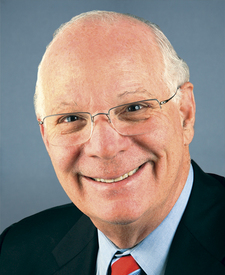
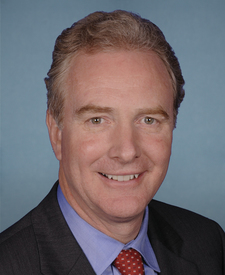
Legislative Progress
IntroducedMr. Cardin (for himself and Mr. Van Hollen) introduced the …
Stakeholder Effects
cui bono?How this legislation distributes effects. Mention counts reflect frequency, not effect magnitude.
Career and technical education programs, Community colleges, Early college and dual enrollment programs
Local educational agencies faces effects in multiple directions
State educational agencies, State educational agencies committed to equity, State governments seeking education grants
State educational agencies faces effects in multiple directions
Positive-direction: State educational agencies committed to equity, States implementing dual enrollment
Negative-direction: State governments seeking education grants
Low-income and underrepresented students, Low-income students, Students pursuing career pathways
Bill Structure & Actor Mappings
Who is "The Secretary" in each section?
- "the_secretary"
- → Secretary of Education
- "the_secretary"
- → Secretary of Education
- "the_secretary"
- → Secretary of Education
- "the_secretary"
- → Secretary of Education
- "the_secretary"
- → Secretary of Education
Key Definitions
Terms defined in this bill
As defined in section 8101 of ESEA
As defined in section 8101 of ESEA
An institution of higher education in partnership with one or more local educational agencies, which may also include nonprofits, businesses, and juvenile detention center schools
A student counted under section 1124(c) of ESEA
We use a combination of our own taxonomy and classification in addition to large language models to assess meaning and potential beneficiaries. High confidence means strong textual evidence. Always verify with the original bill text.
Learn more about our methodology