To require the Attorney General to propose a program for making treatment for post-traumatic stress disorder and acute stress disorder available to public safety officers, and for other purposes.
Analysis under review: This bill has generated analysis that may be too generic or incomplete. Clause-level evidence remains available below.
Summary
What This Bill Does
The Fighting Post-Traumatic Stress Disorder Act of 2023 requires the Attorney General to develop a federal program providing mental health treatment for first responders suffering from job-related PTSD. It addresses the crisis of elevated PTSD and suicide rates among police officers, firefighters, EMTs, and 911 dispatchers who lack access to adequate mental health care.
Who Benefits and How
Public safety officers (police, firefighters, EMTs) and 911 dispatchers would gain access to state-of-the-art PTSD treatment including trauma-informed care, peer support, counseling, and family support services. Mental health providers specializing in trauma would see new revenue opportunities through federal grants. State and local agencies would receive support for addressing their employees' mental health needs through a coordinated federal program.
Who Bears the Burden and How
Federal taxpayers would fund the program through future appropriations. The Department of Justice, specifically the COPS Office, must develop the program proposal, draft grant conditions, create implementation plans, and write authorizing legislation within 150 days. The DOJ also faces ongoing administrative responsibilities for running the program.
Key Provisions
- Directs the Attorney General to propose at least one PTSD treatment program within 150 days, administered through the DOJ COPS Office
- Requires the program to offer evidence-based, trauma-informed care with confidentiality protections for officers seeking help
- Mandates consultation with federal, state, tribal, and local agencies plus organizations representing first responders
- Requires draft grant conditions, implementation plans for all government levels (including telehealth options), and appropriations estimates
- Expands the definition of covered workers to include 911 dispatchers and tribal public safety officers
Evidence Chain:
This summary is generated from the full bill text using AI analysis. Expand "Detailed Analysis" below for identified beneficiaries/burden bearers.
At a Glance
What This Bill Does
Directs the Attorney General to develop a program providing state-of-the-art PTSD and acute stress disorder treatments and preventive care for public safety officers and 911 dispatchers.
Who Benefits
- Public safety officers (police, firefighters, EMTs) suffering from job-related PTSD
- 911 dispatchers and emergency telecommunications workers
- Mental health service providers specializing in trauma-informed care
Who Bears Costs
- Federal taxpayers (funding appropriations for the program)
- Department of Justice (administrative burden of developing and running the program)
Key Policy Areas
Public Safety, Mental Health, Law Enforcement, Emergency Services
Primary Purpose
Directs the Attorney General to develop a program providing state-of-the-art PTSD and acute stress disorder treatments and preventive care for public safety officers and 911 dispatchers.
Policy Domains
Legislative Strategy
"Address the mental health crisis among first responders by creating a federally-administered program to provide PTSD treatment and preventive care, leveraging existing DOJ infrastructure through the COPS Office"
Identified Gains
- Public safety officers (police, firefighters, EMTs) suffering from job-related PTSD
- 911 dispatchers and emergency telecommunications workers
- Mental health service providers specializing in trauma-informed care
- Families of public safety officers affected by PTSD
Identified Costs
- Federal taxpayers (funding appropriations for the program)
- Department of Justice (administrative burden of developing and running the program)
Sponsors

Legislative Progress
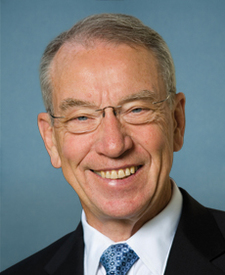
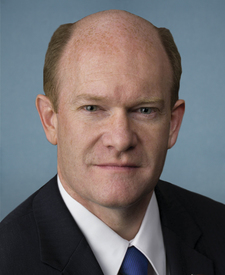
IntroducedMr. Grassley (for himself, Mr. Coons, Mr. Young, Mr. Brown, …
Stakeholder Effects
cui bono?How this legislation distributes effects. Mention counts reflect frequency, not effect magnitude.
911 dispatchers and emergency telecommunications workers, 911 dispatchers and emergency telecommunicators, Public safety officers (police, firefighters, EMTs)
Positive-direction: 911 dispatchers and emergency telecommunicators, Public safety officers (police, firefighters, EMTs) suffering from PTSD
Negative-direction: Taxpayers
Law enforcement, justice-system actors, and affected communities
Mental health service providers specializing in trauma-informed care, Telehealth mental health providers
State and local government agencies employing first responders
Bill Structure & Actor Mappings
Who is "The Secretary" in each section?
- "the_director"
- → Director of the Office of Community Oriented Policing Services (COPS) of the Department of Justice
- "the_attorney_general"
- → Attorney General of the United States
Key Definitions
Terms defined in this bill
Has the meaning given in section 1204 of the Omnibus Crime Control and Safe Streets Act of 1968 (34 U.S.C. 10284), including Tribal public safety officers. Covers police officers, firefighters, emergency medical technicians, and similar roles.
An individual who operates telephone, radio, or other communication systems to receive and communicate requests for emergency assistance at 911 public safety answering points and emergency operations centers; takes information relating to crimes, threats, fires, medical emergencies, and other public safety matters; and coordinates and provides information to law enforcement and emergency response personnel.
We use a combination of our own taxonomy and classification in addition to large language models to assess meaning and potential beneficiaries. High confidence means strong textual evidence. Always verify with the original bill text.
Learn more about our methodology