To require a report by the Secretary of Homeland Security regarding the failed assassination attempt on the life of Donald J. Trump in Butler, Pennsylvania, on July 13, 2024.
Analysis under review: This bill has generated analysis that may be too generic or incomplete. Clause-level evidence remains available below.
Summary
What This Bill Does
This bill amends existing federal water law to allow the Secretary of the Interior and local water districts to conduct extraordinary maintenance on urban canals that pose a safety risk. It creates a new category called 'urban canal of concern' for canals whose failure could affect more than 100 people or cause over $5 million in property damage.
Who Benefits and How
Water district operating entities benefit by receiving 25-35% of maintenance costs covered by federal funds on a nonreimbursable basis, reducing their financial burden for critical infrastructure repairs. Urban communities near aging canal infrastructure benefit from improved safety and reduced flood/failure risks. State and local governments benefit from cost-sharing arrangements that make expensive infrastructure work more financially feasible.
Who Bears the Burden and How
Federal taxpayers bear the cost of providing up to $300 million in federal funding for canal maintenance. Water district operating entities must still cover 65-75% of costs (with federal loan advances available for repayment). States must contribute 10% of maintenance costs under certain provisions.
Key Provisions
- Defines 'urban canal of concern' as canal segments whose failure could affect 100+ people or cause $5M+ in property damage
- Authorizes federal funding to cover 25-35% of extraordinary maintenance costs on a nonreimbursable basis
- Caps federal spending at $300 million unless Congress appropriates additional funds
- Allows transferred works operating entities to carry out maintenance with Secretary concurrence
Evidence Chain:
This summary is generated from the full bill text using AI analysis. Expand "Detailed Analysis" below for identified beneficiaries/burden bearers.
At a Glance
What This Bill Does
Authorizes the Secretary of the Interior to perform extraordinary operation and maintenance work on urban canals of concern to protect populated areas from canal failures.
Key Policy Areas
Water Resources, Infrastructure, Public Safety
Primary Purpose
Authorizes the Secretary of the Interior to perform extraordinary operation and maintenance work on urban canals of concern to protect populated areas from canal failures.
Policy Domains
Section 2 - Extraordinary Operation and Maintenance Work
Identified Gains
Contextual inference, no direct clause citation- Water district operating entities
- Urban communities near canals
- Bureau of Reclamation
Contextual inference, no direct clause citation
Identified Costs
Contextual inference, no direct clause citation- Federal taxpayers
- State governments
Contextual inference, no direct clause citation
Sponsors

Legislative Progress
ReportedReported by Mr. Peters, with an amendment and an amendment …
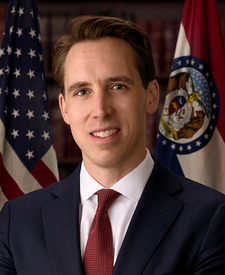
Mr. Hawley (for himself and Ms. Sinema) introduced the following …
Stakeholder Effects
cui bono?How this legislation distributes effects. Mention counts reflect frequency, not effect magnitude.
Congressional oversight committees, Department of Homeland Security, House Committee on Homeland Security
Positive-direction: Congressional oversight committees, House Committee on Homeland Security, House Committee on the Judiciary, Senate Committee on Homeland Security and Governmental Affairs, Senate Committee on the Judiciary, Task Force on the Attempted Assassination of Donald J. Trump
Negative-direction: Department of Homeland Security, United States Secret Service
Bill Structure & Actor Mappings
Who is "The Secretary" in each section?
- "the_secretary"
- → Secretary of the Interior
- "transferred_works_operating_entity"
- → Local water district or entity operating transferred Bureau of Reclamation facilities
Key Definitions
Terms defined in this bill
A transferred works or segment of a transferred works that is a canal reach whose failure would result in an estimated at-risk population of more than 100 individuals or estimated property damage of more than $5,000,000, or a canal reach classified as an urban canal reach by the Bureau of Reclamation, and with respect to which the Secretary determines failure would result in loss of life and property.
We use a combination of our own taxonomy and classification in addition to large language models to assess meaning and potential beneficiaries. High confidence means strong textual evidence. Always verify with the original bill text.
Learn more about our methodology