To require the United States Armed Forces to fully utilize applicable State extreme risk protection order programs, and for other purposes.
Analysis under review: This bill has generated analysis that may be too generic or incomplete. Clause-level evidence remains available below.
Summary
What This Bill Does
This bill requires the U.S. Armed Forces to work with state "extreme risk protection order" (ERPO) programs - sometimes called "red flag laws" - when a commanding officer determines that a service member poses a serious threat of violence. Within one year, the Department of Defense must establish policies ensuring military branches participate in these state court proceedings and share relevant information with law enforcement and judicial personnel.
Who Benefits and How
- Public Safety: Communities where military personnel live or serve gain an additional layer of protection, as the military would be required to engage with state red flag law processes when service members are deemed a threat
- Military Personnel and Families: Service members and their colleagues/families could benefit from earlier intervention when a fellow service member shows warning signs of violence
- Law Enforcement and Courts: State judicial systems gain access to relevant military information that could help them make more informed decisions about extreme risk protection orders
Who Bears the Burden and How
- Commanding Officers: Must make determinations about whether service members pose "serious, credible threats of violence" and take action to engage with state ERPO programs
- Military Branches: Each branch must establish new processes to participate in state judicial proceedings, produce evidence when requested, and share information with civilian authorities
- Service Members Under Review: Those identified as potential threats may have their information shared with state law enforcement and courts, potentially resulting in restrictions on firearm possession through state ERPO orders
Key Provisions
- Requires the Secretary of Defense to establish a policy within one year mandating Armed Forces utilization of applicable state ERPO programs
- Overrides HIPAA and Privacy Act restrictions to allow military branches to share relevant information with law enforcement and judicial personnel in ERPO proceedings
- Defines "covered individual" as a service member determined unfit to carry firearms due to making credible threats of violence, or who meets certain mental health criteria under federal law (18 U.S.C. 922(g)(4))
- Requires commanding officers be trained on state ERPO programs applicable to their commands
- Preserves state court discovery rules - the bill does not override state procedural requirements
Evidence Chain:
This summary is generated from the full bill text using AI analysis. Expand "Detailed Analysis" below for identified beneficiaries/burden bearers.
At a Glance
What This Bill Does
This bill requires the U.S. Armed Forces to utilize state extreme risk protection order programs when a commanding officer determines a member poses a serious threat of violence.
Key Policy Areas
Defense, Law Enforcement
Primary Purpose
This bill requires the U.S. Armed Forces to utilize state extreme risk protection order programs when a commanding officer determines a member poses a serious threat of violence.
Policy Domains
Sponsors

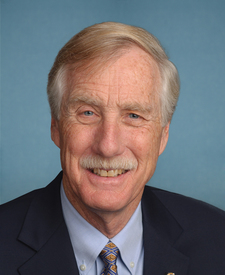
Legislative Progress
IntroducedMs. Collins (for herself and Mr. King) introduced the following …
Impact analysis is available but no clear stakeholder effects identified. View clause-level analysis →
Bill Structure & Actor Mappings
Who is "The Secretary" in each section?
- "the_secretary"
- → Secretary of Defense
Key Definitions
Terms defined in this bill
Taking action consistent with federal law and providing relevant material facts to law enforcement or judicial personnel.
We use a combination of our own taxonomy and classification in addition to large language models to assess meaning and potential beneficiaries. High confidence means strong textual evidence. Always verify with the original bill text.
Learn more about our methodology