S494-119

Passed Senate

National Plan for Epilepsy Act

119th Congress Introduced Feb 10, 2025

Summary

What This Bill Does

The Senate-passed National Plan for Epilepsy Act directs the Health and Human Services Secretary to review and, where appropriate, update existing federal epilepsy programs, activities, and strategic plans. The review must examine evidence-based and federally funded research, knowledge gaps, health disparities, coordination across programs, near- and long-term goals, federal investment, and opportunities to inform global work. HHS must consider ways to improve federal and stakeholder collaboration, eliminate research gaps, address effects on people with epilepsy and caregivers, improve early diagnosis and care coordination, prevent sudden unexpected death and other epilepsy mortality, strengthen surveillance, support new treatments and quality-of-life strategies, and improve public-health approaches. The Secretary must regularly convene relevant federal agencies, patient advocates, and nonfederal subject-matter experts. Within two years of enactment, HHS must report to the Senate HELP Committee and House Energy and Commerce Committee on the review, stakeholder feedback and needs, recommendations and implementation proposals, recommended federal program or strategy changes, and statutory or other barriers. The final bill is narrower than the introduced version: it does not establish a permanent National Plan project, an epilepsy advisory council, annual national assessments, or a recurring advisory report.

Who Benefits and How

People with epilepsy and their caregivers gain a formal opportunity to identify unmet needs and influence federal recommendations. Patient advocates, clinicians, epilepsy researchers, and public-health experts gain a recurring consultation role during the review. Federal health agencies and congressional committees gain a consolidated assessment of research gaps, disparities, program coordination, investment, surveillance, mortality prevention, treatment development, and implementation barriers. Research and care organizations may benefit from better aligned federal priorities.

Who Bears the Burden and How

HHS must coordinate a cross-program review, consider updates to existing plans, regularly convene agencies and outside stakeholders, synthesize evidence and feedback, and submit the detailed report within two years. Participating agencies, advocates, experts, and researchers must devote time and information to the review. Congressional health committees must evaluate recommendations and any requested statutory changes. Compared with the introduced bill, potential advisory-council members and National Plan administrators lose the proposed standing structure and annual assessment process.

Key Provisions

  • Requires HHS to review federal epilepsy research, prevention, identification, diagnosis, treatment, and strategic plans.
  • Requires examination of evidence, disparities, program coordination, federal investment, surveillance, mortality, and treatment gaps.
  • Requires regular consultation with federal agencies, patient advocates, and nonfederal experts.
  • Requires a report to congressional health committees within two years with feedback, recommendations, implementation proposals, and barriers.
  • Limits the final approach by omitting the introduced permanent National Plan, advisory council, and annual assessments.

Evidence Chain:

This summary is generated from the full bill text using AI analysis. Expand "Detailed Analysis" below for identified beneficiaries/burden bearers with clause-level evidence links.

At a Glance

What This Bill Does

Requires HHS to review federal epilepsy research, prevention, diagnosis, treatment, surveillance, and public-health strategies, obtain stakeholder input, and report recommended improvements to Congress within two years.

Key Policy Areas

Epilepsy, Public Health, Medical Research

Primary Purpose

Requires HHS to review federal epilepsy research, prevention, diagnosis, treatment, surveillance, and public-health strategies, obtain stakeholder input, and report recommended improvements to Congress within two years.

Policy Domains

Epilepsy Public Health Medical Research

National Plan for Epilepsy Act

Identified Gains
  • People with epilepsy
  • Family caregivers
  • Epilepsy patient advocates
  • Epilepsy clinicians and researchers
  • Congressional health committees
Model: codex-gpt-5 | Version: bill_summary_v2 | Source: es
Family caregivers: ,
People with epilepsy: ,
Epilepsy patient advocates: ,
Congressional health committees: ,
Epilepsy clinicians and researchers: ,
Identified Costs
  • Department of Health and Human Services staff
  • Participating federal health agencies
  • Nonfederal epilepsy experts
  • Patient-advocacy organizations
  • Congressional health committee staff
Model: codex-gpt-5 | Version: bill_summary_v2 | Source: es
Nonfederal epilepsy experts: ,
Patient-advocacy organizations: ,
Congressional health committee staff: ,
Participating federal health agencies: ,
Department of Health and Human Services staff: ,

Legislative Progress

Passed Senate
Introduced Committee Passed
Aug 10, 2026

Held at the desk.

Aug 10, 2026

Received in the House.

Aug 10, 2026

Message on Senate action sent to the House.

Aug 4, 2026

Passed Senate with an amendment by Unanimous Consent. (consideration: CR …

Aug 4, 2026

Passed/agreed to in Senate: Passed Senate with an amendment by …

Jul 28, 2026

Placed on Senate Legislative Calendar under General Orders. Calendar No. …

Jul 28, 2026

Committee on Health, Education, Labor, and Pensions. Reported by Senator …

Jul 28, 2026

Reported by Mr. Cassidy, with an amendment

Jul 22, 2026

Committee on Health, Education, Labor, and Pensions. Ordered to be …

Feb 10, 2025

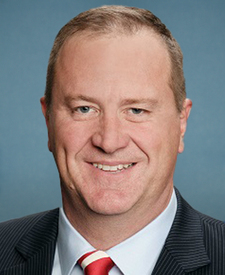
Mr. Schmitt (for himself, Ms. Klobuchar, Mr. Boozman, and Ms. …

Stakeholder Effects

cui bono?

How this legislation distributes effects. Mention counts reflect frequency, not effect magnitude.

General Public
12 mentions across 7 clauses
+5 positive -2 negative ?5 uncertain

Family caregivers, People with epilepsy, Taxpayers

People with epilepsy, Taxpayers face effects in multiple directions

Government
12 mentions across 9 clauses
+2 positive -4 negative ?6 uncertain

Congressional health committees, Department of Health and Human Services, Federal legislative records staff

Department of Health and Human Services, Participating federal health agencies face effects in multiple directions

Healthcare
4 mentions across 4 clauses
+2 positive -1 negative ?1 uncertain

Epilepsy clinicians and researchers, Prospective epilepsy advisory council members

Positive-direction: Epilepsy clinicians and researchers

Negative-direction: Prospective epilepsy advisory council members

Professional Services
2 mentions across 2 clauses
?2 uncertain

Legislative compliance counsel

Nonprofits
1 mention across 1 clause
+1 positive

Epilepsy patient advocates

3/6
sections analyzed
Full impact breakdown

Bill Structure & Actor Mappings

Who is "The Secretary" in each section?

Domains
Epilepsy Public Health Medical Research
Actor Mappings
"administrator"
→ Secretary of Health and Human Services
"affected_public"
→ People with epilepsy and their caregivers
"consulted_groups"
→ Patient advocates and nonfederal epilepsy experts
"federal_partners"
→ Federal agencies administering epilepsy research and public-health programs
"oversight_committees"
→ Senate HELP and House Energy and Commerce Committees

We use a combination of our own taxonomy and classification in addition to large language models to assess meaning and potential beneficiaries. High confidence means strong textual evidence. Always verify with the original bill text.

Learn more about our methodology