To establish a demonstration program for the active remediation of orbital debris and to require the development of uniform orbital debris standard practices in order to support a safe and sustainable orbital environment, and for other purposes.
Analysis under review: This bill has generated analysis that may be too generic or incomplete. Clause-level evidence remains available below.
Summary
What This Bill Does
This bill creates a demonstration program for actively removing orbital debris from space and requires development of uniform debris mitigation standards. It addresses the growing threat of space debris to satellites and space operations.
Who Benefits and How
Space operators benefit from reduced collision risk and clearer standards. National security improves through protected space assets. Commercial space gains regulatory certainty.
Who Bears the Burden and How
NASA must develop and execute active debris remediation demonstrations. Agencies must develop uniform standards.
Key Provisions
- NASA demonstration program for active debris remediation
- Requires removal of U.S. government-generated debris
- Mandates uniform orbital debris standard practices
- Encourages international cooperation on debris mitigation
- Promotes best practices for satellite operators
Evidence Chain:
This summary is generated from the full bill text using AI analysis. Expand "Detailed Analysis" below for identified beneficiaries/burden bearers.
At a Glance
What This Bill Does
This bill establishes a demonstration program for active orbital debris remediation and mandates the development of uniform standard practices for orbital debris mitigation and space traffic coordination to ensure a safe and sustainable orbital environment.
Key Policy Areas
Space, Environment, Technology, International Relations, Commerce
Primary Purpose
This bill establishes a demonstration program for active orbital debris remediation and mandates the development of uniform standard practices for orbital debris mitigation and space traffic coordination to ensure a safe and sustainable orbital environment.
Policy Domains
Orbital Sustainability Act of 2023
Identified Gains
Contextual inference, no direct clause citation- Commercial space industry
- Academic institutions
- Nonprofit organizations
- United States Government
- International space community
- Future space users
Contextual inference, no direct clause citation
Identified Costs
Contextual inference, no direct clause citation- Department of Commerce
- National Aeronautics and Space Administration (NASA)
- National Space Council
- Department of Defense
- Department of State
- Federal Aviation Administration (FAA)
- Federal Communications Commission (FCC)
- National Oceanic and Atmospheric Administration (NOAA)
- Eligible entities (applicants for awards)
Contextual inference, no direct clause citation
Sponsors

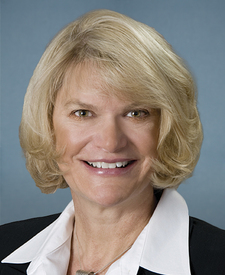
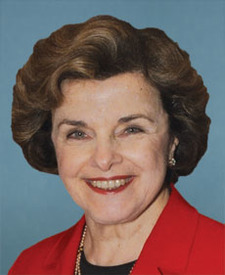


Legislative Progress
Passed SenateReported by Ms. Cantwell, with an amendment
Mr. Hickenlooper (for himself, Ms. Lummis, Ms. Cantwell, Mr. Wicker, …
Passed Senate (inferred from es version)
Stakeholder Effects
cui bono?How this legislation distributes effects. Mention counts reflect frequency, not effect magnitude.
Active debris remediation companies, Commercial debris remediation companies, Commercial space launch providers
Positive-direction: Commercial debris remediation companies, Space traffic management service providers
Negative-direction: Commercial space launch providers
Department of Commerce Office of Space Commerce, NASA, National Space Council
Commercial satellite operators, Communications providers and spectrum users, Satellite constellation operators
Positive-direction: Satellite operators
Negative-direction: Commercial satellite operators, Communications providers and spectrum users, Satellite constellation operators
Importers, exporters, and domestic producers affected by trade rules
Bill Structure & Actor Mappings
Who is "The Secretary" in each section?
- "the_secretary"
- → Secretary of Commerce
- "eligible_entities"
- → United States-based non-Federal commercial entities, institutions of higher education, nonprofit organizations, or partnerships thereof
- "the_administrator"
- → Administrator of the National Aeronautics and Space Administration
- "the_secretary_of_state"
- → Secretary of State
- "the_secretary_of_defense"
- → Secretary of Defense
- "the_national_space_council"
- → National Space Council
- "the_secretary_of_transportation"
- → Secretary of Transportation
- "the_federal_communications_commission"
- → Federal Communications Commission
- "the_national_oceanic_and_atmospheric_administration"
- → National Oceanic and Atmospheric Administration
- "the_administrator_of_the_federal_aviation_administration"
- → Administrator of the Federal Aviation Administration
Key Definitions
Terms defined in this bill
The planning, coordination, and on-orbit synchronization of activities to enhance the safety and sustainability of operations in the space environment.
We use a combination of our own taxonomy and classification in addition to large language models to assess meaning and potential beneficiaries. High confidence means strong textual evidence. Always verify with the original bill text.
Learn more about our methodology