To designate certain land administered by the Bureau of Land Management and the Forest Service in the State of Oregon as wilderness and national recreation areas, to withdraw certain land located in Curry County and Josephine County, Oregon, from all forms of entry, appropriation, or disposal under the public land laws, location, entry, and patent under the mining laws, and operation under the mineral leasing and geothermal leasing laws, and for other purposes.
Analysis under review: This bill has generated analysis that may be too generic or incomplete. Clause-level evidence remains available below.
Summary
What This Bill Does
This bill designates approximately 98,150 acres as the Rogue Canyon Recreation Area and 29,884 acres as the Molalla Recreation Area on BLM land in Oregon. It adds 59,512 acres of federal land to the Wild Rogue Wilderness. It also withdraws federal land in Curry and Josephine Counties from all forms of entry, mining, and mineral leasing.
Who Benefits and How
Outdoor recreationists benefit from designated recreation areas with preserved scenic, ecological, and cultural values. Conservation organizations benefit from expanded wilderness protections and mineral withdrawal. Local tourism businesses benefit from enhanced recreation designations. Fish and wildlife populations benefit from habitat protections. Existing permitted uses (grazing, recreation, hunting, fishing) are preserved.
Who Bears the Burden and How
Mining companies and mineral leaseholders are barred from new claims on withdrawn lands. The BLM and Forest Service bear administration and management costs for the new designations. Timber interests may face restrictions in wilderness areas. Motorized vehicle users face restrictions in wilderness additions.
Key Provisions
- Designates Rogue Canyon Recreation Area (98,150 acres) and Molalla Recreation Area (29,884 acres)
- Recreation areas allow hunting, fishing, trapping, and authorized motorized/mechanized uses
- Adds 59,512 acres to Wild Rogue Wilderness
- Withdraws land in Curry/Josephine Counties from mining and mineral leasing
- Existing grazing permits preserved
- Mineral withdrawal does not restrict recreation, hunting, fishing, or forest management
- Fish and wildlife management by State of Oregon preserved
Evidence Chain:
This summary is generated from the full bill text using AI analysis. Expand "Detailed Analysis" below for identified beneficiaries/burden bearers.
At a Glance
What This Bill Does
Designates approximately 128,000 acres as the Rogue Canyon and Molalla Recreation Areas, adds 59,512 acres to the Wild Rogue Wilderness, and withdraws federal land in Curry and Josephine Counties, Oregon from mining, mineral leasing, and disposal.
Key Policy Areas
Public Lands, Environment, Natural Resources, Recreation
Primary Purpose
Designates approximately 128,000 acres as the Rogue Canyon and Molalla Recreation Areas, adds 59,512 acres to the Wild Rogue Wilderness, and withdraws federal land in Curry and Josephine Counties, Oregon from mining, mineral leasing, and disposal.
Policy Domains
Oregon Recreation Enhancement Act
Identified Gains
Contextual inference, no direct clause citation- Outdoor recreationists
- Conservation organizations
- Local tourism businesses
- Fish and wildlife
- Oregon communities
Contextual inference, no direct clause citation
Identified Costs
Contextual inference, no direct clause citation- Mining and mineral leasing companies
- BLM and Forest Service
- Motorized vehicle users (in wilderness)
Contextual inference, no direct clause citation
Sponsors
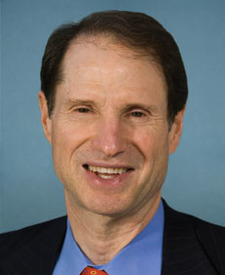
Ron Wyden
D-OR | Primary Sponsor

Legislative Progress
ReportedReported by Mr. Manchin, without amendment
Mr. Wyden (for himself and Mr. Merkley) introduced the following …
Stakeholder Effects
cui bono?How this legislation distributes effects. Mention counts reflect frequency, not effect magnitude.
Motorized and mechanized vehicle users, Outdoor recreationists in Oregon, Recreational users
Positive-direction: Outdoor recreationists in Oregon, Recreational users, Tourism businesses in southern Oregon, Wilderness recreationists (hikers, backpackers)
Negative-direction: Motorized and mechanized vehicle users
BLM and Forest Service, Bureau of Land Management, Oregon Department of Fish and Wildlife
Positive-direction: Oregon Department of Fish and Wildlife
Negative-direction: BLM and Forest Service, Bureau of Land Management
Existing valid rights holders, Mineral and geothermal leaseholders (new), Mining companies
Bill Structure & Actor Mappings
Who is "The Secretary" in each section?
- "the_secretary"
- → Secretary of the Interior (for BLM land) or Secretary of Agriculture (for Forest Service land)
Note: The Secretary refers to the Secretary of the Interior for BLM land and the Secretary of Agriculture for Forest Service land
Key Definitions
Terms defined in this bill
Secretary of the Interior for public land administered by Interior; Secretary of Agriculture for National Forest System land.
The State of Oregon.
We use a combination of our own taxonomy and classification in addition to large language models to assess meaning and potential beneficiaries. High confidence means strong textual evidence. Always verify with the original bill text.
Learn more about our methodology