To provide public health veterinary services to Indian Tribes and Tribal organizations for rabies prevention, and for other purposes.
Analysis under review: This bill has generated analysis that may be too generic or incomplete. Clause-level evidence remains available below.
Summary
What This Bill Does
This bill, To provide public health veterinary services to Indian Tribes and Tribal organizations for rabies prevention, and for other purposes., changes federal law or congressional policy affecting federal agencies and legislative administrators. The main policy domain is Government Operations, Environment, Healthcare.
Who Benefits and How
federal agencies and legislative administrators may benefit from new authority, funding, eligibility, regulatory clarity, or reduced risk created by the bill.
Who Bears the Burden and How
federal implementing agencies may take on implementation duties, reporting obligations, compliance costs, or oversight responsibilities.
Key Provisions
- Section S1: 1. Short title This Act may be cited as the Veterinary Services to Improve Public Health in Rural Communities Act.
- Section id7abe04f7eb8c4511b9023243d940e532: 2. Sense of Congress It is the sense of Congress that the Indian Health Service of the Department of Health and Human Services is uniquely suited to empower...
- Section idEAC57DA4738D46ECA493ACBFA692A0B9: 3. Public health veterinary services Title II of the Indian Health Care Improvement Act is amended by inserting after section 223 (25 U.S.C. 1621v) the...
- Section ide929512f728f4d36ba156dca540b23e6: 224. Public health veterinary services In this section: The term public health veterinary services includes any of the following: spaying and neutering...
- Section id18551dd97ed946fb8960995fde06c0bf: 4. APHIS wildlife services study on oral rabies vaccines in Arctic regions of the United States Not later than 1 year after the date of enactment of this Act,...
Evidence Chain:
This summary is generated from the full bill text using AI analysis. Expand "Detailed Analysis" below for identified beneficiaries/burden bearers with clause-level evidence links.
At a Glance
What This Bill Does
This bill, To provide public health veterinary services to Indian Tribes and Tribal organizations for rabies prevention, and for other purposes., changes federal law or congressional policy affecting federal agencies and legislative administrators.
Key Policy Areas
Government Operations, Environment, Healthcare
Primary Purpose
This bill, To provide public health veterinary services to Indian Tribes and Tribal organizations for rabies prevention, and for other purposes., changes federal law or congressional policy affecting federal agencies and legislative administrators.
Policy Domains
Whole bill
Identified Gains
- federal agencies and legislative administrators
Identified Costs
- federal implementing agencies
Sponsors
Legislative Progress
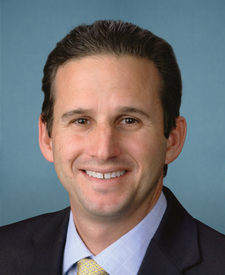
ReportedReported by Mr. Schatz, with amendments
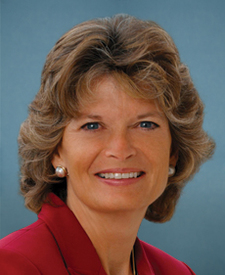
Ms. Murkowski introduced the following bill; which was read twice …
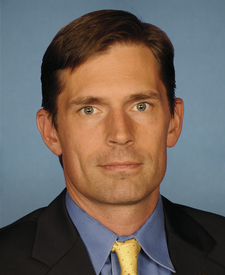
Ms. Murkowski (for herself, Mr. Schatz, and Mr. Heinrich) introduced …
Stakeholder Effects
cui bono?How this legislation distributes effects. Mention counts reflect frequency, not effect magnitude.
Department of Health and Human Services, Indian Health Service
Positive-direction: Indian Health Service
Negative-direction: Department of Health and Human Services
Alaska Native and American Indian communities, Alaska Native and American Indian communities in IHS service areas, Alaska Native communities
Veterinary public health officers in Commissioned Corps, Veterinary public health officers in Public Health Service Commissioned Corps
Bill Structure & Actor Mappings
Who is "The Secretary" in each section?
- "the_commission"
- → The commission identified in the operative section
- "secretary_of_agriculture"
- → Secretary of Agriculture
We use a combination of our own taxonomy and classification in addition to large language models to assess meaning and potential beneficiaries. High confidence means strong textual evidence. Always verify with the original bill text.
Learn more about our methodology