Space Commerce Advisory Committee Act
Summary
What This Bill Does
The Space Commerce Advisory Committee Act gives the Secretary of Commerce, acting through the Office of Space Commerce, a formal advisory body for commercial space activity. The committee would bring industry, state, academic, and technical expertise into Commerce decisions about space objects, commercial space operations, and the practical rules needed for a growing orbital economy.
Who Benefits and How
Commercial satellite companies benefit from a formal channel to advise Commerce on space-object and space-operations policy. Launch providers benefit because the advisory committee can surface operational and regulatory problems affecting commercial space missions. State spaceport authorities benefit from representation in federal space-commerce discussions. The Office of Space Commerce benefits from outside technical and industry advice before it builds civil space traffic services.
Who Bears the Burden and How
The Commerce Secretary must establish and administer the advisory committee within 180 days. Office of Space Commerce staff must manage member appointments, meetings, records, and advice. Committee members must spend time developing recommendations on space commerce and space-object coordination. Congressional commerce committees must review any committee recommendations and oversight information.
Key Provisions
- Establishes the Secretary, State, space object, and commercial space terms used by the advisory committee.
- Requires Commerce to establish the Commercial Space Activity Advisory Committee.
- Creates a public-private expert forum for commercial space activity policy.
- Provides the Office of Space Commerce with outside advice on civil space responsibilities and commercial space operations.
Evidence Chain:
This summary is generated from the full bill text using AI analysis. Expand "Detailed Analysis" below for identified beneficiaries/burden bearers with clause-level evidence links.
At a Glance
What This Bill Does
Creates a Commercial Space Activity Advisory Committee inside the Commerce Department to advise on commercial space operations, space objects, and regulatory issues affecting the space economy.
Key Policy Areas
Space, Commerce, Regulatory Oversight
Primary Purpose
Creates a Commercial Space Activity Advisory Committee inside the Commerce Department to advise on commercial space operations, space objects, and regulatory issues affecting the space economy.
Policy Domains
Bill provisions
Identified Gains
- Commercial satellite companies
- Launch providers
- State spaceport authorities
- Office of Space Commerce
Identified Costs
- Commerce Secretary
- Office of Space Commerce staff
- Advisory committee members
- Congressional commerce committees
Sponsors

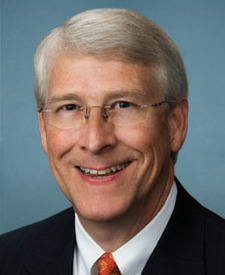
Legislative Progress
ReportedReported by Mr. Cruz, with an amendment
Placed on Senate Legislative Calendar under General Orders. Calendar No. …
Committee on Commerce, Science, and Transportation. Reported by Senator Cruz …
Committee on Commerce, Science, and Transportation. Ordered to be reported …
Mr. Peters (for himself and Mr. Wicker) introduced the following …
Read twice and referred to the Committee on Commerce, Science, …
Introduced in Senate
Stakeholder Effects
cui bono?How this legislation distributes effects. Mention counts reflect frequency, not effect magnitude.
Commerce Secretary, Office of Space Commerce
Positive-direction: Office of Space Commerce
Negative-direction: Commerce Secretary
Bill Structure & Actor Mappings
Who is "The Secretary" in each section?
- "secretary"
- → Secretary of Commerce
We use a combination of our own taxonomy and classification in addition to large language models to assess meaning and potential beneficiaries. High confidence means strong textual evidence. Always verify with the original bill text.
Learn more about our methodology